
The Absurd Bottleneck: Why Your Doctor Still Can’t Call You Back (and AI’s Latest Battle)
- Artificial Intelligence
Arjun Vedanta
- 0
- 8 minutes read
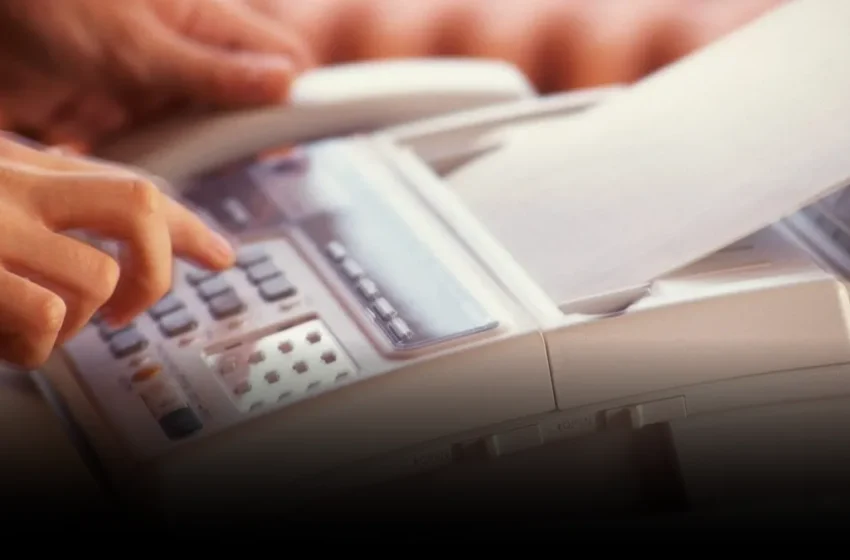
The Ghost in the Machine: Why Fax Still Rules Healthcare Referrals
Let’s be honest about this: The American healthcare system, for all its marvels of surgical precision and pharmaceutical innovation, often feels like it’s running on fumes and a prayer. And the prayer, more often than not, is for a fax machine to actually work. I know. It sounds absurd in 2026, doesn’t it? But what I find truly fascinating, and frankly, infuriating, is how often this relic of the 1980s sits squarely at the center of why you, the patient, can’t get your specialist appointment scheduled without an act of Congress or divine intervention.
We talk endlessly about AI’s potential in diagnostics, in drug discovery, in predicting outbreaks. All critical. But a less glamorous, utterly human problem has persisted, quietly strangling the entire referral pipeline: the administrative nightmare between a primary care doctor’s referral slip and a specialist’s calendar. This isn’t about doctor shortages, though those are real. This is about paperwork. Mountains of it. Much of it arriving by fax.
I’ve watched companies try to tackle various slices of this problem for decades. From early digital health record pushes to today’s interoperability dreams, the promise has always been smoother patient journeys. But the fax machine, bless its anachronistic heart, has proven to be an incredibly resilient foe. And it’s not just an inconvenience. It causes real harm. Kaled Alhanafi, formerly of Lyft and Cruise, and Chetan Patel, who spent a decade at Medtronic building cardiac devices, felt this pain personally. Patel’s wife fainted on a flight; Alhanafi’s father needed urgent cardiology referrals after a serious diagnosis. Their experiences? One clinic called back weeks later; another, after surgery was already done; a third, never. These aren’t isolated incidents. They are the systemic norm.
Specialty practices are often drowning. We’re talking hundreds, sometimes thousands, of these faxed referrals flooding in daily. And who processes them? Small administrative teams, often understaffed, manually transcribing, calling, chasing. Patients get lost in this paper-based purgatory, not because practices don’t want to see them, but because they simply can’t process the backlog. This is where a startup called Basata, co-founded by Alhanafi and Patel, is stepping into the fray. And frankly, it’s about time someone brought a bazooka to this fax fight.
AI on the Front Lines: From Fax to Appointment in Minutes?
Basata’s pitch isn’t glamorous; it’s practical. When a referral — still typically a fax, I remind you — lands, their system is designed to immediately read and process the document. It extracts critical clinical information using AI, converting unstructured data into something actionable. Then, a genuinely interesting move: an AI voice agent calls the patient directly to schedule the appointment. Think about that for a second. An AI calling you about your specialist appointment, often within minutes of your primary care doctor sending the referral.
This isn’t some far-off sci-fi fantasy. Alhanafi talks about recordings of patients expressing audible surprise at the speed. The goal, he says, is for a patient to have a scheduled appointment before they even leave the parking lot after their primary care visit. That matters. The economics are brutal in healthcare administration, and anything that can shave minutes off a process, multiply staff efficiency, and prevent patient leakage is gold. Basata also offers AI agents for inbound calls, handling common administrative tasks like prescription renewals or appointment changes 24/7. This frees up human staff from the repetitive drudgery, allowing them to focus on complex cases or patient education.
What I appreciate about Basata’s approach is its focused execution. Instead of trying to be all things to all specialties, they’ve gone deep: cardiology first, then urology. They recently turned down a large deal in a specialty they hadn’t thoroughly mapped yet. That’s a sign of maturity, something often missing in the frenetic scramble of early-stage startups chasing ‘hyper-growth’ at any cost. (Remember the ‘pivot to crypto’ era? I do.)
The Money and the Market: A Crowded AI Battlefield
Of course, where there’s a gaping administrative hole, venture capital money will flow. Basata has secured a total of $24.5 million, including a fresh $21 million Series A round led by Basis Set Ventures’ Lan Xuezhao, with participation from Cowboy Ventures and Sofeon. That’s a healthy chunk of change, but it’s just one player in an increasingly crowded arena.
Consider Tennr, a New York-based startup that’s pulled in over $160 million to date, boasting a $605 million valuation. They’re heavily invested in document intelligence, claiming proprietary language models trained on tens of millions of medical documents. Then there’s Assort Health, backed by Lightspeed, focusing on automating patient phone communication, last valued at $750 million. This isn’t a sleepy niche. This is a high-stakes AI race.
Basata’s revenue model is straightforward: usage-based. Practices pay per document processed and per call handled. It makes sense, tying costs directly to value delivered. They’ve processed referrals for roughly 500,000 patients to date, with a remarkable 100,000 of those in the last month alone. That kind of acceleration is hard to ignore. Aileen Lee of Cowboy Ventures highlighted the importance of experienced founders in this space, emphasizing that ‘trust is a really big deal’ when selling to medical practices. She’s right. These aren’t early adopters on a whim; these are critical infrastructure decisions.
The Unseen Costs and the Future of Work
Basata’s founders argue their differentiation lies in providing an end-to-end workflow tailored to specific specialties, integrating both document processing and patient communication. A noble goal, but one that gets harder to maintain as those better-funded competitors inevitably expand their own feature sets. The real question, the uncomfortable one for any company automating human tasks, always comes back to jobs. Will AI augment these administrative workers, or will it displace them?
For now, Basata’s narrative, and a convincing one, is augmentation. The administrative staff aren’t worried about losing their jobs; they’re worried about drowning. These are often seasoned professionals, with decades of institutional knowledge, currently buried under a volume of work that no reasonable number of hires could absorb. Freeing them from the repetitive, often soul-crushing tasks of chasing faxes and making reminder calls theoretically allows them to do the more human, empathetic parts of their job better.
But the long game here is more complex. As AI systems become more sophisticated, integrating deeper with existing Electronic Health Record (EHR) systems – a famously difficult integration challenge – the line between augmentation and displacement will blur. We’ve seen this movie before, across industries. Automation rarely *eliminates* jobs overnight, but it reshapes them, often requiring new skills and leaving behind those who can’t adapt. Nobody’s talking about the real problem — which is how do we upskill or redeploy a workforce whose core function is gradually being siphoned off by intelligent systems. It’s a societal question that extends far beyond healthcare.
Still, for now, the immediate problem is clear: patients aren’t getting the care they need because of an archaic administrative backbone. If AI can cut through that, if it can reduce patient wait times and improve access, then the argument for its deployment is compelling. Alhanafi shared one powerful metric: 70% of Basata’s new deals now come through word-of-mouth. That’s a testament to real-world pain being solved. For an industry so resistant to change, word-of-mouth adoption means the solution actually works, and that, for me, is something to still get excited about. Even after all these years.
