
The Ghost in the Genome: When Dad’s Workout Echoes in His Kids
- Special
Arjun Vedanta
- 0
- 6 minutes read
A Marathon in Miniature, a Mystery in the Making
I’ve seen a lot of things come and go in tech and science. I’ve watched companies chase digital ghosts, and others build empires on truly groundbreaking stuff. But every so often, a piece of research floats across my desk that makes me sit up, lean in, and think: ”Wait. What?” This week, it’s coming out of Jiangsu, China, where a biochemist named Xin Yin is putting mice through their paces, quite literally.
Picture this: a miniature treadmill, tiny paws scrambling, the scent of science in the air. These aren’t just any lab mice; they’re the offspring of fathers who exercised rigorously before conception. And what Yin’s team at Nanjing University found is frankly, a little startling. These young rodents, their little hearts pumping, were natural athletes. They ran farther, built up less lactic acid – the burning byproduct of exertion – and exhibited a stamina that far outstripped their control littermates.
What I find fascinating here is that their athletic prowess wasn’t inherited in the way we traditionally understand it. Their genes were identical to the control group. They hadn’t received any special training themselves. The implication? Dad’s pre-baby workouts might have left a biological breadcrumb trail, a blueprint for fitness, that bypassed the classic genetic lottery.
Beyond DNA: The Epigenetic Whisper
Let’s be honest about this: for decades, we’ve largely thought of inheritance as a neat package of DNA, passed down from parent to child. Mendel’s peas, double helices, all very tidy. But the world, as it often does, is proving to be a lot messier, and infinitely more interesting.
What Yin’s research, and a growing body of work globally, points to is the fascinating realm of epigenetics. It’s not about changing the letters in the genetic code, but rather how those letters are read. Think of it as annotations on the genome, tiny chemical bookmarks or sticky notes that tell the body which genes to use, how much, and when. These annotations can be influenced by environment, diet, stress – and, apparently, exercise.
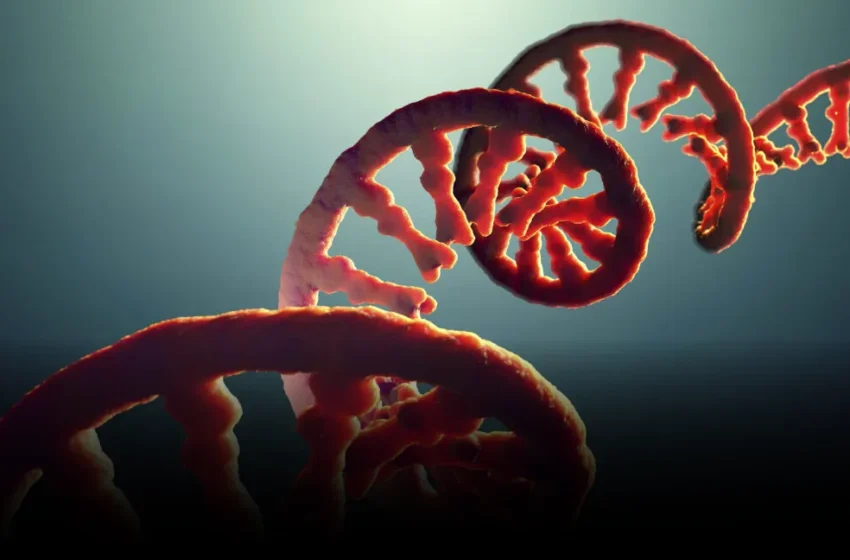
The leading hypothesis here revolves around microRNAs (miRNAs). These are tiny RNA molecules found in sperm that don’t code for proteins themselves, but instead regulate gene expression. Essentially, they act as cellular traffic cops, telling the cell which genetic messages to amplify or silence. If a father’s intense exercise alters the profile of miRNAs in his sperm, then these molecular messages could potentially be carried over into the nascent embryo, influencing everything from metabolic efficiency to muscle development.
I’ve watched companies try to bottle the ‘secret sauce’ of longevity and performance for years. Early gene therapy promised so much, only to hit ethical and technical walls. This isn’t gene editing; this is something far more subtle, a biological whisper rather than a shout. And that, in itself, is a profound shift in thinking.
From Treadmills to Totems: The Commercial & Ethical Currents
So, where does this leave us, the tech-minded, the health-conscious, the perpetually curious? If confirmed in humans (and that’s a gargantuan ‘if’ that requires years of replication and study), the implications are vast. We’re not talking about designer babies, but perhaps something even more insidious, or empowering, depending on your perspective: designer pre-conception lifestyles.
Imagine the pressure. If future parents could statistically increase their child’s athletic potential, or metabolic health, simply by optimizing their own lifestyles months before conception, what would that do to the already fraught world of fertility and family planning? Nobody’s talking about the real problem yet — which is how easily this translates into guilt, into a new form of parental anxiety, a new set of metrics to be judged by. The economics are brutal here too. The global human longevity market alone is projected to hit over $44 billion by 2030, and any discovery that promises a ‘head start’ for future generations is going to attract serious venture capital attention. We’ve seen similar surges in personalized nutrition and AI-driven wellness platforms, and this could be the next frontier.
The operational challenges are immense, of course. How do you measure these paternal epigenetic markers reliably? What constitutes ‘optimal’ exercise? For how long? Are there optimal diets that interact with this? It opens a Pandora’s Box of questions that would require an entirely new ecosystem of diagnostics, wearables, and perhaps even AI-driven predictive analytics to even begin to address. Companies would undoubtedly emerge promising ‘pre-conception optimization kits,’ selling everything from specialized diets to quantified-self programs targeted specifically at dads-to-be.
This isn’t just about athletic performance. It’s about fundamental health. Better metabolism, reduced risk of diabetes, improved cardiovascular fitness – these are the long-term prizes. But we’ve also seen the dark side of data collection and hyper-personalization. Who owns this epigenetic data? What are the privacy risks if pre-conception biomarkers become part of medical records or insurance profiles? (And yes, that’s as scary as it sounds).
The Long Game of Biological Investment
What Xin Yin and his team are teasing out is a complex, multi-generational story. It suggests that our biological decisions ripple outwards, sometimes in ways we can’t yet fully grasp. For a long time, the tech world has been obsessed with optimization: faster chips, better algorithms, seamless user experiences. Now, perhaps, we’re looking at optimizing human biology in a way that feels almost science fiction, yet is rooted in fundamental biological processes.
My skepticism, honed over two decades of ‘paradigm shifts’ that fizzled, reminds me that the jump from a mouse treadmill in Jiangsu to a definitive human health recommendation is a monumental one. There are endless confounding variables in human studies, ethical minefields, and the sheer inertia of biological systems.
But the underlying science – the idea that a father’s transient metabolic state can leave a lasting, non-genetic imprint on his offspring – is too compelling to ignore. It forces us to reconsider the very definition of ‘legacy.’ It’s not just about what genes we pass on, or what wealth we accumulate. It might also be about the microRNA messages whispering from our sperm, a silent, biological investment in the generation to come. A fascinating thought. A scary thought. A future thought.
