
The Unseen Legacy: Your Father’s Lifestyle, Your Future Biology
- Tech
Arjun Vedanta
- 0
- 7 minutes read
The Unseen Legacy: Your Father’s Lifestyle, Your Future Biology
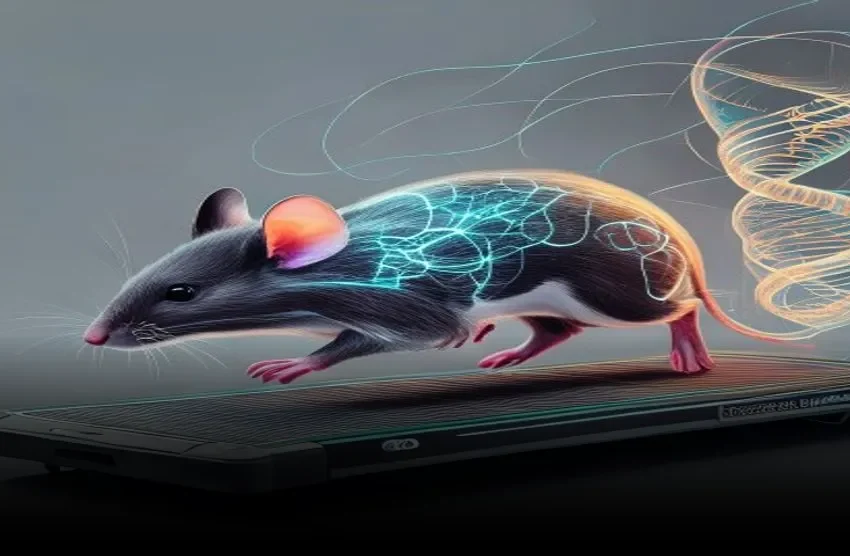
The scene is almost comical: tiny mice on miniature treadmills in a Jiangsu lab. For Dr. Xin Yin and his team at Nanjing University, what they observed wasn’t a joke; it was a profound biological riddle. These particular littermates, born of average genetic stock, ran further, generated less lactic acid, and recovered quicker than their counterparts. They were, in essence, super-fit rodents. And their secret? It wasn’t written in their genes. It was, astonishingly, encoded in their father’s exercise habits before they were even conceived.
What I find fascinating here isn’t just the sheer unexpectedness of the data, as Dr. Yin himself admitted. It’s the uncomfortable truth it nudges: that our parents’ experiences, long before we’re even a glimmer in their eye, might be shaping our biology in ways traditional genetics simply can’t explain. For so long, we’ve been told the DNA helix is destiny, the immutable script passed down through generations. This suggests a different, more fluid reality. A kind of biological memory.
This isn’t about some sci-fi gene editing or direct genetic manipulation. Nobody’s talking about CRISPR-ing your future progeny here. This is something far more subtle, and frankly, more pervasive. It’s a whisper from the past, echoing through generations, carried not by the double helix itself, but by molecular messengers that are only now beginning to yield their intricate secrets.
Beyond DNA: The Ghost in the Machine, Molecular Messengers
For decades, when we talked about heredity, we talked about genes. Mendel, dominant, recessive. Simple, elegant, and largely incomplete. What this study, and a rapidly expanding body of research across the globe, points to is the profound influence of epigenetics – changes in gene expression that don’t alter the underlying DNA sequence. Think of it like a dimmer switch for your genes, turned up or down by environmental cues. Your core genetic code remains the same, but how it’s read and expressed can vary wildly.
Specifically, researchers like Yin are zeroing in on things like small non-coding RNAs, particularly microRNAs, found in sperm. These aren’t the blueprints themselves, but rather the contractors and foremen, dictating how the blueprints are interpreted. When a male mouse exercises regularly, its sperm’s epigenome – the collection of chemical tags and RNA molecules attached to the DNA – appears to shift. Those shifts then somehow influence the metabolism and athletic capacity of its offspring. It’s a stunning mechanism, suggesting the father isn’t just contributing half the genetic material; he’s also contributing a set of highly dynamic, environmentally-responsive instructions.
Let’s be honest about this: the implications are vast. We’ve known for a while that mothers’ diets, stress levels, and environmental exposures during pregnancy can profoundly impact offspring development. But paternal transgenerational inheritance, especially non-genetic, has always been a harder sell, often dismissed as environmental noise or statistical anomaly. This, however, puts a very specific molecular mechanism on the table, moving it squarely into the realm of measurable, reproducible biology. That matters.
It’s not just microRNAs, either. There are other epigenetic marks, like DNA methylation patterns or histone modifications, that can be influenced by diet, stress, and yes, even exercise. The sperm is a tiny, highly specialized cell, but its cargo of epigenetic information is proving to be far richer and more complex than we once imagined. Unpacking how these various epigenetic layers interact and contribute to a phenotype is one of the grand challenges of modern biology. And it’s a field where computing power and advanced sequencing techniques are absolutely critical for sifting through the data.
The Promise, The Peril, and The Precedent of Biological Legacy
I’ve watched companies try variations of “optimize your offspring” for decades, often with little more than pseudoscientific fluff and expensive supplements. From early nutritional genomics promising a bespoke diet based on your DNA (mostly hot air) to the current crop of “biohacking” gurus, the allure of influencing the next generation is powerful. This research, however, is serious science, conducted with rigorous controls and published in peer-reviewed journals. But its translation to humans? That’s a different story.
The economics are brutal. Moving from a controlled mouse study to verifiable human health outcomes is an odyssey. We’re talking about decades of longitudinal studies, navigating confounding factors that make lab mice look like simple machines. Human diets, stress, pollution, varying exercise routines – the variables are astronomical. Nobody’s talking about the real problem — which is how easily these fascinating biological quirks can be oversimplified by the wellness industry looking for the next ‘biohack’. Imagine the collective panic, the parental guilt, if every expectant father felt pressured to become an Olympian simply to ensure their child’s athletic prowess. (And yes, that’s as scary as it sounds).
There’s also the darker side of the coin. If beneficial traits can be inherited through epigenetic means, what about detrimental ones? Could a father’s unhealthy habits – chronic stress, poor diet, exposure to toxins, even heavy screen time (a new kind of environmental exposure we’re still figuring out) – likewise cast a long shadow over his children’s metabolic health, their risk for diabetes, or even mental health? Studies are already hinting at this, but the precise mechanisms remain elusive and far more complex in humans than in controlled lab settings. Replicability across different human populations is a massive hurdle.
This opens up a regulatory and ethical minefield that makes gene editing debates look tame by comparison. Consider the emerging market around fertility treatments, already a multi-billion dollar industry – estimated to hit $36.2 billion globally by 2030. The potential for epigenetic “optimization” to become a premium service, exacerbating existing health disparities, is a very real, very uncomfortable thought. Who gets access to the knowledge, or even the potential interventions, if they ever materialize? Who decides what constitutes a “better” epigenome?
Ultimately, what Dr. Yin and his colleagues are unraveling isn’t just about athletic mice. It’s a fundamental rethinking of heredity itself, pushing us beyond the simple Mendelian view and into a new era of understanding biological plasticity. It reminds us that biology is always more complex, more interconnected, and frankly, more wondrous than we dare to imagine. This isn’t just a discovery; it’s an invitation to look at our own lives, and the lives of those who came before us, with entirely new eyes. It’s a long road from mouse treadmill to human health policy, but one worth watching. Very, very closely.
