
Beyond Black & White: Spider-Noir’s ‘True Hue’ Gimmick and the Streaming Conundrum
- Tech
Arjun Vedanta
- 0
- 7 minutes read
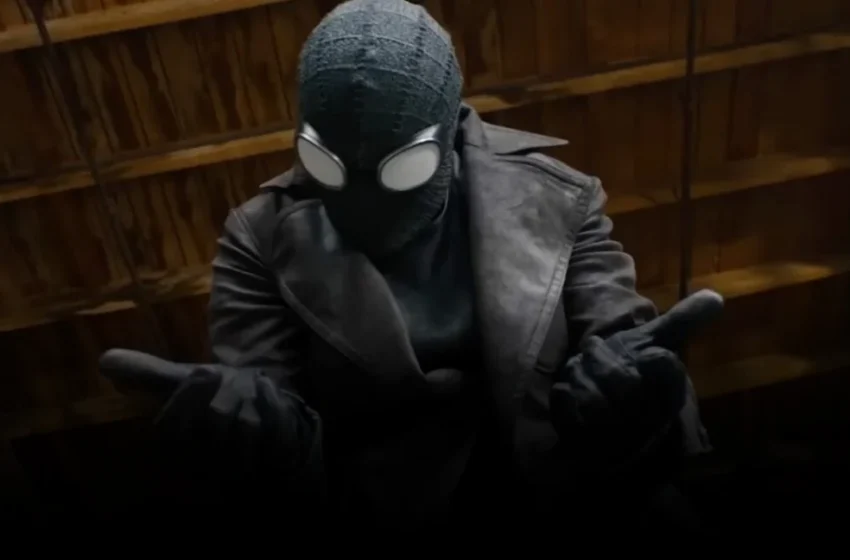
Prime Video is serving up a curious dilemma with its final trailer for the live-action series, Spider-Noir, starring Nicolas Cage: viewers can watch it in classic black-and-white or a so-called “True Hue” color version. This isn’t merely a creative flourish; it’s a perplexing prompt, effectively asking the audience to decide which aesthetic interpretation of a 1930s pulp detective story is the “correct” one. This curious dual release highlights a perplexing industry trend of leveraging nostalgia and artistic pretense to mask streaming content saturation, forcing viewers into an arbitrary aesthetic choice.
The premise for Spider-Noir, which places a down-on-his-luck private investigator named Ben Reilly in Depression-era New York, is already steeped in a specific visual language. Marvel Comics initiated its “noir” line in 2009, specifically reinterpreting established characters in grittier, period settings that evoked the dark, morally ambiguous tone of classic film noir. Nicolas Cage, who previously lent his distinctive voice to an animated Spider-Noir in the acclaimed Spider-Man: Into the Spider-Verse and Across the Spider-Verse, is now bringing the character to live-action, promising a hard-boiled tone perfectly suited to the genre’s origins.
Yet, the very concept of “noir” — French for “black” — intrinsically links the genre to its monochromatic origins. From Humphrey Bogart in The Maltese Falcon to Orson Welles in Touch of Evil, the interplay of light and shadow, the stark contrasts, and the dramatic chiaroscuro are fundamental to its expressive power. Presenting a “True Hue” version isn’t just offering an alternative; it’s functionally inviting audiences to bypass the very visual grammar that defines the genre, effectively undermining the artistic intent implied by the series’ title and source material.
The False Promise of Aesthetic Choice
The decision to offer two distinct visual presentations for the Spider-Noir trailer is less about expanding artistic horizons and more about distracting from an industry grappling with profound content saturation. It implies a level of consumer agency that, upon closer inspection, feels superficial, almost a parlor trick in the ever-escalating streaming wars. We are told there’s a “True Hue,” suggesting that one option is inherently more authentic, yet the noir genre itself thrives on the deliberate omission and stylization inherent in monochrome, compelling viewers to engage with subtext and atmosphere in a way color often mitigates.
This isn’t an experimental art house film exploring the nature of perception; it’s a major studio production on a platform vying for global eyeballs and subscription retention. The underlying incentive is clear: generate discussion, differentiate the product from a sea of competing intellectual property adaptations, and create a buzz that transcends the standard trailer release cycle. By framing “True Hue” as an option, Prime Video subtly pushes the narrative that this is an elevated experience, when in fact, it may just be an overengineered one designed for maximum virality and minimal artistic coherence. This is less about artistic conviction and more about optimizing for viewer engagement metrics.
Consider the broader implication: should the series itself offer a “True Hue” option throughout its run? If so, does a platform truly understand the visual language of a genre like noir if it believes a full-color version is equally, or even more, valid? This feels less like bold artistic vision and more like an attempt to broaden appeal to audiences who might instinctively dismiss black-and-white content, despite it being integral to the source material’s stylistic roots. It’s an interesting experiment, but one that raises more questions about the industry’s priorities than it answers about storytelling, exposing a fundamental tension between artistic integrity and market demand.
When More Options Mean Less Clarity
In a landscape where platforms like Netflix, Disney+, and Apple TV+ are pouring billions into original content, every major announcement attempts to carve out a unique space. Prime Video’s dual-trailer strategy attempts to achieve this by giving viewers a performative choice, rather than a genuine creative one. This is reminiscent of the “choose your own adventure” phases some platforms dabbled in, ultimately proving more cumbersome than truly engaging for most viewers seeking a cohesive narrative. The psychology of choice dictates that while some options are empowering, an excessive or unnecessary choice can lead to decision fatigue, or even a sense of being manipulated into validating a marketing gimmick.
The focus inevitably shifts from the compelling story of Ben Reilly grappling with a personal tragedy in 1930s New York to the technical novelty of its presentation. We are discussing the color palette before we’ve seen the performances or the writing, before we’ve engaged with the core narrative elements. This is a troubling trend for storytelling, where the meta-narrative of how content is delivered or formatted begins to overshadow the content itself. It creates a secondary layer of decision-making for an audience already overwhelmed by algorithmic recommendations and endless scrolling across disparate streaming services.
This approach subtly commodifies artistic intent. If a director or showrunner genuinely believed a “True Hue” version was superior, why not just release that? Conversely, if the noir aesthetic is paramount, why dilute it with a color alternative? The very existence of the choice suggests an equivocation, a lack of unwavering commitment to a singular vision. It frames creative decisions as consumer features, blurring the line between artistic expression and platform differentiation in a way that ultimately serves neither fully.
Ultimately, the “True Hue” proposition for Spider-Noir serves as a stark reminder of the desperate lengths streaming services will go to capture attention in a hyper-competitive market. It’s a calculated move to stand out, leveraging artistic pretense and audience engagement metrics in a crowded ecosystem. Yet, in doing so, it risks diluting the very essence of a genre defined by its distinctive visual constraints. For a series explicitly named “Noir,” implying a monochromatic world, presenting a color alternative feels less like innovation and more like a concession to market forces, or perhaps an admission that the platform fears its global audience isn’t quite ready for true noir after all. It’s an interesting experiment, but one that ultimately prioritizes platform buzz over authentic artistic vision, signaling a troubling shift in how narratives are conceived and consumed.
