
JWST’s Granular Gaze: When Sensor Technology Rewrites Cosmic Chemistry
- AI Infrastructure
Arjun Vedanta
- 0
- 5 minutes read
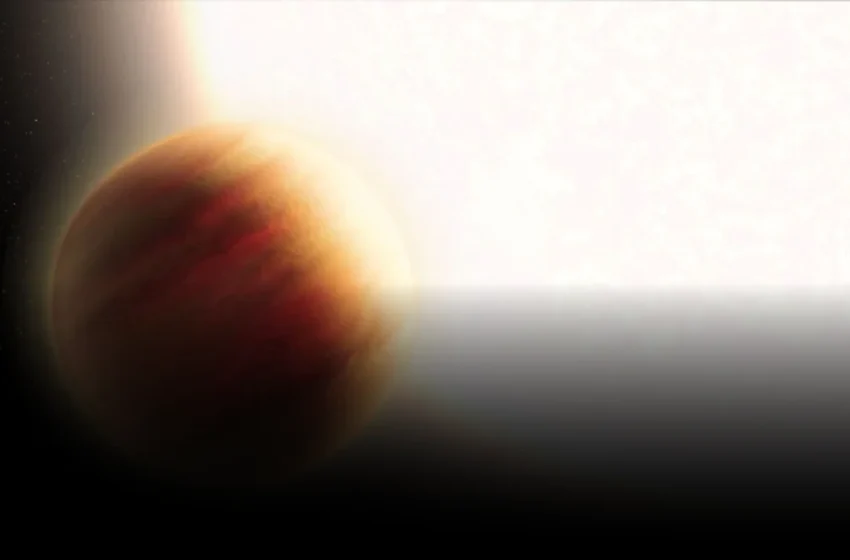
The Era of Granular Data in Deep Space
The latest observations from the James Webb Space Telescope are not just another set of stunning cosmic photographs; they represent a fundamental shift in our technological capacity to understand the universe. What Sagnick Mukherjee and his team at Johns Hopkins University have achieved – mapping the daily weather patterns of WASP-94A b, a hot gas giant orbiting 700 light-years away – goes far beyond mere scientific discovery. It is a profound demonstration of precision engineering and data science, pushing the boundaries of what observational technology can reveal.
For years, our understanding of exoplanets has been built on broad strokes. We could infer compositions, detect general atmospheric conditions, and model potential climates. But the ability to discern cloudy mornings from clear evenings on a tidally locked world almost 700 light-years distant signifies a leap from statistical averages to granular, dynamic data. This isn’t just about finding alien worlds; it’s about dissecting their daily lives, driven by infrared spectroscopy and computational models capable of teasing out subtle atmospheric shifts that were previously undetectable noise.
This level of detail forces a critical re-evaluation not just of WASP-94A b, but of every exoplanet we’ve ever studied. When Mukherjee points out that the fact we didn’t know this already means “we might have gotten the chemistry of this and many other exoplanets surprisingly wrong,” he’s articulating a quiet revolution. It underscores how radically new sensor technologies can dismantle long-held scientific assumptions, built on the best available, yet ultimately limited, prior instrumentation.
The Uncomfortable Truth of ‘Averaged’ Atmospheres
The previous methodology, transmission spectroscopy, was groundbreaking in its time. By analyzing light filtering through an exoplanet’s atmosphere, scientists could deduce its chemical composition. But as the JWST now vividly illustrates, this often meant averaging vast swaths of atmospheric phenomena into a single, static snapshot. It was a technological compromise, a necessary simplification driven by the constraints of what our instruments could actually capture.
The uncomfortable truth is that for decades, our understanding of exoplanet atmospheres wasn’t just incomplete; it was often a sophisticated guess, built on the technological equivalent of blurring a photograph to make it seem coherent. WASP-94A b, with its low density and extended atmosphere, made it an easier target for JWST’s more sensitive gaze, revealing an environment that is anything but static. This suggests that for countless other exoplanets, where observations are even more challenging, our models likely contain even greater discrepancies.
This isn’t to diminish the work of previous generations of astronomers, but rather to highlight the exponential impact of technological advancement. The incentive behind these increasingly intricate observational campaigns isn’t just pure scientific curiosity; it’s a strategic investment in the fundamental sensor technologies and computational models that will underpin everything from next-generation climate prediction on Earth to future deep-space exploration. The companies and research institutions pioneering these highly sensitive, remote sensing capabilities stand to redefine multiple scientific and commercial frontiers.
Engineering the Next Epiphany
The implications of the JWST’s granular insights extend far beyond astrophysics. The engineering challenges overcome to achieve this level of atmospheric mapping — maintaining sub-kelvin temperatures across vast mirror arrays, precisely calibrating infrared detectors, and transmitting petabytes of data across unfathomable distances — are directly applicable to a multitude of adjacent technologies. Consider Earth observation satellites, atmospheric monitoring for climate change research, or even advanced imaging for autonomous systems.
What we’re witnessing is not just a scientific instrument; it’s a proof-of-concept for extreme-environment data collection and processing. The same AI and machine learning algorithms used to disentangle the faint spectral signatures of exoplanet clouds from cosmic noise could be adapted for terrestrial applications, yielding breakthroughs in everything from pollution tracking to agricultural yield optimization. The convergence of physics, computer science, and engineering in projects like JWST is blurring traditional disciplinary lines.
The era of viewing distant worlds through a haze of averaged data is ending. We are entering a period where sophisticated sensor arrays and advanced computational techniques will peel back the layers of cosmic mystery with unprecedented precision. The true significance of JWST’s weather report from WASP-94A b is not just the discovery of alien clouds, but the stark realization that technology itself is fundamentally reshaping the very nature of scientific inquiry, demanding a more dynamic, data-rich understanding of the universe.
