
The Vatican’s Gandalf Moment: A Moral Gauntlet for Silicon Valley’s AI Hubris
Arjun Vedanta
- 0
- 6 minutes read
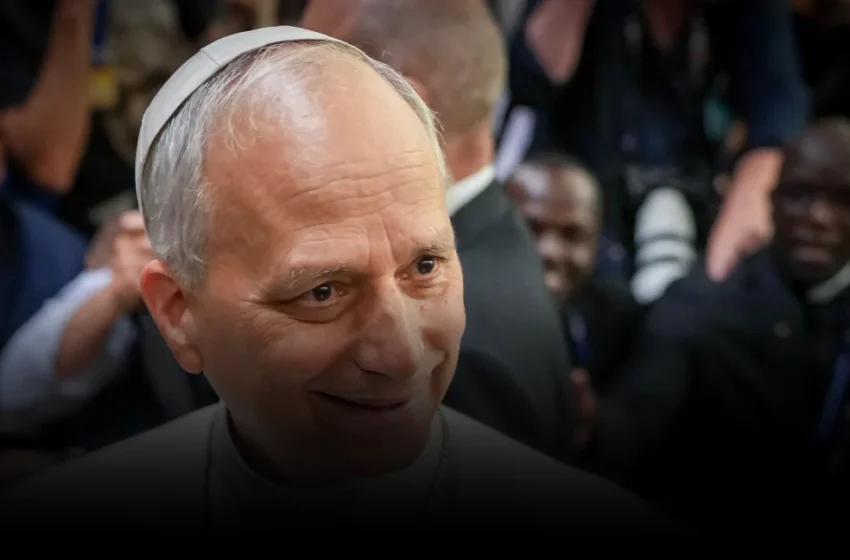
The Vatican Weighs In: A New Moral Frontier for AI
The Vatican has finally spoken, not with thunderous anathemas, but with the quiet wisdom of a grey wizard. Pope Leo’s new 40,000-word encyclical on AI and technology, released yesterday, contains a singular literary quotation: Gandalf from J.R.R. Tolkien’s Return of the King. This isn’t a quirky footnote for academic theologians; it is a direct challenge to the uncritical techno-optimism currently prevalent in Silicon Valley, particularly among those who envision technology as a redemptive force, promising an almost utopian future.
For too long, the discourse surrounding artificial intelligence has been dominated by a narrow set of voices. These are often engineers, venture capitalists, and futurists who prioritize innovation at any cost, sometimes blurring the lines between progress and an almost spiritual quest for transcendence. They speak of the Singularity, of human augmentation, and of machines as potential saviors, or at least architects, of a new world order. The Vatican, a millennia-old institution with a unique perspective on human dignity and the common good, now offers a starkly different framework: one rooted in human agency, ethical boundaries, and the profound limits of human ambition.
This intervention is significant precisely because it doesn’t come from a regulatory body, a tech giant, or a university ethics department. It emerges from a moral authority with a global reach far exceeding any Silicon Valley evangelist. The encyclical signals a formal, comprehensive effort by the Catholic Church to articulate a foundational ethical framework for AI. It moves beyond the usual suspects of algorithmic bias detection and data privacy, delving into deeper questions of technology’s ultimate purpose, its impact on human meaning, and the very nature of human destiny itself. This global perspective is what often escapes US-centric analyses.
Gandalf’s Wisdom: A Counter-Narrative to Technological Determinism
The chosen quote from Gandalf is pointed, even provocative, in its simplicity: “It is not our part to master all the tides of the world, but to do what is in us for the succour of those years wherein we are set, uprooting the evil in the fields that we know, so that those who live after may have clean earth to till.” This isn’t just a literary flourish; it’s a theological and philosophical declaration against the kind of technological determinism that suggests humanity’s destiny is to merge with machines or engineer a post-human future. It directly counters the notion that we are obligated, or even justified, in pursuing every technological possibility simply because it exists, without a deep consideration of its moral and societal ramifications.
Consider the implicit critique aimed at figures like Peter Thiel, who have long advocated for a radical reshaping of human society through technology, often framed in almost apocalyptic terms. Thiel, known for his critiques of progress stagnation and his significant investments in longevity and advanced AI, embodies a certain strand of techno-libertarianism that sees few limits to human — or rather, technologically augmented human — potential. His past statements about extending life indefinitely or escaping Earth via space colonization echo a profound desire to master all tides. The Pope’s choice of Gandalf, a character who embodies guardianship, humility, and the struggle against overwhelming evil on a known battlefield, delivers a powerful message of stewardship over unbridled mastery.
The tension here is palpable: one worldview advocates for humanity to become gods through silicon and code, while the other reminds us of our finite nature and our sacred role as custodians of creation. The implicit accusation, one could argue, is that Silicon Valley’s unfettered accelerationism often mistakes technological capability for moral righteousness, assuming that ‘can’ implies ‘should’. This skeptical observation highlights a profound disconnect between secular innovation and traditional wisdom. The encyclical suggests that true progress isn’t about transcending inherent human limitations, but about cultivating human virtues and justice within those limitations.
Beyond the Hype: The Vatican’s Play for Future Relevance
Why now? Why a 40,000-word document, laden with theological weight and a surprising literary reference, entering the fray of AI ethics? The incentive is clear: the Vatican is asserting its moral authority in one of the most defining technological shifts of our era. As societies grapple with the societal, economic, and existential implications of advanced AI — from job displacement to autonomous weapons to the very definition of consciousness — institutions that can offer a coherent ethical compass will gain significant cultural and spiritual currency. The Church, by staking a firm claim on the moral high ground, positions itself as an indispensable voice in shaping humanity’s relationship with its creations and, crucially, with itself.
This isn’t merely about protecting ancient dogma; it’s about maintaining relevance and influence in a world where tech companies often command more attention than spiritual leaders. By addressing AI through a lens of human dignity, social justice, and environmental stewardship, the Vatican aims to provide a robust counter-narrative to purely economic or efficiency-driven arguments. It’s a sophisticated play for future influence, recognizing that global digital ethics will require a framework that extends beyond corporate boardrooms and government regulations. This is a battle for the soul of the machine, and by extension, for the soul of humanity.
The encyclical, therefore, is more than just another document on AI. It is a calculated move to inject millennia of ethical reflection into a conversation often dominated by short-term gains and speculative futures. The Gandalf quote is not merely a dig at any one individual; it is a profound articulation of a philosophy that fundamentally challenges the secular, unbounded pursuit of technological power. It reminds us that some tides are not ours to master, and perhaps, should not be.
