
The AI Echo Chamber: How Silicon Valley’s Obsession Risks Alienating Users and Talent
- Artificial Intelligence
Arjun Vedanta
- 0
- 5 minutes read
When Corporate AI Visions Clash with User Reality
A curious disconnect is solidifying in the technology sector: while companies zealously restructure around artificial intelligence, often shedding human talent and altering product experiences, a significant segment of users is actively seeking ways to opt out. This isn’t merely a generational gap in tech adoption; it’s a fundamental misalignment of strategic priorities that threatens to undermine long-term market value and trust.
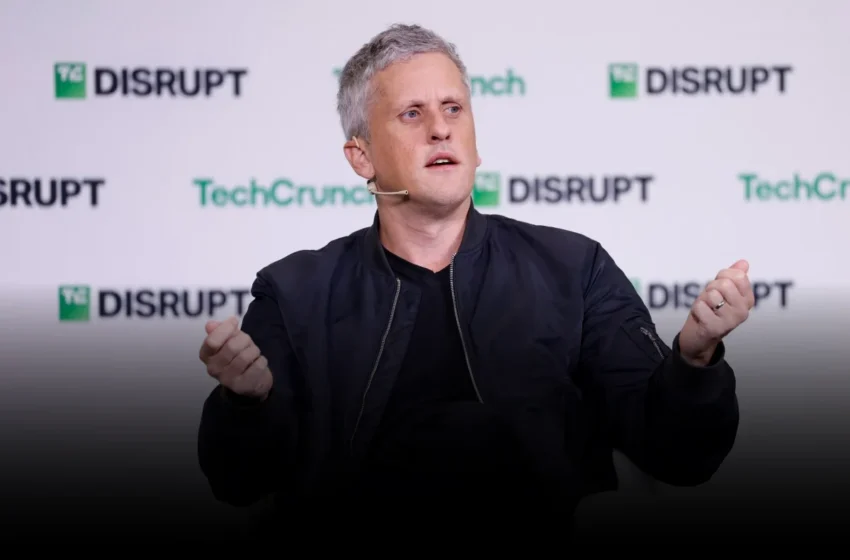
The symptom? Box founder Aaron Levie recently coined it “AI psychosis” – a state where decision-makers, far removed from operational realities, believe AI can universally replace nuanced human tasks. This isn’t just an abstract theory; it’s manifesting in concrete, damaging actions. Consider ClickUp, which cut 22% of its workforce, explicitly citing the deployment of AI agents. Meanwhile, search privacy browser DuckDuckGo reported a 30% surge in installations, driven by users frustrated with Google’s relentless integration of AI into its core search product, preferring straightforward links to algorithmic interpretation.
This scenario illuminates a profound contradiction: the very companies betting their future on AI are simultaneously alienating the human capital and user bases essential for sustainable growth. The incentive here is often a short-sighted pursuit of efficiency metrics and a fear of being left behind in the AI hype cycle, rather than a genuine understanding of how AI truly enhances human capability or user experience. It’s a gold rush mentality, but the ‘gold’ being chased might be fool’s gold if it comes at the expense of loyal customers and experienced employees.
The Cost of AI-Driven Disruption: Talent Drain and Market Erosion
The pace of AI-driven layoffs is accelerating dramatically. Tech layoffs in 2026 are already nearly matching the entirety of 2025, painting a stark picture of an industry in self-disruption. While proponents argue that AI simply shifts roles, the immediate impact is a significant displacement of skilled workers. This isn’t just a humanitarian concern; it’s an economic one. Each departure represents a loss of institutional knowledge, a weakening of company culture, and a potential boon for competitors who prioritize human-AI collaboration over wholesale replacement.
The most skeptical observation here is that many of these AI-driven efficiency gains are still largely theoretical, or at best, marginal improvements masked by significant human cost. Companies like Snowflake or AWS, which are building the underlying infrastructure for AI, might see direct benefits, but for those adopting AI purely for internal cost-cutting, the calculation is far riskier. The talent being shed isn’t necessarily obsolete; it’s often expertise in user experience, content creation, or customer support — areas where AI, for all its advances, still struggles with context, empathy, and originality.
The immediate savings from reducing headcount might look good on a quarterly report, but the long-term impact on product quality, customer satisfaction, and a company’s ability to innovate beyond the current AI frontier is deeply concerning. When Waymo’s robotaxis hit the road, the engineering challenge is immense, but the human element of public trust and regulatory navigation remains paramount. This is a subtle yet critical distinction often lost in the fervor to implement AI agents across the board, from product development to customer service.
Rebuilding Trust in the Age of Algorithmic Overreach
The user backlash against AI-infused products, particularly in search, suggests a deeper desire for agency and control. Users aren’t inherently anti-AI; they are anti-forced AI, anti-suboptimal AI, and anti-AI that disrupts established workflows without clear benefits. Google, with its vast data and market dominance, has the luxury to experiment, but the climbing installs for DuckDuckGo indicate a genuine market demand for alternatives that respect user preferences.
The fundamental structural implication is that companies are creating a new form of digital divide: one between those who embrace AI-first interfaces and those who seek simpler, human-centric interactions. This isn’t sustainable for companies aiming for broad market penetration. Firms like Anthropic, developing advanced models like Opus 4.8 with dynamic workflow tools, face the challenge of making these powerful tools genuinely useful and intuitive, rather than just technically impressive.
Ultimately, the industry must recalibrate. The path forward involves integrating AI as an augmentative force, one that empowers human talent and enhances user choice, rather than replacing one with the other. Failure to do so risks not just operational inefficiency, but a wholesale erosion of the trust that underpins successful technology companies. Ignoring the quiet exodus of both talent and users is a luxury no major player can afford, regardless of how ‘AI-pilled’ their C-suite may be.
