
Ring’s Facial Recognition Lawsuit Exposes America’s Growing Biometric Blind Spot
- AI Tools
Arjun Vedanta
- 0
- 6 minutes read
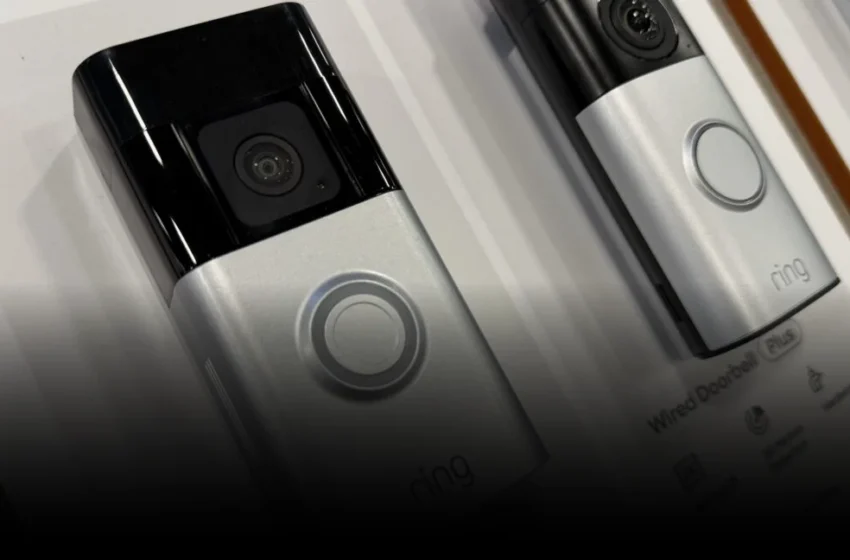
The Unseen Biometric Network: When Private Cameras Go Public
The legal battle brewing around Amazon’s Ring and its "Familiar Faces" feature is not just another class-action claim for damages; it’s a stark reminder that the frontier of digital privacy is no longer just on our phones or in our browsers. It’s on our doorsteps, in our neighborhoods, and increasingly, etched into our faces without explicit consent. Plaintiff Charles Sigwalt’s lawsuit against Ring seeks to represent millions of Americans, arguing that their biometric data has been collected and retained, setting up a fight for "far more than $5 million" in damages. This isn’t merely about recompense; it’s about drawing a line in the sand against the casual, widespread deployment of surveillance technology that outpaces any meaningful public discourse or legal framework, particularly in the US.
Ring, and by extension Amazon, isn’t developing ‘Familiar Faces’ out of altruism; the incentive is clear: enhance product stickiness, integrate deeper into the smart home ecosystem, and potentially — albeit less overtly — amass a valuable, granular dataset of physical movement and identity across residential areas. This move underscores a growing divergence between the sophisticated capabilities of consumer-grade surveillance technology and the fragmented, lagging legal frameworks designed to protect biometric privacy. The result? Private citizens are left to bear the exorbitant legal burden of challenging widespread data capture.
A Ring camera, ostensibly a tool for home security, becomes a node in a vast, privately owned surveillance network, capable of recognizing and logging individuals who simply walk past. The "Familiar Faces" feature, rolled out late last year, essentially turns every enabled camera into a de facto public biometric scanner. While owners may opt-in, the millions of non-owners whose data is captured have no such agency. This creates an invisible layer of surveillance capitalism, harvesting data from public and semi-public spaces, with a reach that rivals — and often exceeds — that of municipal CCTV networks in many global cities. The real kicker? While Ring users might pay for security, the implicit cost for everyone else is an eroding expectation of privacy, underwritten by the legal system only when private citizens are willing to foot the bill for litigation.
America’s Patchwork Privacy Problem
The United States stands out globally for its piecemeal approach to data privacy, especially concerning biometric information. Unlike the General Data Protection Regulation (GDPR) in Europe or even national laws in countries like India, which explicitly classify biometric data as a special category requiring heightened protection and explicit consent, the US operates under a patchwork of state-level statutes. Illinois’s Biometric Information Privacy Act (BIPA) is a notable exception, offering robust protections that have led to significant class-action settlements against tech giants for unauthorized data collection. Texas and Washington also have relevant laws, but their scope and enforcement mechanisms vary wildly.
This fragmented legal landscape creates a fertile ground for companies like Ring to experiment with advanced surveillance features. They can launch products nationally, knowing that legal challenges will likely be confined to specific jurisdictions, thereby reducing the immediate financial and regulatory pressure. The current lawsuit, seeking "far more than $5,000,000.00" in damages, points to the potential scale of liability when a state like Illinois’s BIPA—or a similar federal standard—is applied broadly. Yet, without a unified federal law, the burden of proving harm and securing remedies falls to individual plaintiffs and their legal teams, effectively making private citizens the accidental enforcers of privacy rights.
This isn’t an academic debate; it has tangible implications. Consider the implications for vulnerable communities, or the potential for this data to be aggregated, shared with law enforcement without warrants, or even sold. The lack of a clear, nationwide standard means that a Californian’s face might be scanned differently than a New Yorker’s, not based on their personal choice, but on the regulatory lottery of their geography. It’s a structural flaw that allows technology to leap years ahead of public protection, leaving a widening gap that only reactive lawsuits, like Sigwalt’s, can attempt to bridge.
The Global Glare: Why the US Lags on Biometric Rights
Compare the US situation to Singapore, where regulators have taken a proactive stance on smart city initiatives, or to the EU, where the GDPR’s broad definitions of personal data — including biometrics — require explicit, informed consent for processing. These regions often frame data collection within a broader societal contract, emphasizing transparency and individual control. In contrast, the US approach often presumes data collection is permissible until proven otherwise, a stance heavily influenced by a commercial-first view of information.
The current legal challenge against Ring isn’t just a local issue for Amazon; it’s a global signal. International consumers and regulators are increasingly scrutinizing how US tech firms handle sensitive personal data, especially when these firms operate across borders. The regulatory arbitrage that companies might leverage in the US due to weaker federal laws becomes a liability in more stringent jurisdictions. This particular lawsuit therefore serves as a critical test case, potentially influencing future product development and deployment strategies for any company operating in the smart home ecosystems and AI tools space.
Ultimately, the Ring lawsuit forces an uncomfortable question: how much passive biometric surveillance are we willing to accept in our communities before we demand a comprehensive, federal framework for biometric data protection? This class action is not just about a specific feature or a single company; it’s about the fundamental right to anonymity in public spaces, a right that technology is eroding one camera feed at a time. Until policymakers address this systemic imbalance, the fight for digital privacy will continue to be fought, expensively and reactively, by those with the fortitude to challenge the tech giants in court.
