
MAVEN’s Silent End Exposes Deep Space’s Unseen Frailty
- Artificial Intelligence
Arjun Vedanta
- 0
- 4 minutes read
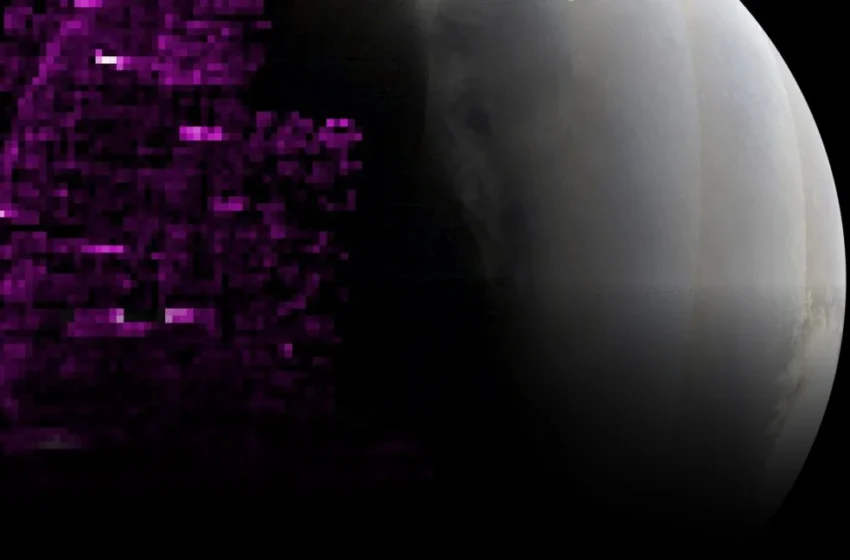
An Unceremonious Exit from 200 Million Miles Away
Two hundred million miles away, a workhorse went silent. On December 6, a NASA spacecraft named MAVEN, tasked with studying the Martian atmosphere, performed a routine orbital maneuver, an occultation behind the red planet. It was expected to re-emerge in less than an hour, but it never did.
Ground teams listened intently for signals, sent commands into the void, and engaged their contingency plans. Despite its 11 years of diligent service and being in “excellent shape” prior to its disappearance, NASA officials announced this week they are ceasing efforts to re-establish contact. MAVEN is now officially a decommissioned mission, its final whisper lost in the vastness.
This isn’t merely the end of another space probe. The quiet, almost casual announcement of MAVEN’s demise, particularly given its prior health, should be a stark reminder of the profound and often unacknowledged fragility inherent in even our most successful deep-space endeavors.
The Unseen Vulnerabilities of Martian Infrastructure
For over a decade, MAVEN was a crucial sentinel in Mars orbit. Its primary scientific mission focused on understanding how Mars lost its atmosphere, providing critical data for atmospheric science and climate models. Beyond that, MAVEN, like several other international orbiters, served as a vital communications relay for rovers like Perseverance and Curiosity on the surface, forming part of an embryonic but increasingly crucial Martian infrastructure.
It is easy to laud the longevity of missions, with records stretching into decades for some interplanetary missions. But the swiftness with which a ‘healthy’ spacecraft can vanish into the orbital void should give pause to anyone projecting seamless, networked operations for future human outposts.
The loss of telemetry, swift and complete, highlights an uncomfortable truth: despite advanced engineering and redundant systems, deep space operations are still fundamentally prone to single points of failure. This fragility is often overshadowed by the relentless optimism surrounding multi-asset strategies and the dream of self-sustaining Martian settlements.
The Incentive of a Controlled Narrative
NASA’s matter-of-fact tone regarding MAVEN’s decommissioning is understandable. An organization with ambitious future plans, including sample return missions and eventually human expeditions to Mars, has a clear incentive to manage public perception. Drawing significant attention to the unexpected, unrecoverable loss of a long-serving asset, even one beyond its primary mission, doesn’t bolster confidence.
The narrative instead defaults to celebrating longevity and success, minimizing the suddenness of the end. This framing allows focus to remain on the grand challenges ahead, rather than the intrinsic vulnerabilities that persist in orbital mechanics and deep-space hardware. After all, securing funding and political will for billion-dollar initiatives like the Mars Sample Return campaign depends on a perception of reliability, not unexpected vanishing acts.
The silence around MAVEN’s abrupt exit also serves to avoid uncomfortable questions about systemic risk. What if a similar, sudden event affected a more critical relay satellite, or a future component of a crewed mission’s support system? The sophisticated Deep Space Network can only do so much when a spacecraft simply stops communicating.
This isn’t to diminish the incredible accomplishments of the MAVEN mission or the engineers who sustained it for 11 years. Its contributions to our understanding of Mars are undeniable. However, we must critically examine the implications of such losses as we push towards increasingly complex interplanetary missions.
MAVEN’s silent departure is more than just a footnote in the history of Mars exploration. It is a potent, if understated, reminder that even robust technology operating for a decade can be extinguished without warning. As humanity dreams of building complex ecosystems on Mars, acknowledging and openly confronting this deep-space vulnerability is not just prudent—it is essential for genuine progress beyond Earth.
