
Ötzi’s Living Legacy: How Active Microbes Redefine Biological Preservation
- Tech
Arjun Vedanta
- 0
- 5 minutes read
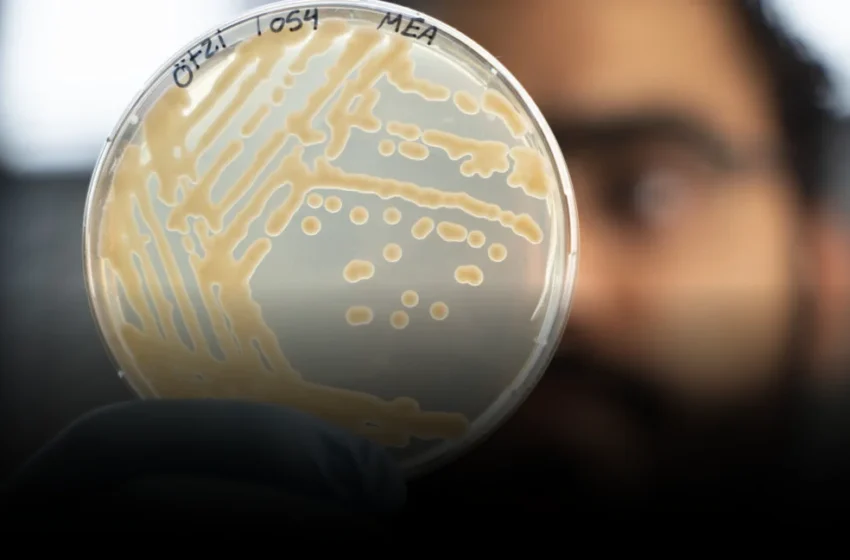
Unexpected Biology: The Living Legacy of Ötzi
Five millennia after his demise, Ötzi the Iceman’s remains continue a quiet, persistent biological narrative, defying the simplistic expectations of decay. This isn’t merely a morbid curiosity from the South Tyrol Museum of Archaeology; it’s a profound, unfolding challenge to our understanding of biological stasis, echoing far beyond ancient Alps and into the sterile labs pursuing the holy grail of cryopreservation. While the mainstream tech press often fixates on engineered solutions for longevity, Ötzi provides a chilling, organic counterpoint: nature’s accidental experiments might hold deeper insights into extreme biological resilience.
Microbiologist Mohamed S. Sarhan and his team at the Eurac Research center have meticulously sampled Ötzi’s well-preserved form, not just for archaeological insight, but for something far more contemporary. Their findings confirm that cold-adapted yeast species, likely present since shortly after his Copper Age death, are still eking out a living within his tissues. This isn’t passive fossilization; it’s a testament to sustained, albeit minimal, biological activity over 5,300 years. The implications for cellular longevity, microbial ecology, and even the very definition of ‘death’ for complex biological systems are staggering.
For years, scientists have focused on the initial discovery of Ötzi in 1991, his last meal, and his DNA. But the narrative has subtly shifted. The current research spotlights his remains not as a static historical artifact, but as a dynamic, low-power bioreactor. It forces us to reconsider the mechanisms of natural preservation and whether our high-tech interventions are overlooking fundamental principles perfected by millennia of evolutionary trial and error.
Cryopreservation’s Unseen Architect: Nature’s Blueprint
The pursuit of long-term biological preservation, or biostasis, typically revolves around sophisticated, energy-intensive methods. Companies pour millions into cryopreservation techniques for human bodies, organs, or even just genetic material, employing complex vitrification protocols and liquid nitrogen storage. Yet, even with these advancements, the practical application remains fraught with challenges, particularly in avoiding ice crystal formation and ensuring post-thaw viability for complex structures like organs.
Ötzi offers a different model entirely. His preservation wasn’t a product of controlled laboratory conditions or rapid freezing. It was a gradual, alpine process, a testament to the power of slow dehydration and consistent cold. The active microbial life within him suggests that complete biological inertness might not be a prerequisite for extreme longevity. Instead, a finely balanced, low-metabolic state, sustained by extremophiles adapted to icy conditions, could be nature’s answer. This naturally occurring phenomenon suggests that rather than brute-force freezing, perhaps nudging biological systems into a state of deep, self-sustaining torpor—a genuine, stable biostasis—is the more promising avenue.
The incentive for researchers like Sarhan extends beyond mere archaeological curiosity; it’s about unraveling the fundamental mechanisms of resilience, a quest with profound implications for everything from biodefense to interstellar travel, securing a unique position in global scientific discourse. This pursuit is a quiet, steady countercurrent to the splashy announcements of AI breakthroughs and quantum computing, reminding us that fundamental biological understanding remains critical, even in an era of digital dominance.
Data from the Deep Past: Re-evaluating Biological Longevity
What Ötzi represents is an unparalleled, five-thousand-year-old biological data stream. Every active yeast cell, every surviving microbe, offers a living sample of a system that has fundamentally defied conventional degradation timelines. This isn’t merely about finding ancient life; it’s about observing how life persists under conditions we previously considered terminal. The insights gained from studying these hardy organisms could inform new approaches to material science, drug discovery, and even astrobiology, by understanding how life adapts to and exploits harsh, stable environments.
While Silicon Valley often champions the idea of ‘data as the new oil,’ the data Ötzi provides is far more complex and fundamentally biological, offering a direct observation of living systems pushing the boundaries of what is considered possible. This is not anecdotal evidence but measurable, ongoing biological activity, a living fossil that continues to evolve on its own terms. Yet, amidst the wonder, a pragmatic question hangs heavy: for all the awe Ötzi inspires, can the accidental, chaotic biostasis of a Copper Age cadaver truly offer a scalable blueprint for controlled, long-term human or organ preservation, or does it merely highlight how far engineered solutions still have to go?
Ultimately, Ötzi the Iceman stands as a stark reminder that the most profound technological lessons sometimes come not from the latest venture-backed startup, but from the quiet, enduring wisdom of the natural world. His body, lying in a high-tech resting place, isn’t just a relic. It’s an active, living laboratory, silently instructing us on the deepest secrets of endurance, challenging our assumptions about decay, and offering a unique roadmap for future biotechnological strategies for those willing to look beyond the immediate headlines.
