
Google Home Speaker’s Delayed Debut Exposes Smart Home Strategy Vacuum
- Hardware
Arjun Vedanta
- 0
- 4 minutes read
The Echo of Strategic Drift
Ten months is an eternity in consumer electronics, especially for a product line Google once championed as the vanguard of ambient computing. The Google Home Speaker, finally available for preorder at $100 after its initial announcement last August, lands on shelves June 25 not as a triumphant return, but as a muted echo of a strategic vision that seems increasingly muddled. This isn’t merely a protracted product development cycle; it’s a symptom of a deeper aimlessness within Google’s smart home hardware division, suggesting the company is now prioritizing ecosystem stickiness over true product innovation in a market it helped define.
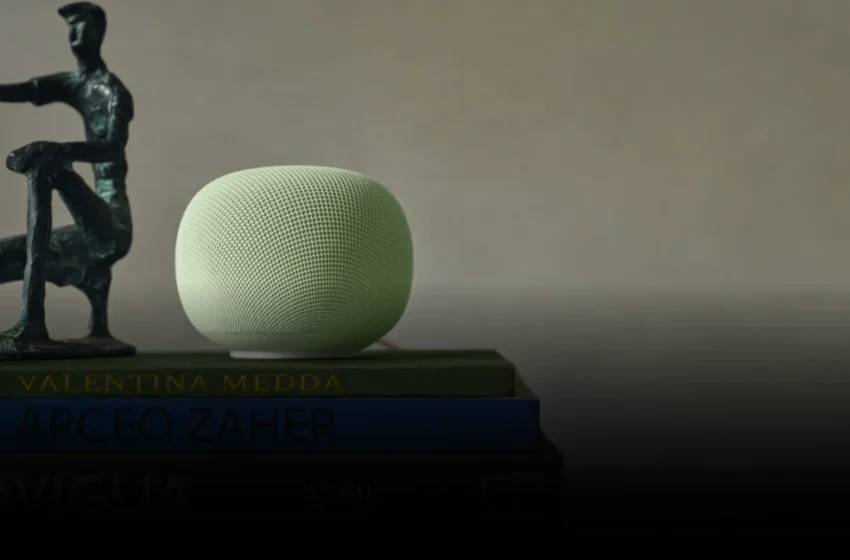
The device itself, a small, round, fabric-covered oblate spheroid, feels like an obligation rather than an aspiration. Its primary selling points – “360-degree sound” and a glowing light ring – are iterative, not disruptive. Google, which once pushed the boundaries with conversational AI through the Assistant, now offers a product that barely distinguishes itself from a crowded field of smart speakers, many of which have existed for years. The last new home audio device, the Nest Audio, debuted back in September 2020, making this new speaker’s six-year gap feel like a pause, not a strategic recalibration.
Hardware as a Service Funnel
For a company that once sought to put a digital brain in every room, the Google Home Speaker’s lack of genuine innovation is striking. The market has matured, driven by Amazon’s relentless Echo device proliferation and the creeping ubiquity of voice assistants embedded in everything from refrigerators to thermostats. Google’s delayed entry with an undifferentiated product suggests a realization that the smart speaker is no longer a growth engine in itself. Instead, it’s a portal. The imperative now is to maintain a presence, to ensure a Google Assistant endpoint remains readily available, funneling users into its search, music, and advertising services.
This is where the incentive lies: not in selling groundbreaking hardware, but in securing a beachhead for data collection and ecosystem lock-in. The four color options – hazel, porcelain, jade, and berry – and partially recycled fabric are aesthetic nods to environmental consciousness and interior design, but they don’t solve for a diminishing unique value proposition. The three far-field microphones and a physical mute switch are table stakes, not innovations. The article’s observation that Google will require a similar glowing lightbar embellishment on upcoming Googlebook laptops is telling; it points to a superficial branding exercise across product lines rather than a deep commitment to function or user experience.
Ambient Computing’s Muted Promise
The original promise of ambient computing, where technology seamlessly recedes into the background while intuitively serving our needs, feels largely unfulfilled by this offering. Instead, Google appears content to compete on parity, relying on its brand recognition and the broader Android ecosystem to move units. This strategy stands in stark contrast to earlier efforts, such as the original Google Home, which genuinely pushed the envelope for what a voice assistant could do in the home. Now, the conversation is about recycled materials and light rings, not new AI capabilities or truly intelligent home automation.
Perhaps the most skeptical observation here is that Google, a company with unparalleled AI research capabilities, is seemingly treating its smart home hardware as a necessary but uninspired adjunct. It’s an admission that the smart speaker market has largely commoditized, reducing its role to that of a utility rather than a focal point of innovation. The real story isn’t the speaker itself, but the signal it sends: Google is increasingly content to let others define the bleeding edge of consumer AI hardware, while it quietly works to ensure its services remain the default. This isn’t a retreat, but a strategic repositioning – a tacit acknowledgment that the battle for the smart home is no longer won by individual devices, but by the gravitational pull of the underlying platform.
