
Ambani’s AI Gambit: India’s National Stack, Global Dependencies
- Artificial Intelligence
Arjun Vedanta
- 0
- 4 minutes read
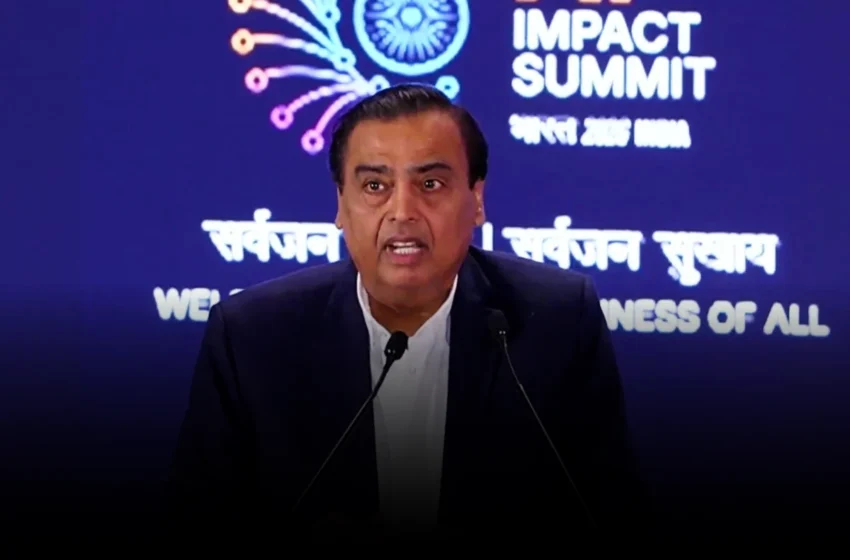
India’s AI Nationalism: A Stack Built on Foreign Foundations?
Mukesh Ambani, India’s most influential industrialist, is placing an astonishing $110 billion bet on artificial intelligence, aiming to infuse every call, every app, and every home with Jio-branded AI services. The recent shareholder meeting announcements, from the network-embedded Jio Call Agent to the ambient TeleFrame home display, paint a vivid picture of a vertically integrated digital future where Reliance is the undisputed gatekeeper.
This aggressive push, championed by Ambani’s declaration that “India should not be a mere consumer of AI created elsewhere,” is explicitly framed as a nationalistic imperative. It’s a compelling narrative of self-sufficiency, positioned against a backdrop of perceived vulnerabilities like the recent restrictions on Anthropic models that highlighted India’s deep reliance on foreign cloud and AI providers.
Yet, a closer look reveals a far more complex reality beneath the patriotic rhetoric. Reliance’s vision for an independent Indian AI future is, paradoxically, being built with significant foundational support from the very global tech giants it seeks to displace or, at least, diminish in influence.
The Silicon Valley Paradox: Partnerships vs. Sovereignty
The contradiction stands starkly: how can a nation become a “creator” and “global leader in AI” when its champion conglomerate is ramping up AI ambitions through crucial partnerships with Google, Meta, and Nvidia? These aren’t merely handshake deals; they are deep collaborations, including a joint venture with Meta to establish an AI data center in Gujarat, the very infrastructure that underpins a truly sovereign AI ecosystem. This isn’t building our own; it’s inviting someone else to help build it, often on their terms.
Silicon Valley reporters often miss the nuances of these geopolitical tech plays, focusing on the innovation story rather than the underlying power dynamics. While Reliance presents its AI services—from JioHealthIQ to AI Vyapar—as tailored for local needs and operating across 22 Indian languages, the foundational models and the core processing power frequently originate from non-Indian entities. This creates an undeniable dependency. One has to question whether this model truly mitigates supply-chain risk or merely shifts it from renting models to co-owning infrastructure with global players whose own national interests might diverge from India’s.
The integration of AI directly into Jio’s vast telecom network, with over 500 million users, offers an unparalleled distribution advantage. It makes AI assistance a native feature of phone calls and apps, bypassing standalone solutions. However, this tight integration also amplifies questions around data sovereignty and privacy, particularly as the company remained cagey on whether user data generated from these pervasive services could be used to train AI models or shared with these very technology partners.
The IPO Incentive: National Pride Meets Market Pressure
The timing of Ambani’s grandiose AI vision is not accidental. Jio Platforms’ board has just approved a draft prospectus for its long-awaited initial public offering, a monumental event that demands an equally monumental growth story. With Reliance’s conglomerate shares down 17% this year, AI provides the indispensable narrative for investor excitement and valuation uplift. The immediate incentive for this ambitious framing is less about a sudden breakthrough in AI and more about securing a compelling future for its market debut.
While other Indian behemoths like Tata Consultancy Services, Infosys, and Adani Group are also expanding their AI initiatives, their approaches appear to be more openly collaborative, acknowledging the global nature of advanced AI development. Reliance, however, maintains the public posture of building an indigenous “national stack” while simultaneously forging essential alliances that tether it to the global players.
This creates a fascinating, if precarious, balance. India’s aspiration to move beyond being a mere consumer of AI is laudable, but the path Ambani is charting for Reliance is less about isolated innovation and more about deep, intricate integration into a global digital ecosystem. The long-term implications for genuine technological sovereignty, and indeed for competition, in a world where foundational AI models and compute infrastructure remain largely concentrated in a few powerful hands, are far from settled. The dream of a purely Indian AI future, as presented, might be more strategic marketing than technological reality.
