
Ebola’s Economic Paradox: How a Neglected Strain Exposes Global Health’s Flawed Calculus
- Artificial Intelligence
Arjun Vedanta
- 0
- 4 minutes read
The Price of Predictability
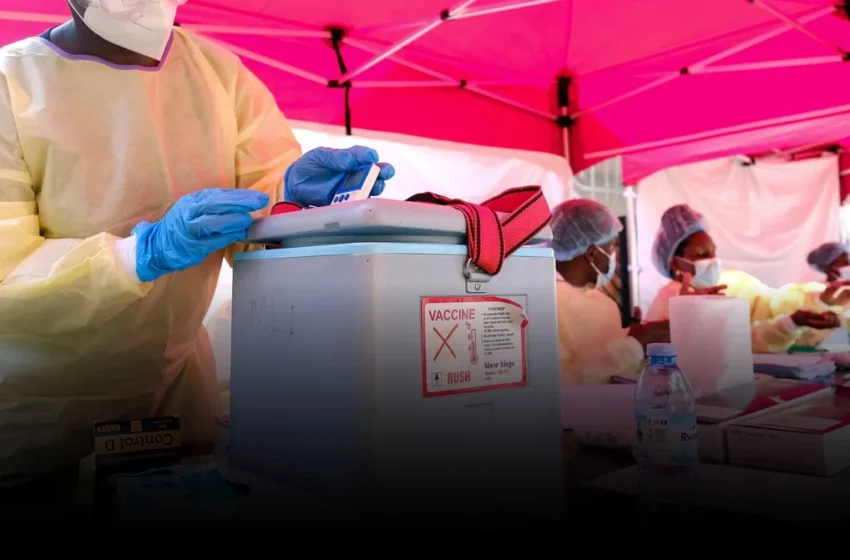
Hundreds are infected, nearly 200 dead in the current Bundibugyo Ebola outbreak tearing through the Democratic Republic of Congo and Uganda. This is not breaking news to virologist Thomas Geisbert; he effectively solved this problem in 2011. His rVSV Bundibugyo vaccine, proven effective in crab-eating macaques, has languished on a shelf for over a decade, a testament to a global health system that prioritizes reactive commercial opportunity over proactive, non-lucrative preparedness.
The fundamental contradiction is stark: we know specific Ebola strains will “pop up again,” as Geisbert himself notes, yet our response mechanism is designed primarily for a crisis of scale and commercial appeal, not the predictable, smaller-footprint threats that consistently evade the market’s attention. This isn’t just about the current Bundibugyo outbreak; it’s a structural failure that extends across numerous neglected tropical diseases and emerging pathogens. When a vaccine for a known threat sits for 15 years, it’s not a market failure; it’s a political choice disguised as one.
The Silicon Valley Blind Spot in Global Health
From the vantage point of Silicon Valley, a problem without a clear, scalable business model is often deemed a non-problem, or at best, one for philanthropy. This myopia, however, proves catastrophic when applied to global public health. Geisbert’s early 2000s work, initially funded by the US Army post-9/11 for bioweapon defense, yielded a breakthrough in 2003, showing a single injection could protect monkeys from Ebola. Yet, commercial interest was nil. “There just wasn’t a global market for an ebola vaccine,” he stated. “It’s not a moneymaker, nobody really wanted to pick it up.”
Merck’s Ervebo vaccine, effective against the more common Zaire strain, only gained critical mass during the devastating 2013-2016 West African epidemic, which infected 28,600 and killed 11,300. This was a crisis so immense it forced a market. The less lethal Bundibugyo strain, responsible for only three prior outbreaks, including a 2012 event that killed 30, was simply not commercially attractive. Courtney Woolsey, a co-author on Geisbert’s later work, bluntly confirms, “Nobody really makes money off these vaccines, so there are funding barriers as well to advance these vaccines where people likely aren’t going to make money.” This incentive structure ensures that innovation in vital areas remains captive to market dynamics rather than public need.
Predictable Outbreaks, Delayed Responses
The Coalition for Epidemic Preparedness Innovations (CEPI) has finally offered $3.2 million to prepare Geisbert’s vaccine for manufacturing and human trials – a paltry sum given the decade of inaction. Rachael Bonawitz of CEPI optimistically notes that existing safety data from other rVSV-based vaccines could “expedite approval pathways.” This is an important detail, but it doesn’t change the fact that this preparatory work could have been done years ago.
This current scramble, with the World Health Organization now identifying Geisbert’s candidate as the most promising, highlights a persistent gap. Moderna and Oxford have candidates in development, but Geisbert’s rVSV-based solution has preclinical data backing its suitability for ring vaccination, a crucial strategy where contacts of the infected are vaccinated. While a 2023 study showed promise even for post-exposure vaccination in monkeys, that work still has not translated into human trials.
The current Bundibugyo strain is believed to be 98-percent similar to previous outbreaks, but without a live sample for testing, that 2 percent remains a critical unknown. Geisbert, having handed off the “baton” to the International AIDS Vaccine Initiative, can only “sit back and hope that it works.” The cynical take here is that this current outbreak, now rivaling the Zaire epidemic in scale, has finally created enough urgency to merit funding that should have been allocated to a preventative measure a decade prior. This is not a failure of science; it is a profound failure of public funding and global governance, where the world waits for crisis to become catastrophe before acting on solutions already at hand.
