
The Silent Shuttle: Endeavor’s Display and the Commercial Space Era
- Tech
Arjun Vedanta
- 0
- 5 minutes read
A Monument to a Fading Model
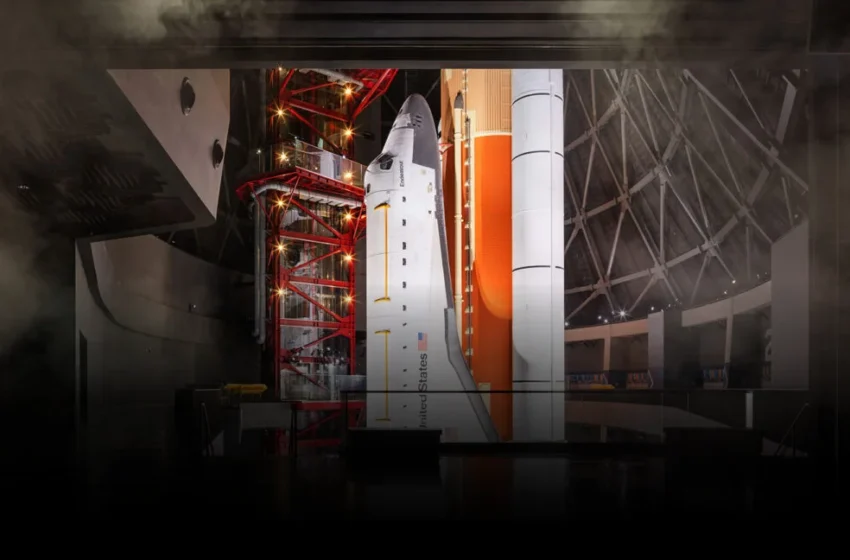
The unveiling of the space shuttle Endeavor’s permanent, upright display at the California Science Center in Los Angeles on Friday, November 13, is a moment for reflective celebration. Yet, this meticulous recreation of a launch-pad scene, intended to inspire awe, serves a deeper, perhaps unintended purpose. It stands as a magnificent, silent monument to an era of state-sponsored space exploration that has definitively closed, precisely as an entirely different, commercially-driven future for humanity beyond Earth begins to launch.
For many, the Space Shuttle program, with its reusable orbiters and high-profile missions, epitomized national ambition and technological prowess. NASA’s Endeavor, a veteran of 25 missions, ferried astronauts, satellites, and components for the International Space Station, representing the zenith of a government-funded, public-facing approach to space. This exhibit captures that faded glory, inviting visitors to gaze upon a relic.
However, the real story here is not merely the reverence for past achievements, but the stark contrast between this commemorative act and the frantic pace of the current aerospace landscape. While crowds gather to admire a shuttle that last flew over a decade ago, companies like SpaceX, Blue Origin, and Rocket Lab are not just developing new launch vehicles; they are fundamentally reshaping the economic and operational paradigms of space access. This isn’t just an evolution; it’s a categorical shift in who goes to space, why, and crucially, who pays for it.
The Shifting Gravitational Pull of Capital
Silicon Valley reporters often fixate on the latest rocket launches or funding rounds, missing the profound structural implication of this pivot from public utility to private enterprise. The Space Shuttle was a taxpayer-funded marvel, a symbol of national pride and scientific endeavor. Its successor in public engagement is now arguably the Starship program, driven by venture capital and the pursuit of commercial viability, from satellite deployment to lunar tourism.
This shift isn’t benign; it redefines the incentives. Why is this grand display happening now, and who benefits from this framing of space exploration as primarily a historical achievement? The spectacle of Endeavor reinforces a nostalgic narrative, perhaps inadvertently distracting from the uncomfortable truth that national governments, particularly the US, are increasingly relying on private entities for core space capabilities. It’s an implicit hand-off, masked by public reverence for what was.
The economic models are poles apart. The Space Shuttle was an engineering marvel, but notoriously expensive, with estimated costs per launch often exceeding USD 1.5 billion in inflation-adjusted figures. Today’s commercial players boast cost efficiencies orders of magnitude lower, driven by reusability and mass production. SpaceX’s Falcon 9, for instance, offers launches at a fraction of that cost, enabling a satellite internet constellation like Starlink and even the potential for point-to-point terrestrial travel. The contrast highlights a fundamental re-evaluation of how much a nation is willing to invest in direct, public-sector space operations.
Global Implications of a Commercialized Cosmos
The veneration of Endeavor’s physical presence at the California Science Center represents the ultimate static endpoint of a dynamic, national space program. Yet, outside of this curated experience, the actual ‘space race’ is now a multi-polar competition among private entities and increasingly, diverse national space agencies beyond the traditional US-Russia duopoly. From India’s ISRO to Europe’s ESA and China’s CNSA, sovereign space efforts continue, but the private sector’s burgeoning role in critical infrastructure, logistics, and even exploration changes the geopolitical calculus.
What an American journalist might miss is the global resonance of this transition. For nations that historically viewed space access as a luxury of superpowers, the rise of cheaper, commercial launch services from companies like Rocket Lab, which spun out of New Zealand, offers unprecedented opportunities for independent satellite deployment. This democratization of access, driven by private capital and fierce competition in aerospace engineering, subtly erodes the long-standing technological advantages of a few dominant spacefaring nations.
My most skeptical observation is this: while Endeavor’s display is undeniably majestic, it ultimately functions as a powerful, emotionally charged museum piece, celebrating a past where national identity was inextricably linked to monumental, state-driven technological feats. It stands as a poignant contrast to a future where orbital mechanics and deep space exploration are increasingly dictated by balance sheets, quarterly earnings, and the audacious visions of private founders, whose missions may or may not align with broader public interests. The future of space is not being displayed in Los Angeles; it is being negotiated in corporate boardrooms and launched from private pads, fundamentally altering humanity’s relationship with the cosmos.
