
Apple’s Hardware Talent Shift: Why OpenAI’s Gain Reveals a Deeper Industry Reshuffle
- Artificial Intelligence
Arjun Vedanta
- 0
- 6 minutes read
The New Gravity Well for Hardware Leadership
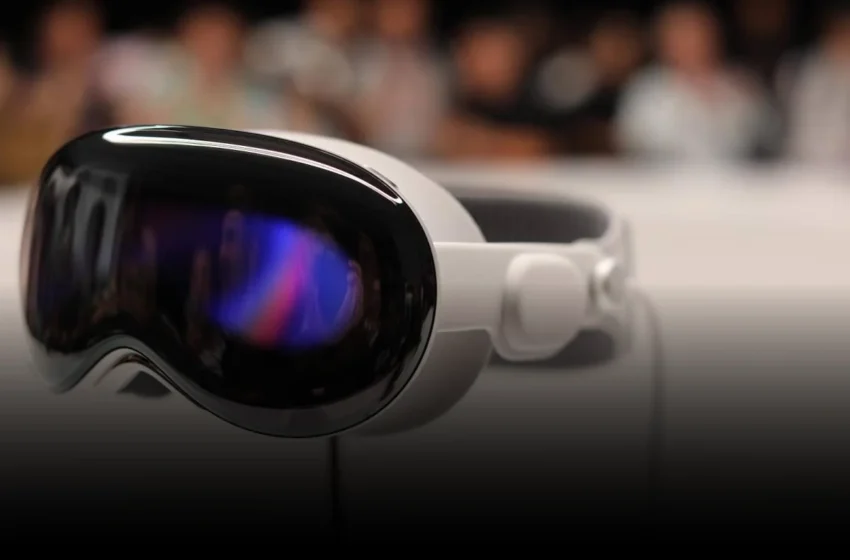
Paul Meade’s reported departure from Apple, where he served as vice president for the Vision Pro headset, to join OpenAI’s nascent hardware division is more than a mere executive shuffle. This isn’t just about a senior leader jumping ship; it’s a stark illustration of a fundamental shift in where the tech industry perceives the cutting edge of hardware innovation to be. For a veteran like Meade, who also reportedly spearheaded Apple’s upcoming AI-powered smart glasses, choosing OpenAI over the most hardware-competent company on Earth signals a recalibration of talent priorities: the future of competitive hardware is now inextricably linked to proprietary AI integration, not solely industrial design or an established ecosystem.
The move comes amidst a confluence of internal Apple dynamics, according to Bloomberg’s Mark Gurman. John Ternus’s rumored ascension to Apple CEO and his subsequent shake-up of the hardware engineering team reportedly left some vice presidents, Meade among them, feeling demoted. While Silicon Valley narratives often default to internal politics or product success — and the costly Vision Pro was admittedly not a hit — this framing misses the larger strategic pull. Why would a seasoned hardware executive, whose entire career has been built on bringing physical products to life within a meticulously engineered company, opt for a startup primarily known for large language models and struggling to get its own hardware device off the ground?
It’s a question of where the raw power lies. For decades, Apple set the standard for blending hardware, software, and services into a cohesive, consumer-ready package. Their ability to deliver on this promise has been unparalleled. But what happens when the core differentiation shifts from industrial design and user experience polish to the foundational intelligence embedded within the device itself? This isn’t just about adding AI features; it’s about AI becoming the *reason* for the hardware to exist.
The AI Hardware Conundrum: Beyond Jony Ive’s Vision
OpenAI has been publicly grappling with its hardware ambitions for some time, engaging even with Apple’s former chief design officer, Jony Ive, on an “AI device” that CEO Sam Altman claimed would be more “peaceful and calm” than an iPhone. Reports from last fall suggested this collaboration was struggling with details, highlighting the immense challenge of building a new hardware category from scratch, especially for a software-native company. Bringing in someone of Meade’s caliber is not a typical hire for a company seeking to simply outsource manufacturing or refine aesthetics. It suggests OpenAI is serious about embedding deep hardware expertise into its core strategy.
The incentive here is clear: control. Companies like OpenAI, Google, and Meta recognize that to fully realize their AI visions, they cannot rely solely on third-party hardware. The performance, efficiency, and unique capabilities of their large language models demand bespoke silicon and integrated physical interfaces. Google has shown this with its Pixel line and Tensor chips; Apple does it with its A-series and M-series silicon. OpenAI, though late to this specific hardware game, now faces the same strategic imperative. Securing talent like Meade is about building that vertical integration capability, securing a competitive moat that goes beyond algorithms.
Apple, meanwhile, is betting on more affordable smart glasses to compete with wearable devices from Meta. This strategy reflects a broader market trend towards more accessible, ubiquitous form factors. However, the *sharpest observation* here is that while Apple continues to perfect iterative hardware design and build out its ecosystem, companies like OpenAI are implicitly challenging the very premise of what makes a successful consumer electronics device. They are not merely adding AI to existing paradigms; they are attempting to create entirely new ones, driven from the ground up by generative AI capabilities. This is a far more disruptive — and arguably riskier — undertaking than refining an existing product category.
Shifting Baselines: From Experience to Intelligence
The tech industry’s gravitational center has subtly but surely shifted. For a long time, it was about elegant design (Apple), open platforms (Android), or massive user bases (Facebook). Now, the primary battleground is foundational AI. This isn’t to say design no longer matters, or that ecosystems are irrelevant. But without a proprietary, deeply integrated AI layer, future hardware could be relegated to mere conduits for others’ intelligence. This is why Meade’s move is so significant. It signifies a belief that the crucial intellectual property and strategic advantage in consumer electronics now resides less in the fabrication techniques or display technology, and more in the ability to deliver intelligence directly to the user through a custom-built physical interface.
Consider the implications for chip design. If AI is the new differentiator, then the people who understand how to build hardware optimized for those AI workloads become invaluable. This means a shift in demand for electrical engineers, system architects, and supply chain experts away from companies primarily focused on established consumer device categories towards those innovating at the intersection of AI and silicon. OpenAI is not just hiring a manager; it’s acquiring an understanding of how to translate a complex software vision into a tangible, performant device. This is a skill set that only a handful of companies, primarily Apple and Google, truly possess at scale.
The race is on not just to build the best AI models, but to build the most effective physical manifestations of those models. Meade’s defection is a bellwether, signaling that for the industry’s top hardware talent, the most exciting — and perhaps most impactful — work is increasingly happening in the AI-first domain, even if the products themselves are still years from widespread adoption. It suggests that companies like Apple, while still dominant, might be losing key personnel to emerging players who promise a chance to redefine what a computer, or even a simple wearable, can fundamentally *be*.
