
Euclid’s Galactic Bulge Image: More Than Just a Pretty Picture
- Artificial Intelligence
Arjun Vedanta
- 0
- 5 minutes read
The Quiet Shift in Astrophysical Discovery
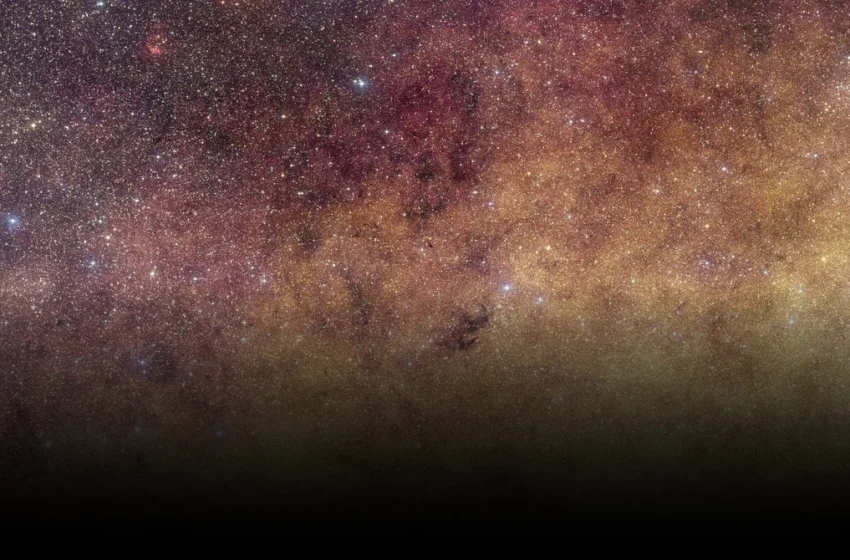
Sixty million stars, captured in a single, unprecedented visible-light mosaic of the Milky Way’s galactic bulge. That is the headline number from the European Space Agency’s (ESA) Euclid space telescope, released officially on March 23, 2025, after a mere 26 hours of observation. But while the initial reports correctly laud the sheer scale—Euclid’s field of view is 270 times wider than Hubble’s—the true significance of this accomplishment is far more subtle, and it points to a quietly revolutionary shift in how we approach the discovery of exoplanets.
Euclid, fundamentally, is not just taking stunning photographs; it is laying down a deep, wide, and foundational photographic memory of our galaxy’s most crowded stellar region. This mission, designed primarily to map the large-scale structure of the universe by observing billions of distant galaxies, has now demonstrated a unique capability closer to home. Its visible-light camera can resolve individual stars in a region so dense and bright that it would overwhelm many other instruments.
The announcement from lead scientists Jean-Philippe Beaulieu, Natalia Rektsini, and Valeria Pettorino highlights the image’s utility for gravitational microlensing, a technique vital for detecting exoplanets. The implication, however, is that Euclid isn’t primarily a *discovery* instrument for new microlensing events in this context, but rather an *enabler* for future discoveries. This distinction is crucial, and it’s a detail easily lost in the excitement of a new cosmic portrait.
The Archival Advantage: Rewriting the Discovery Process
The core innovation here is Euclid’s role as a pre-event observational baseline. Microlensing events are fleeting, occurring when a foreground star (and potentially its planets) passes in front of a more distant background star, briefly magnifying its light. Detecting such an event requires weeks of continuous observation. Euclid’s relatively brief 24-hour campaign couldn’t identify new, real-time events. Yet, as Natalia Rektsini noted, Euclid has “already captured the stars involved in all the future microlensing events that the Roman space telescope will detect, but before the stars and planets involved have aligned.”
This means future missions, like the Nancy Grace Roman space telescope slated for launch later this year, will no longer be starting from scratch. When Roman or ground-based telescopes detect a microlensing anomaly, they will be able to consult Euclid’s comprehensive, high-resolution archive to see how the stellar field looked *before* the event. This pre-event data is priceless. It removes significant unknowns, improves background subtraction, and critically, allows for far more precise measurements of exoplanet masses—an area where current microlensing detections often struggle with ambiguity.
This is where the true strategic brilliance of Euclid’s operation becomes apparent. It’s a shift from ‘live’ discovery to ‘archival pre-discovery’. Instead of simply finding new objects, Euclid provides the context that transforms subsequent raw detections into robust, quantifiable science. This approach underscores a growing trend in big science: the value of infrastructure that supports and enhances the efficacy of *other* missions, rather than operating in isolation. This is less about Eureka moments and more about building a robust, interconnected scientific apparatus.
Beyond the Bling: Incentives and Implications for Space Science
The framing of this announcement, celebrating a “most detailed image yet,” aligns perfectly with public interest in stunning space visuals while also satisfying the scientific community’s need for new data. The ESA benefits from showcasing Euclid’s versatility and unique capabilities beyond its primary cosmology mission, thus justifying its significant investment. For the scientists, it’s about setting the stage for more accurate, definitive exoplanet characterization—a holy grail in astrobiology. This strategic release ensures Euclid remains central to the narrative of exoplanet exploration, even if its role is shifting from direct discovery to foundational data collection.
The skeptical observation here is that for all the talk of discovering 51 known planetary systems within the image, or assisting in finding “many more,” the actual microlensing *detection* will primarily fall to others. Euclid is the quiet archivist, the cartographer of the ‘before times,’ without whom the ‘after’ becomes much harder to interpret. This isn’t a demotion of its achievement; it’s an elevation of its strategic purpose. This is the new frontier in space exploration—less about individual feats, and more about creating synergistic networks of observational power.
What Euclid has achieved is a vast, unparalleled digital negative of the Milky Way’s heart. Future missions will develop these negatives, adding layers of time and motion, ultimately revealing the hidden exoplanets with a clarity and precision that would have been impossible without Euclid’s foundational gaze. This is not just a pretty picture; it’s a temporal map, and it reshapes our understanding of how we find new worlds in the crowded cosmos.
