
The Global Tech Blind Spot: Why Olfactory Health Remains an Unsolved AI Challenge
- Artificial Intelligence
Arjun Vedanta
- 0
- 4 minutes read
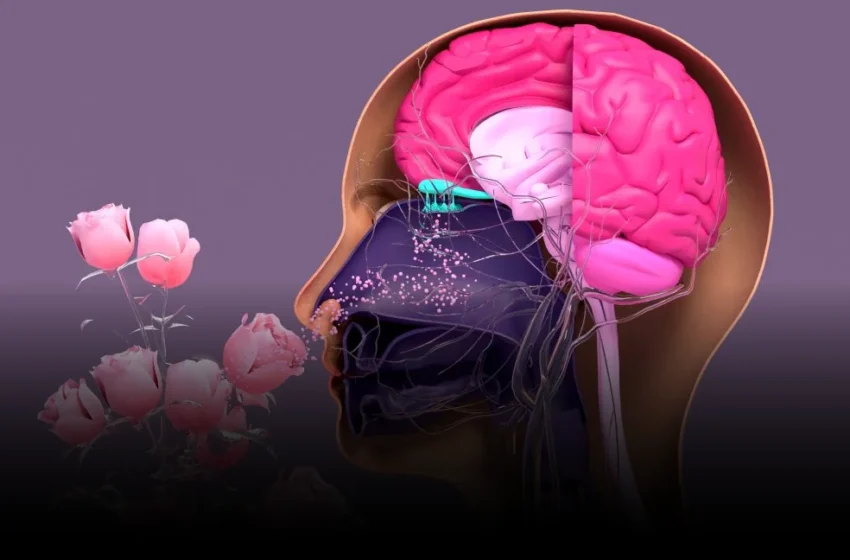
The Unseen Crisis: Olfaction’s Neglected Frontier
Up to 22 percent of the global population grapples with some form of smell impairment, a quiet, debilitating crisis that technology, for all its disruptive power and endless venture capital, has conspicuously ignored. Chrissi Kelly’s experience 14 years ago—a viral infection in the Czech Republic leading to complete anosmia—is not an outlier; it’s a stark illustration of a pervasive medical blind spot. Her despair, feeling she was “climbing the walls” and no longer herself after six months of smell loss, underscores a quality-of-life impact routinely minimized by clinicians, who often advise patients simply to ‘learn to live with it’.
The medical establishment’s historical disinterest in conditions like hyposmia, phantosmia, or parosmia stems from a bias towards life-threatening diseases or those with easily quantifiable biomarkers. Olfaction, inherently subjective and complex, has been relegated to a niche concern, despite its profound role in human safety, nutrition, and psychological well-being. This medical neglect creates a gaping chasm, one begging for the analytical prowess of modern technology.
Silicon Valley’s Sensory Blind Spot
For an industry obsessed with augmenting human perception, Silicon Valley has largely overlooked one of our most fundamental senses. We have seen massive investments in computer vision and natural language processing, transforming how machines ‘see’ and ‘understand’ the world. Yet, the equally intricate world of smell – the **computational olfaction** challenge – remains largely uncharted territory for mainstream tech innovation.
Consider the contrast: billions are poured into haptics for virtual reality, creating simulated touch, while basic tools for diagnosing and treating smell disorders are rudimentary at best. The sophisticated array of **olfactory sensors** and advanced AI inference engines used in industrial applications, from gas leak detection to food quality control, rarely translate into consumer or medical devices. Where are the wearable diagnostic devices that could map a user’s evolving olfactory landscape? Where are the **personalized diagnostics** that track the nuances of smell loss and recovery, moving beyond blunt self-reporting?
The incentive structure of tech development, often driven by immediate, scalable markets or highly visible ‘moonshot’ projects, has simply not prioritized this space. There’s no clear, high-return pathway for developing **digital therapeutics** for anosmia when the medical community itself struggles to articulate its pathology or treatment protocols. This means that problems like the phantom odors of phantosmia or the distorted reality of parosmia—conditions that profoundly alter daily life for millions—remain low-priority, too complex and too niche for a market focused on easy wins.
Reimagining Olfactory Health with Algorithmic Insight
The global rise of post-viral conditions, particularly in the wake of recent pandemics, has dramatically amplified the urgency of this neglected area. Millions worldwide are experiencing persistent smell loss, making the medical establishment’s past minimization untenable. This surge in cases presents a unique catalyst for technological intervention, but only if the industry redirects its gaze.
Imagine AI-powered solutions that analyze **biometric data** alongside subjective symptom reports to generate precise olfactory profiles. Envision next-generation electronic noses capable of detecting subtle changes in a patient’s perception, distinguishing between hyposmia and parosmia with objective, measurable data. This shift demands a multidisciplinary approach, blending neurobiology, material science, and advanced machine learning.
However, the skepticism remains: will the tech industry, traditionally focused on more glamorous or immediately lucrative challenges, genuinely commit to a problem that requires such nuanced understanding and long-term research? It’s far easier to build another social media platform or optimize ad delivery than to unravel the complexities of human chemosensation. The true measure of our innovation won’t just be in how many new senses we simulate, but in how effectively we restore the ones already lost. This problem requires not just advanced algorithms, but a fundamental reordering of tech’s priorities.
