
Europe’s AI Ambition: Station F’s F/ai Program and the Shadow of US Tech Dominance
- AI Tools
Arjun Vedanta
- 0
- 6 minutes read
The Illusion of European AI Independence
Europe’s quest for AI leadership often sounds like a unified front, a collective push to cultivate homegrown talent and avoid becoming a mere satellite to Silicon Valley. But the reality is more complex, and often, more contradictory. Station F, the sprawling Paris startup hub founded by billionaire Xavier Niel, is gearing up to launch the second cohort of its F/ai accelerator program this September. This initiative, framed as a vital stepping stone for promising European AI startups, offers a microcosm of this tension, revealing how deeply embedded US tech giants are even in Europe’s most ambitious attempts at digital sovereignty.
F/ai’s director, Roxanne Varza, states its goal explicitly: “to bring together all the major players and make it much easier for [AI] startups looking to launch in Europe to connect with them.” She also candidly acknowledges a key driver: “We’d heard quite a bit of criticism about the slow pace of commercialization of European startups.” The program’s aim to hit €1 million in revenue within six months for its cohorts directly addresses this, seeking to put European ventures “on par with what investors are seeing in the U.S.” This pursuit of US-level commercial velocity, however, comes with a strategic cost that is rarely articulated.
The program’s partner list reads like a who’s who of established American tech powerhouses: AMD, Anthropic, AWS, Google, Meta, Microsoft, OpenAI, Qualcomm, Rippling, HubSpot, and GitHub. These are not merely sponsors; they are deeply integrated partners, lending their brand, resources, and influence. While the presence of European players like Mistral AI and OVHcloud offers a counterbalance, the gravitational pull of these US behemoths in a program designed to foster European independence is undeniable. It suggests that success, even in Europe, is still largely defined and enabled by a particular American ecosystem, raising questions about whether this genuinely cultivates autonomous European AI or merely optimizes a funnel for existing power structures.
The Network Effect: Elitism as a Feature, Not a Flaw
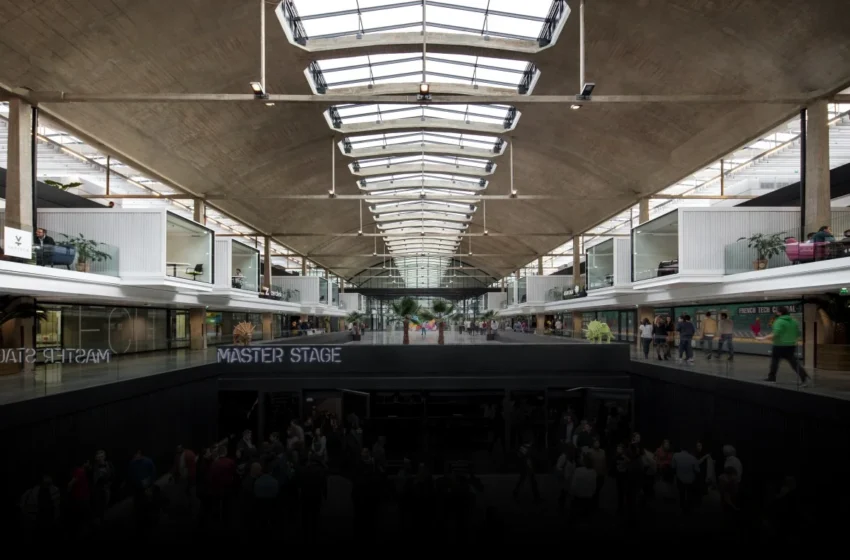
Station F, a colossal 538,000-square-foot facility, is more than just a co-working space; it’s an ecosystem. Its annual Future 40 selection consistently shows a heavy lean towards AI, underscoring the shift in focus across the tech landscape. Niel’s connections and the sheer scale of the operation have made it a mandatory stop for dignitaries, including 11 presidential visits since Emmanuel Macron’s inaugural tour in 2017. Even Sam Altman and Turing Award winner Yann LeCun have passed through its doors for private chats.
The F/ai program leverages this high-level access as a core selling point. Varza’s observation that “if the founders here want to speak to people at this level, they all seem to think they need to go to the U.S. and join a program there” speaks volumes. F/ai is explicitly designed to counter this perception, asserting that such connections are attainable locally. Yet, the method of access bears scrutiny. The first F/ai cohort, comprising 20 AI startups, was reportedly chosen exclusively via recommendations from founders, partners, and investors. The profile skews heavily towards 80% repeat entrepreneurs, a third of whom hold PhDs, hinting at a tightly curated, almost insular network.
This reliance on insider recommendations, while understandable for vetting high-potential ventures, risks reinforcing the very cliquishness and elitism that critics occasionally level against the French tech scene. It’s an incentive structure that rewards existing connections, potentially overlooking nascent, groundbreaking talent that doesn’t yet have a sponsor within this exclusive circle. The argument that “teams can’t apply directly, but they can get in touch with one of F/ai’s many partners” feels like a distinction without a meaningful difference for outsiders. While Station F offers some 30 other programs for broader application, the flagship F/ai clearly operates on a different, more closed principle.
The Unseen Current: Capital, Talent, and Influence
The first F/ai cohort collectively raised $34 million in pre-seed funding. This is a significant sum, and the program’s ability to draw in major tech partners like Google and Microsoft, alongside venture funds, indicates a powerful draw for capital. But behind the headline numbers and the rhetoric of European empowerment lies a subtle, yet profound, current of influence. When major US tech companies actively partner with a European accelerator, their incentives are rarely purely altruistic.
They gain early access to cutting-edge IP, potential acquisition targets, and a pipeline of top-tier talent without the overhead of scouting and developing these resources themselves. This is the sharpest point: while European startups are celebrated for gaining “access” to US giants, these same giants are gaining a privileged, de-risked foothold into Europe’s most promising AI ventures, effectively turning a quest for independence into a well-oiled talent and IP scouting operation for American interests. It’s a savvy move for the partners, ensuring their continued dominance in the global AI landscape, even as localized ecosystems attempt to flourish.
The F/ai program is a powerful symbol of European ambition, a genuine attempt by Xavier Niel and Station F to inject commercial dynamism into the continent’s AI ecosystem. It offers a counter-narrative to the persistent brain drain towards Silicon Valley. However, its methods – a highly exclusive selection process and deep entanglement with American tech giants – reveal a structural implication that the original narrative doesn’t fully explore: Europe’s AI future may not be one of pure independence, but rather a complex integration, with significant portions of its innovation incubated, validated, and perhaps ultimately absorbed by the very powers it seeks to rival.
