
ULA’s Atlas V Sunset: A Commercial Reckoning Beyond Starliner
- Tech
Arjun Vedanta
- 0
- 5 minutes read
The Quiet Commercial Exit of a Workhorse
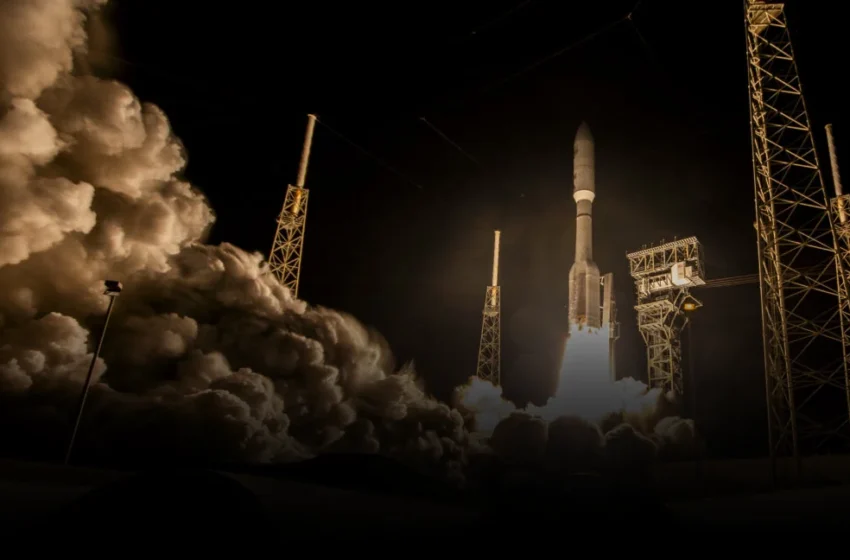
Last week’s final United Launch Alliance Atlas V mission for Amazon’s Kuiper constellation marked a definitive end, not just a transition, for a rocket that once embodied American space launch reliability. This wasn’t merely another satellite deployment; it was the quiet closure of Atlas V’s commercial chapter, leaving only a six-launch lifeline tethered solely to Boeing’s beleaguered Starliner program. The launch, occurring at 12:30 am EDT last Thursday, deployed 29 satellites, moving Amazon’s Leo broadband network closer to initial services, yet this success overshadowed a profound shift in ULA’s market position.
For years, the Atlas V, a joint venture between Lockheed Martin and Boeing, stood as a pillar of consistent, if expensive, access to orbit for critical government and commercial payloads. Its reliability was undisputed. But this final commercial flight for a major constellation like Kuiper crystallizes a hard truth: ULA’s legacy launch vehicles are no longer commercially competitive for the broader satellite market. The six remaining Atlas V rockets are now exclusively earmarked for Boeing’s Starliner crew transport missions to the International Space Station, a commitment that underscores a dependency, not a diversified future.
This latest Amazon launch, therefore, provided ULA with a clean narrative arc: a successful delivery, a major client satisfied, and a dignified close to an era, all while subtly diverting attention from the harsh truth that its primary commercial vehicle has, for all intents and purposes, left the building. The messaging around these launches always aims to maintain investor confidence and prepare the ground for future systems, regardless of the underlying market erosion. The commercial chasm for ULA has narrowed dramatically.
Starliner: A Lifeboat, Not a Launchpad
The exclusive commitment of the remaining Atlas V manifest to Starliner missions exposes a critical vulnerability. These are not new commercial contracts won in a competitive bid; they are long-standing agreements tied to a highly scrutinized human spaceflight program. The irony is stark: Atlas V’s operational life is now prolonged, not by market demand, but by the persistent delays and challenges faced by its singular remaining major customer, Boeing’s Starliner itself.
The global launch market, particularly for satellite internet constellations and other large payloads, has been radically reshaped by SpaceX’s reusable Falcon 9 and Starlink dominance. Companies like Rocket Lab and Arianespace are also carving out niches. ULA, formed as a duopoly to guarantee US government access to space, found its traditional business model unsustainable in an era of rapid innovation and cost-cutting driven by new entrants. The continued reliance on a sunsetting rocket for crewed missions, when more advanced, and demonstrably cheaper, launch options are available, speaks less to strategic foresight and more to an entrenched, often calcified, procurement system unwilling to fully embrace market realities.
This situation leaves ULA in a peculiar limbo. Its current breadwinner is being retired. Its future workhorse, Vulcan Centaur, faces its own set of significant hurdles, from engine development (Blue Origin’s BE-4) to extensive certification processes. The Starliner launches, while high-profile, represent a fixed, time-limited commitment, not a path to renewed market leadership. This is less about strategic evolution and more about managing a contractual obligation while fighting for relevance.
The Shadow of Vulcan Centaur’s Promise
ULA’s long-term viability now hinges entirely on the success and timely deployment of its next-generation launch vehicle, Vulcan Centaur. Despite its recent inaugural flight, Vulcan has been plagued by delays, mirroring the broader challenges faced by traditional aerospace giants in adapting to the agile methodologies of new space. The market has moved on significantly since Vulcan was conceived, driven by relentless price pressure and the increasing feasibility of reusable rocket technology, pioneered by its primary competitor.
The fundamental structural implication of the Atlas V’s commercial retirement, beyond Starliner, is that ULA is transitioning from a dominant player to a company fighting tooth and nail for a sliver of the commercial launch market. Its strategic choices, once rooted in high-reliability, custom-built systems, now appear ponderous against the backdrop of mass-produced, vertically integrated competitors. ULA’s next few years will not merely be about launching rockets; they will be a critical, public referendum on whether a legacy aerospace giant can truly reinvent itself or if it’s destined to remain a specialized government contractor in a rapidly diversifying cosmic economy. The promises of Vulcan Centaur must become reality, and quickly.
