
General-Purpose Robots: A Global Economic Reckoning Missed by Silicon Valley
- Robotics
Arjun Vedanta
- 0
- 5 minutes read
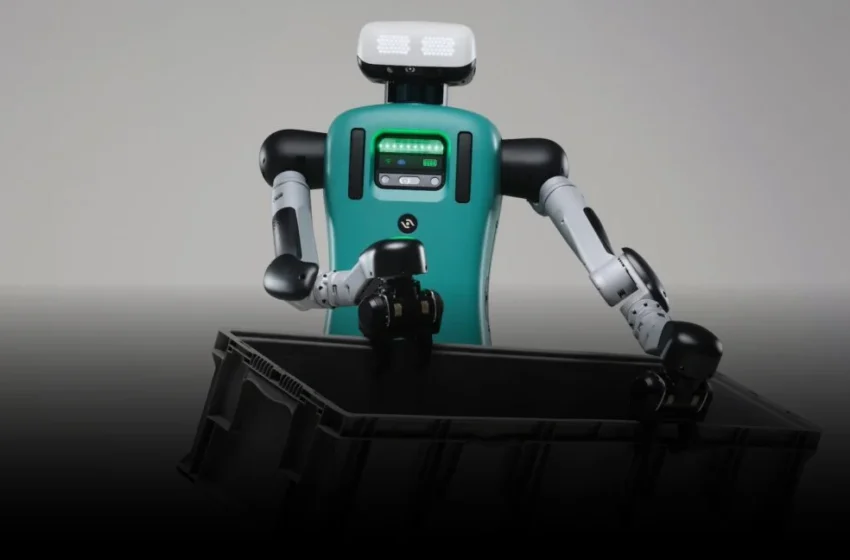
The Quiet March of Autonomy Towards Universal Displacement
The casual confidence emanating from tech hubs, such as Boston Dynamics’ observation that robotic autonomy now spans a “huge space of tasks,” belies a profound reordering of global economic opportunity. This isn’t just about faster production lines or more efficient logistics; it’s the quiet, relentless march of artificial intelligence into the most granular aspects of human labor, from factory floors to the often-overlooked service and care sectors. The industry’s focus on the technical marvel — getting a robot to do ‘its own thing’ — obscures the imminent reality for millions of workers worldwide.
For years, the robotics community spoke of autonomy in narrow terms: an industrial arm performing a single, repetitive motion, or a mobile platform navigating a pre-programmed path. Matt Malchano’s recollection of early projects merely aiming for point-A-to-B navigation underscores how dramatically the ambition has shifted in just 15 years. Today, billions of dollars are pouring into startups and established players alike, all racing to imbue machines with generalized intelligence capable of adapting to novel environments and executing complex, multi-stage tasks. This leap, powered by advancements in dexterity AI and the application of foundation models for robotics, moves beyond specialized automation towards a truly versatile, general-purpose machine.
What few acknowledge openly is that this is not merely an an evolution of technology but a fundamental re-evaluation of the economic utility of human hands and minds. The narrative, often framed as ‘solving labor shortages’ or ‘enhancing productivity,’ conveniently sidesteps the question of who truly benefits, and at whose expense. The incentive to push this technology forward, for corporations and investors, is clear: de-risk supply chains, minimize human variability, and ultimately, maximize profit margins through a cheaper, more controllable workforce that doesn’t demand benefits or higher wages.
The Invisible Hand of AI-Driven Reshoring
While Silicon Valley celebrates each benchmark in robot learning, the structural implications are rippling through global economies, far from California’s campuses. The ability to deploy highly autonomous, flexible robots drastically alters the calculus for manufacturing and logistics. Factories no longer need to chase the lowest human labor costs across continents; they can now consider bringing production closer to end markets, a trend known as reshoring, which is increasingly driven by automation rather than nationalistic fervor.
This isn’t just a concern for established industrial nations; it profoundly impacts emerging economies built on the back of manual labor. Regions that have seen decades of investment flow in due to competitive wage structures will find their primary economic advantage eroded, not by cheaper human labor elsewhere, but by machines that don’t need wages at all. The promise of an industrial revolution bringing jobs often gave way to a wave of automation that outsourced them; now, the second wave of automation might bring them back, but without the people.
Consider the expansive ambitions: ‘workplaces and even homes.’ This isn’t confined to factories, but extends into service, hospitality, retail, and even domestic care. Each domain represents millions of jobs currently performed by humans. The transition from specific, controlled environments to ‘general-purpose robots helping humans with various tasks’ in varied, unpredictable settings demands an AI sophistication that is rapidly materializing, threatening a vast spectrum of employment simultaneously.
Stratification: The Global Divide of Robotic Prosperity
The prevailing discourse often focuses on how individuals in developed nations might adapt through reskilling initiatives or potentially universal basic income (UBI). These are important discussions, but they rarely address the sheer scale of the global disruption or the inevitable stratification of wealth and opportunity that will follow. This isn’t just about ‘upskilling’ a few factory workers; it’s about an entire tier of the global workforce becoming economically superfluous as machines assume tasks requiring not just brute force, but adaptability and cognitive processing.
This current wave of automation differs qualitatively from previous iterations of industrial robotics. Earlier robots were largely programmable tools, performing predefined sequences. Modern autonomous systems, however, learn, adapt, and make decisions, encroaching on tasks that were once considered uniquely human. This shift means the global south and parts of the developed world heavily reliant on service economies face an unprecedented challenge to their economic models.
The tech industry’s unbridled optimism about general-purpose robots is understandable from a technical perspective. Yet, seen from Geneva, Singapore, or London — vantage points that offer a clearer view of interconnected global supply chains and disparate labor markets — the picture is more complex, and frankly, more unsettling. The future where self-driving robotaxis and delivery drones are commonplace is indeed here, but the broader implication of truly autonomous, general-purpose robots is not just about convenience or efficiency. It’s about a fundamental redrawing of who creates value in the global economy, and critically, who is left behind when the machines take over the ‘huge space of tasks’ we can imagine them doing on their own.
