
AI’s Energy Hunger: A Quiet Threat to American Manufacturing
- AI Infrastructure
Arjun Vedanta
- 0
- 5 minutes read
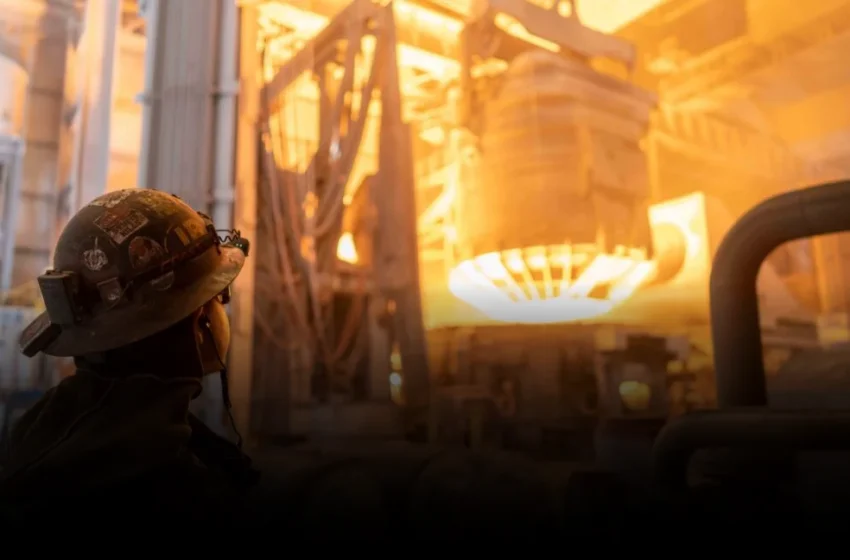
The Invisible Hand of AI on the Factory Floor
A single brick factory in Ohio, the Belden Brick Company, recently saw its monthly electricity bill surge from $1,600 to $12,000. This is not an isolated incident. Across the 13-state PJM Interconnection region, America’s oldest industries are absorbing a quiet but brutal new tax: the burgeoning energy appetite of artificial intelligence data centers. The contradiction for policymakers, particularly those committed to a “Made in America” manufacturing revival, is stark and immediate.
For steelmakers and brick factories concentrated in the Rust Belt, electricity isn’t a minor overhead; it’s a foundational cost. The Steel Manufacturers Association reports that power can constitute anywhere from 20 to 40 percent of total production expenses for steel. When monthly capacity charges skyrocket, as they have for Belden Brick, the ripple effect isn’t marginal—it’s existential. Manufacturers already operating on razor-thin margins suddenly find themselves competing for grid capacity with hyperscale data centers designed for always-on, energy-intensive AI computations, many of which receive significant tax breaks and incentives from states eager for “tech jobs.”
This isn’t just about higher utility bills. It’s about a fundamental reprioritization of national infrastructure. The PJM Interconnection, one of the United States’ largest grid operators, is struggling to keep pace. Decades of underinvestment in transmission infrastructure are now intersecting with an unprecedented surge in demand driven by computation. The outcome is predictable: a zero-sum game for available power, where the most recent, most subsidized, and often least localized demand trumps established industrial users.
The Reuters analysis highlighting this trend underlines a critical oversight in the tech narrative. While Silicon Valley touts AI’s efficiency gains, its foundational infrastructure—the sprawling server farms packed with NVIDIA GPUs—demands colossal, consistent power. This isn’t a “green” revolution if it’s fueled by burning more coal or straining an already creaking grid, forcing traditional industries to either relocate, innovate energy solutions they can’t afford, or simply shut down.
Policy Discord: Silicon Valley vs. the Rust Belt
President Donald Trump’s “Made in America” plan, a cornerstone of his economic platform, aims to revitalize US manufacturing. Yet, the very tech companies he often champions as symbols of American innovation are, indirectly, escalating the operational costs for the very industries his policy seeks to save. This creates a deeply embedded policy contradiction: a simultaneous push for digital supremacy and industrial resurgence, where the former actively undermines the latter through resource competition. It’s a textbook case of incentives gone awry, where short-term economic development wins obscure long-term industrial erosion.
The problem extends beyond individual companies; it’s a systemic challenge for national energy policy and industrial strategy. Historically, states have offered significant tax breaks and land incentives to attract data centers, viewing them as high-tech employers. These incentives were often designed without fully accounting for the immense, sustained energy draw or the downstream impact on local energy markets. Power purchase agreements (PPAs) for renewable energy sources often don’t truly alleviate grid strain because they don’t guarantee local generation matching local consumption, especially when massive new loads are introduced rapidly.
The scramble for affordable, reliable power isn’t unique to the US. From Ireland, where data centers now consume more than 18% of all electricity, to Singapore, which briefly paused data center growth due to energy concerns, the global picture reflects a strained infrastructure. What’s different here is the direct clash with a vocal domestic manufacturing agenda. The political calculation behind backing tech expansion often fails to properly weigh the tangible, localized impact on traditional employers. This is not an abstract market force; it’s a palpable threat to steel mills, chemical plants, and fabrication shops.
The Broader Geopolitical Cost of AI’s Energy Footprint
Beyond the immediate financial pain for manufacturers, there’s a broader geopolitical implication. A strong manufacturing base is a national security asset, reducing reliance on volatile global supply chains for critical goods from automotive components to defense materials. If the pursuit of AI dominance inadvertently weakens this industrial bedrock, the US risks a hollow victory. The promise of “AI supremacy” rings hollow if the nation cannot produce its own steel or bricks without disproportionate energy burdens.
Consider the competitive landscape. While US manufacturers grapple with escalating energy prices, rivals in other nations, particularly China, often benefit from state-subsidized energy or less stringent environmental regulations, creating an uneven playing field. The global tech community often discusses the “decoupling” of supply chains, yet this energy crisis demonstrates a different kind of reliance—a dependency on a stable, affordable domestic energy supply that is increasingly contested. It’s a strategic oversight to assume that the ‘digital economy’ exists in a vacuum, detached from the physical realities of power grids and resource allocation.
The current situation demands a coherent national strategy that acknowledges the energy intensity of modern computation and integrates it with industrial policy. This means not just incentivizing AI development, but simultaneously investing massively in grid modernization, diversifying energy sources with true localized impact, and perhaps even rethinking the unchecked growth of data centers in energy-constrained regions. Otherwise, the United States will find itself sacrificing its industrial muscle on the altar of AI, leaving it with impressive algorithms but fewer factories to build its future.
