
Ivy League Cheating Scandal Exposes Deeper AI-Driven Crisis in Higher Education
Arjun Vedanta
- 0
- 5 minutes read
The Illusion of Excellence in the Age of LLMs
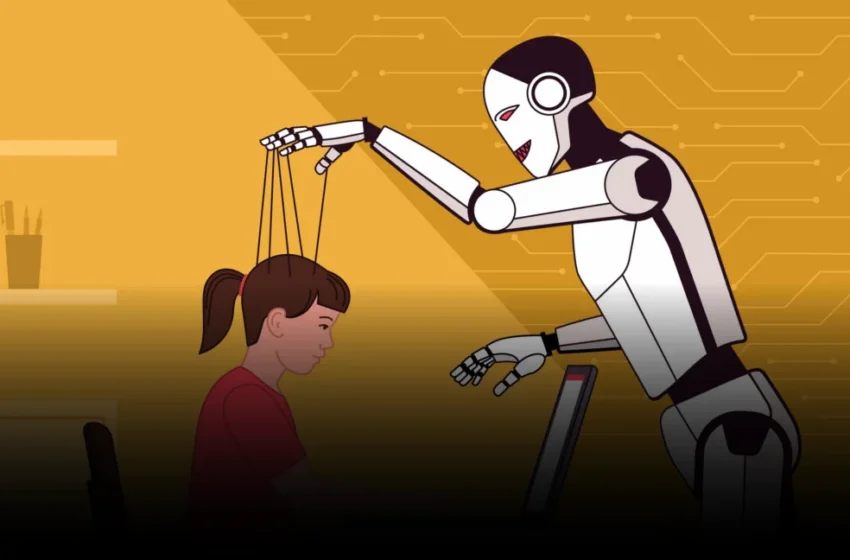
A staggering 50 percent drop in exam scores at Brown University is not merely a headline about student cheating; it is a direct indictment of how elite institutions measure aptitude in the age of generative AI. Professor Roberto Serrano’s decision to move a final economics exam in-person exposed a chasm between perceived Ivy League brilliance and the uncomfortable reality of automated academic performance. This isn’t just about individual students cutting corners; it’s about a fundamental crack in the very foundation of credentialing at the highest levels of education.
The data points to a systemic issue. A recent survey at Princeton revealed that 29.9 percent of its students admitted to using AI to cheat on at least one assignment or exam. These are not struggling students grasping for a lifeline; these are the highly competitive, overscheduled individuals who have historically been lauded for their intellect and drive. What the Silicon Valley press often misses, being too close to the shiny promise of large language models (LLMs), is the corrosive effect on the very definition of merit when such powerful tools become widely available in a high-stakes environment.
It is profoundly cynical to assume that students at institutions like Brown or Princeton, supposedly the intellectual vanguard, suddenly lack the capacity to learn basic course material without relying on a chatbot. The truth is far less flattering: they’ve learned to optimize for the appearance of knowledge rather than its acquisition. This incident compels a re-evaluation, not of student ethics in isolation, but of the pedagogical frameworks that allow such a disparity between performance and actual understanding to fester.
Unmasking the True Cost of Convenience
The allure of AI as an easy shortcut is undeniable, especially for students under immense pressure to maintain perfect GPAs while juggling extracurriculars and internships. Generative AI offers a perceived solution to time scarcity, promising to free up hours for pursuits chatbots cannot yet replicate. But this convenience comes at a steep, often unacknowledged, price: the erosion of true academic integrity and the devaluation of the very degree these students are striving for.
The institutional incentive to frame this as an isolated incident of student misconduct rather than a widespread failure of assessment methodologies is clear: to protect brand reputation and the perceived value of a degree that increasingly relies on its scarcity, not its demonstrated rigor. If a significant portion of the student body at an elite university can’t perform without digital assistance, what does that say about the institution’s claims of fostering genuine talent and critical thinking? The focus shifts from developing intellectual resilience to merely policing the tools used to produce output.
This is not a uniquely American phenomenon. Conversations in Geneva and Singapore suggest similar anxieties among educators regarding automated assessment and the authentic validation of skills. While US discussions often center on detection software and academic honesty pledges, the deeper question internationally revolves around how higher education can evolve to cultivate skills that cannot be replicated or easily faked by sophisticated algorithms. Simply banning AI is a stopgap, not a solution, when the very structure of learning and evaluation is demonstrably vulnerable.
Beyond the Campus: A Global Talent Reckoning
The ramifications of this trend extend far beyond campus quads. If elite universities are graduating students whose fundamental knowledge base has been artificially inflated by AI, the implications for the global talent pipeline are significant. Businesses and research institutions, particularly in highly competitive sectors, rely on the implicit guarantee of competence that an Ivy League degree traditionally represents. What happens when that guarantee becomes compromised?
The issue isn’t whether students can use AI; it’s whether they can function without it. The job market, particularly in technical and analytical fields, demands genuine problem-solving capabilities, not just the ability to prompt an LLM effectively. A significant portion of these graduates will enter industries where critical thinking, data analysis, and original synthesis are paramount. If their foundational skills were never truly tested, let alone developed, the downstream effects on innovation and competitiveness will be profound.
This Brown University episode serves as a stark warning. The challenge is no longer merely about catching cheats; it’s about fundamentally redesigning how we educate and certify competence in an AI-saturated world. This necessitates a radical pedagogical shift, moving away from rote memorization and easily synthesizable assignments towards projects and evaluations that demand human creativity, ethical reasoning, and complex, interdisciplinary thought that even the most advanced generative AI cannot yet replicate. The integrity of an entire educational ecosystem — and the value of its future workforce — depends on it.
