
James Webb Telescope Reveals a Cosmic Paradox: Our Models Are Broken
- Space
Arjun Vedanta
- 0
- 6 minutes read
The Universe’s Stubborn Refusal to Conform
The universe, it seems, takes perverse pleasure in defying human expectation. Every few years, a new astronomical observation doesn’t just expand our understanding; it shatters foundational assumptions we’ve held for decades. The latest example arrives courtesy of the James Webb Space Telescope (JWST), which, in scrutinizing the Jupiter-sized planet WD 1856 b orbiting a white dwarf, confirms what many astute observers already suspected: our astrophysical models for planetary formation and survival are not merely incomplete, but fundamentally flawed. This isn’t just a story about a resilient exoplanet; it’s a stark revelation about the humbling power of advanced instrumentation to systematically dismantle scientific orthodoxy.
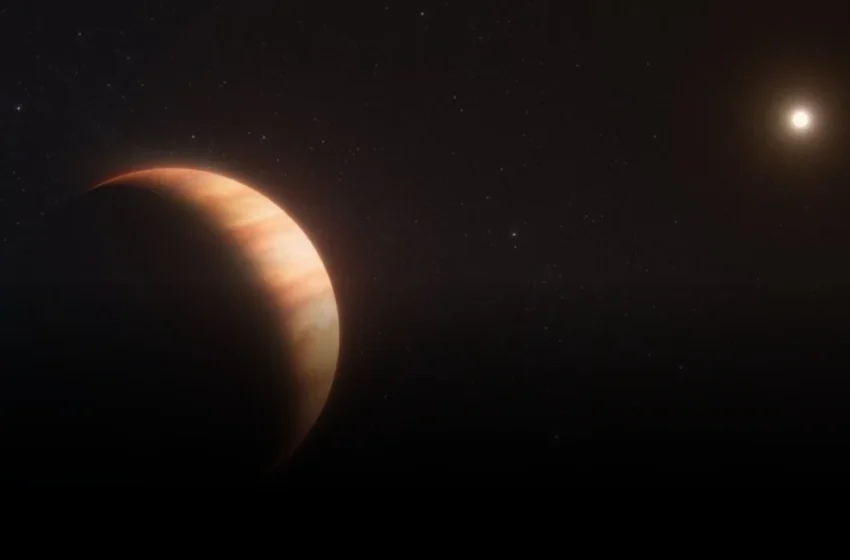
WD 1856 b, a gas giant discovered in 2020 by the TESS observatory, always presented a cosmic anomaly. It orbits a white dwarf, the dense, Earth-sized remnant of a Sun-like star that has already incinerated its inner planets during a violent red-giant phase. Conventional wisdom dictated that any planet surviving such stellar cataclysm would either be engulfed, ejected, or tidally shredded. Yet, here was WD 1856 b, a behemoth, seemingly unscathed. TESS, originally hunting for smaller objects like comets and asteroids around some 2,000 white dwarfs, stumbled upon this giant, prompting theoretical astrophysicist Christopher O’Connor to aptly note, “As soon as they looked at it, they said, okay, that’s weird.” The initial discovery was an unintentional challenge to established gravitational dynamics, suggesting a complex, violent past for the system that our then-current simulations could barely fathom.
This accidental finding already hinted at the limitations of our prior models, which often assume a more orderly cosmic evolution. The planet’s sheer existence demanded scenarios involving unlikely orbital migration or a chaotic scattering event that somehow preserved this massive world. Before JWST, we had a tantalizing data point, but little in the way of comprehensive spectral data to truly understand the planet’s atmospheric composition or its thermal profile. Without that deeper insight, any theories about its survival were largely speculative, resting on inferences rather than direct observation enabled by next-generation infrared spectroscopy.
Beyond Detection: The Interpretive Leap of JWST
The JWST is not simply a bigger telescope; it is a profound upgrade in our capacity for interpretation. Its sophisticated infrared capabilities allow astronomers to peer through cosmic dust and detect thermal signatures that older observatories could only dream of. For WD 1856 b, this meant obtaining a far more detailed understanding of its atmosphere, revealing specific spectral lines that challenge even the revised theories of its unlikely survival. What we’ve learned makes the system, as the original reports indicated, “even stranger,” forcing researchers to reconsider the very mechanics of extreme planetary resilience.
The irony is that every technological leap designed to confirm our existing understanding often ends up proving how little we truly know. Prior to JWST, a planet surviving such a stellar death was deemed an outlier, a statistical fluke. Now, with more detailed data, it suggests that the mechanisms allowing for such survival might be more varied and robust than previously modeled. This isn’t just about spotting a faint light; it’s about dissecting that light’s chemical signature to fundamentally revise the rulebook for exoplanet research and the physics governing planetary systems around post-main sequence stars. This shift moves us from simply cataloging celestial bodies to actively deconstructing their pasts and futures through their spectral fingerprints, pushing the boundaries of observational astronomy.
Rewriting the Planetary Playbook
The implications of WD 1856 b and similar “weird” exoplanet discoveries are profound for the field of astrophysics. If gas giants can routinely survive the red-giant phase and subsequent white dwarf metamorphosis, then our understanding of planetary formation — how planets move closer or further from their stars over eons — must be drastically re-evaluated. It challenges simplistic notions of a “habitable zone” as a static region, forcing us to consider dynamic zones around dying stars, or even the possibility of secondary genesis of life on moons or planets that survive such cataclysms. The data from JWST forces a conversation about the raw energy and gravitational forces that can redistribute planetary material in ways we are only just beginning to model with high-resolution computational simulations and advanced data analysis.
Moreover, these findings serve a crucial, if understated, purpose for the scientific apparatus itself. Why are these announcements coming now, and who benefits from this framing? The scientific community, certainly, thrives on discovery and the constant revision of knowledge. But also, the agencies funding these multi-billion-dollar instruments, like NASA and ESA, are keen to demonstrate tangible returns on audacious investments and maintain political capital for future endeavors in an increasingly competitive landscape for public funds. Showcasing the JWST’s capacity to upend fundamental science provides compelling evidence of its indispensable value, justifying its immense cost and complex engineering. The narrative of “unexpected discovery” helps secure continued investment in cutting-edge space telescopes and the complex pipelines required to process their output.
The lesson from WD 1856 b, illuminated by the JWST, is not merely that space is stranger than fiction. It is that our most advanced technology consistently proves our scientific models too conservative, too anthropocentric. As more data streams in from sophisticated instruments, the universe continues to reveal itself as a place of far greater complexity and dynamism than we dared to imagine, forcing a humbling, exhilarating, and essential rewrite of the astrophysical playbook.
