
US Immigration Policy’s Global Chill on Digital Governance Research
- Artificial Intelligence
Arjun Vedanta
- 0
- 6 minutes read
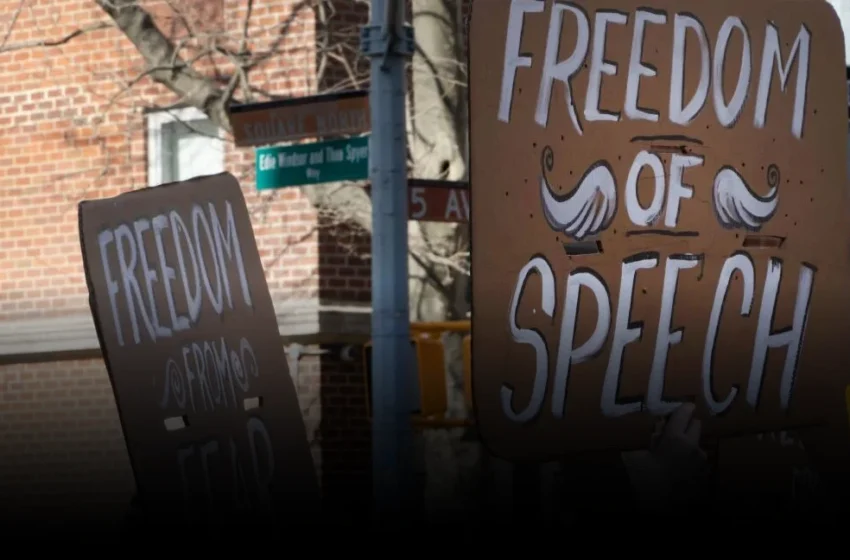
When Research Becomes a National Security Risk
The quiet ruling this week by US District Judge James Boasberg, issuing a preliminary injunction against a Trump administration policy targeting non-US citizens in content moderation, is far more than a narrow legal victory. It is a stark reminder of how deeply the lines have blurred between legitimate internet research, digital governance, and perceived national security threats. This policy, authorizing immigration investigations and potential deportations for individuals working in fields like misinformation and trust and safety, fundamentally reframes a global civic challenge as a geopolitical weapon, directly impacting the free flow of ideas and talent that Silicon Valley — and indeed the world — relies upon.
For years, US-based tech reporting has often viewed content moderation through a distinctly domestic lens: free speech absolutism versus platform responsibility, a debate framed by the First Amendment. But outside the United States, particularly in regions where digital authoritarianism is on the rise, the stakes are different. Governments routinely pressure platforms, censor dissent, and often target individuals who engage in independent analysis of information environments. The chilling irony of the now-blocked Trump-era policy is its alignment, however unintentional, with these very tactics. It suggests that merely studying or working to mitigate information hazards could be interpreted as aiding “foreign adversaries,” a broad and dangerously vague accusation that carries profound implications for researchers and practitioners globally.
The Coalition for Independent Technology Research (CITR) deserves credit for taking on this fight. Their lawsuit against the State Department spotlights how the administrative state can weaponize immigration law to exert control over intellectual pursuits. This isn’t just about whether a platform bans a specific post; it’s about whether the US government perceives the act of analyzing such bans, or developing policies around them, as subversive. The policy’s intent was clear: to create an environment of fear and uncertainty for non-US citizens engaged in critical work on platform integrity. It’s a tactic designed to achieve a chilling effect through the threat of punishment, rather than through direct censorship.
The Geopolitical Redefinition of Digital Expertise
Consider the global ecosystem of digital governance. Teams managing trust and safety, battling disinformation, or implementing compliance often comprise individuals from dozens of nationalities, working across time zones and legal jurisdictions. They are linguists, sociologists, political scientists, and AI ethicists, not merely engineers. Many of the most critical insights into how information operations affect democracies and vulnerable populations come from international researchers, often based in the US, leveraging its open academic environment and access to platform data. By casting suspicion on these roles, the policy effectively declared an entire, internationally diverse professional class as potentially adversarial.
This redefinition has far-reaching consequences. It signals to global talent — the brightest minds in internet research and content moderation — that pursuing these careers in the United States carries unique risks. Why would a top researcher from Singapore, Geneva, or London choose to work on a sensitive digital governance project in the US if their visa status could be jeopardized by the very nature of their work? The Silicon Valley bubble, often insulated from the messy realities of global geopolitics, fails to grasp how profoundly this impacts the talent pipeline and the credibility of US tech leadership abroad. The policy essentially argues that critical analysis of platform power is a potentially seditious act, rather than an essential component of an informed public sphere.
The incentive behind such a policy, while cloaked in national security rhetoric, was undeniably political. Framing content moderation and fact-checking as foreign interference — or susceptible to it — allowed the Trump administration to delegitimize inconvenient narratives and silence perceived critics under the guise of protecting national interests. It was a blunt instrument designed not merely to address legitimate national security concerns but to politically weaponize the complex domain of content moderation, enabling the targeting of critics and the narrative framing of dissent as foreign influence. This approach simplifies complex digital challenges into a convenient political narrative, one that resonates with populist appeals to national sovereignty over global collaboration.
A Dangerous Precedent for Internet Freedom
The judge’s preliminary injunction is a temporary reprieve, not a definitive reversal. The underlying legal challenge from CITR continues, meaning the fundamental question of whether the US government can label and potentially deport tech researchers for their professional roles remains unsettled. This is not a theoretical exercise; it represents a tangible threat to academic freedom and the principles of open internet research.
Even if the policy is ultimately struck down, its very existence sets a dangerous precedent. It offers a blueprint for future administrations, both in the US and abroad, to exert political pressure on digital governance. If a democratic nation like the United States can attempt to use immigration policy to control who researches and moderates online information, what message does that send to countries with less robust protections for civil liberties? It legitimizes the notion that technical expertise in content analysis can be equated with espionage or anti-state activity, a dangerous idea that authoritarians have long championed to justify suppressing dissent. The truly skeptical observation here is that the policy’s architects have already won a subtle victory: they’ve seeded suspicion, forcing a chilling effect on independent research, whether the courts ultimately uphold their specific methods or not.
The global tech community, particularly those grappling with the pervasive challenges of platform integrity, needs to recognize this moment for what it is: a warning. The battle for the future of digital governance will be fought not just in algorithms and terms of service, but also in courtrooms and immigration offices. Protecting independent research and the diverse talent that powers it is paramount, not merely for academic freedom, but for the very health of our global information ecosystem.
