
Pentagon’s SDA Reabsorption: Streamlining or Bureaucratic Regression?
- Military Technology
Arjun Vedanta
- 0
- 5 minutes read
The Illusion of Streamlining
The Pentagon’s quiet decision to dismantle the Space Development Agency, folding it back into the Space Force bureaucracy, isn’t a move towards agility; it’s a telling regression. Established in 2019, the SDA was precisely designed to sidestep the very bureaucratic morass that has historically strangled innovation and slowed deployment of crucial US military space systems. Its mandate was clear: move fast, procure differently, and get capabilities into orbit sooner.
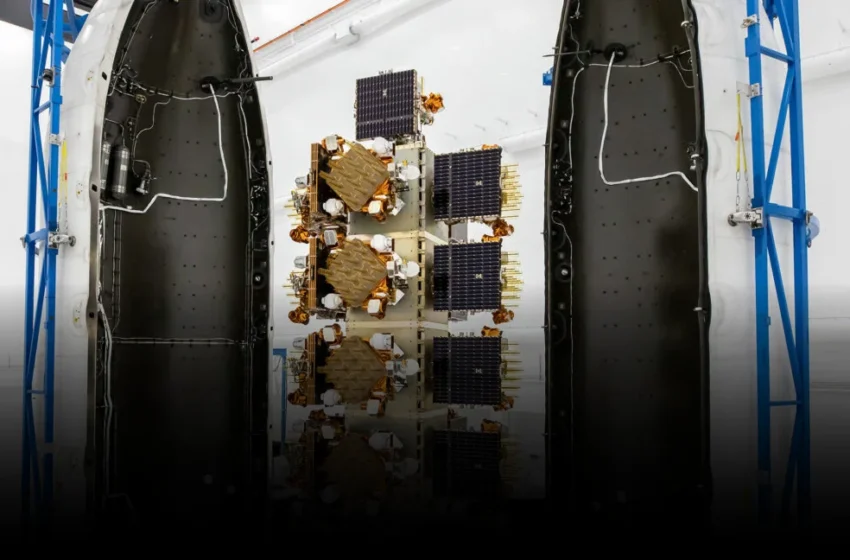
Yet, here we are, seven years later – a timeline that itself highlights the difficulty of accelerating anything within the defense apparatus. Just as the SDA begins to launch its first batches of operational satellites, demonstrating tangible, if belated, progress, the axe falls. Lawmakers in both houses of Congress have backed this closure, signaling an institutional acquiescence to re-centralization. The official narrative suggests this is about “streamlining weapons buying” by integrating SDA into the Space Force’s existing procurement pipeline, now reorganized under several program acquisition executives. This framing is a bureaucratic fiction, not a strategic solution. The idea that an entity created to circumvent sluggishness will become faster by rejoining the source of that sluggishness stretches credulity beyond breaking point.
If the SDA, with its distinct mandate and streamlined processes, still took seven years to get its first operational satellites off the ground, the issue clearly wasn’t its separation from the Space Force. The problem lies deeper. This re-absorption fundamentally contradicts the stated goal of accelerating military space system deployment, revealing a deeper, unaddressed structural resistance to true agility within the defense apparatus. It is easier to dissolve a fledgling outlier than to fundamentally reform the entrenched system it was meant to challenge.
A Cycle of Bureaucratic Gravity
This isn’t an isolated incident; it’s a pattern. The US defense establishment has a history of creating special agencies, task forces, or innovative procurement models only to reabsorb them once they either show initial success or struggle to fully integrate with the broader, slower ecosystem. Think of past attempts to inject commercial practices or rapid prototyping units into the Department of Defense. Many are eventually consumed by the larger organism, their initial velocity lost to the systemic drag.
The Pentagon’s framing of SDA’s re-absorption as “streamlining” primarily serves to consolidate power within existing departmental hierarchies, providing the illusion of efficiency while insulating entrenched acquisition processes from genuine disruption. For program acquisition executives within the Space Force, bringing SDA’s budget and projects under their direct control represents a win for traditional authority. This eliminates a perceived competitor for resources and influence, even if it comes at the expense of genuine innovation and speed. It’s a classic case of the immune system of a large organization rejecting a foreign, albeit beneficial, implant.
The incentive here is simple: maintain control. The defense industry and its procurement processes are a multi-trillion-dollar ecosystem with deeply vested interests. Any agency that truly cuts through bureaucracy threatens the established order of contracts, timelines, and oversight layers that benefit a wide array of stakeholders, from major defense contractors to congressional committees. True agility demands decentralization and empowered decision-making, which is inherently disruptive to a system built on centralized control and layered approvals.
What This Means for Global Space Dominance
While the Pentagon reconfigures its internal organizational charts, global competitors are not pausing for breath. Nations like China and Russia, operating under more centralized control, are rapidly advancing their military space capabilities, from sophisticated anti-satellite weapons to vast constellations of dual-use reconnaissance and communication satellites. Their bureaucratic processes, while different, often enable faster decision cycles and deployment for certain strategic programs, especially where commercial considerations are secondary to national objectives.
The US needs a truly responsive approach to developing and deploying low Earth orbit (LEO) satellite constellations, advanced missile tracking systems, and resilient communication layers. These aren’t just buzzwords; they are the backbone of future strategic advantage. Every year spent debating internal structures, rather than accelerating actual deployment, creates a widening gap. The notion that integrating SDA into the Space Force will suddenly unlock unprecedented speed, especially for next-generation architectures like the Proliferated Warfighter Space Architecture, is naive at best. It’s more likely to introduce new layers of review and approval, slowing down critical projects.
The world’s battlefields, both terrestrial and orbital, are becoming increasingly interconnected and data-dependent. Losing ground in the speed of space-based asset deployment is not merely an administrative hiccup; it is a strategic vulnerability. The Pentagon’s move with SDA signals a preference for control and traditional order over the urgent need for genuine, rapid technological advantage in space. This will be noticed beyond Washington’s Beltway, and it will be factored into the strategic calculations of both allies and adversaries.
