
Space Access is Commoditizing: The Geopolitical Shift Beyond Rocket Landings
- Space
Arjun Vedanta
- 0
- 5 minutes read
The global headlines last week focused on China’s successful orbital mission and the safe return of its booster, marking its entry into the exclusive club of nations mastering reusable rocket technology. This event, alongside Japan’s hop tests and Honda’s vertical reuse demonstrations, often gets framed as a relentless, nation-by-nation sprint to catch up with SpaceX’s now-routine launches. Yet, this narrative, fixated on individual accomplishments, fundamentally misunderstands a far more profound shift underway: space access is rapidly becoming a commoditized utility, and with that, the geopolitical calculus of orbital power is being rewritten.
The Illusion of the Reusability Race
In the United States, SpaceX reuses boosters with such frequency it barely registers as news, while Blue Origin, Stoke Space, Rocket Lab, and Relativity Space are all making tangible progress towards their own reusable launch vehicles. This burst of activity paints a picture of intense competition, a technological arms race to see who can land a booster most elegantly. But focusing solely on who performs the trick best—or even first—distracts from what the trick actually enables. This isn’t merely about national pride or corporate prowess; it’s about fundamentally altering the economics of getting to orbit.
The ability to reliably and affordably send payloads into space isn’t just an engineering feat; it’s a foundational change to how nations and corporations will project power and establish infrastructure beyond Earth. When launch costs drop precipitously, the strategic value of a single launch vehicle shifts. It moves from being an irreplaceable national asset to a component of a larger space infrastructure, almost a high-tech truck delivering goods. Is the world’s fixation on who lands a booster reducing strategic space access to a mere parlor trick? The question demands an answer beyond the celebratory press releases.
Geopolitical Consequences of Cheap Orbit
The true story isn’t the race itself, but the consequences of a finish line that’s within reach for multiple actors. When payload delivery to Low Earth Orbit (LEO) becomes cheap and frequent, what happens? Governments and private entities trumpet their individual launch successes, not just for national pride, but to frame their respective capabilities as unique, thereby securing future funding and geopolitical leverage in a market destined for commoditization. The barrier to entry for establishing extensive satellite internet constellations or deploying military observation platforms diminishes significantly. This makes orbital mechanics less about exclusive access and more about ubiquitous presence.
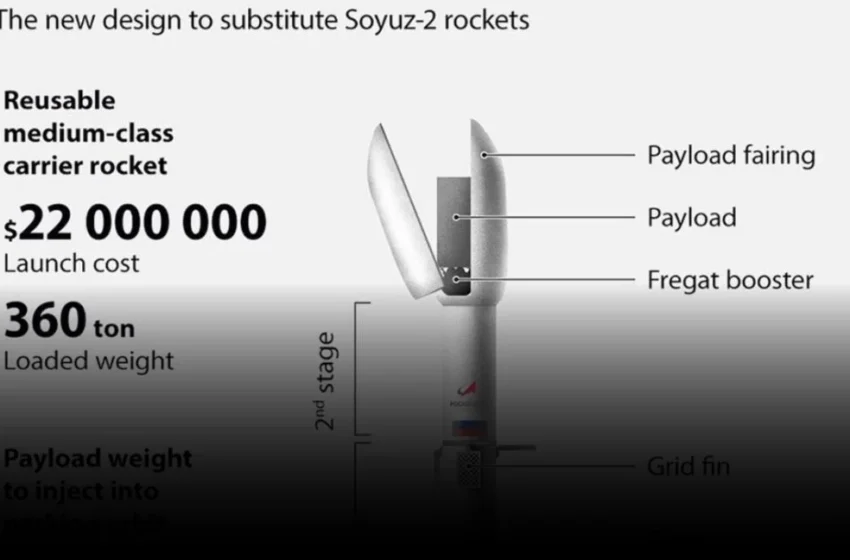
Consider the implications for nations like Russia, whose current space program faces significant headwinds and sanctions. The source article’s very title implied a struggle to match the Falcon 9. If reusable launch vehicles become the global standard, and a nation cannot field competitive capabilities, its access to independent space deployment shrinks, potentially rendering its traditional launch vehicles economically obsolete. This isn’t just a technological gap; it’s a strategic vulnerability in a domain increasingly critical for everything from communication to defense.
The ability to launch dozens, even hundreds, of small satellites cheaply and quickly means a rapid expansion of orbital assets. This translates into more resilient communication networks, more comprehensive Earth observation, and unprecedented data collection. It also means the potential for rapid deployment of space-based weapons or counter-space capabilities, complicating existing arms control treaties and increasing the risk of orbital conflicts. The shift moves from a world where only a few superpowers can play to one where many more players have cards, but the rules are still being written.
The Commoditization Dilemma: Access vs. Control
As launch vehicle technology matures and commoditizes, the focus will inevitably pivot from who can launch to who can do what in space. This means a surge in demand for in-orbit servicing, debris mitigation, and space traffic management. Companies like Stoke Space and Rocket Lab, while working on reusability, are also positioning themselves for these adjacent technologies, recognizing the broader opportunity beyond just throwing rockets skyward.
The dilemma emerging is clear: widespread access democratizes space, but it also fragments control. More actors in orbit mean more potential for accidental collisions, more intentional interference, and greater difficulty in establishing norms of behavior. The applause for a landed booster, whether Chinese, American, or Japanese, should be tempered by the looming questions of governance in an increasingly crowded and accessible frontier. The real challenge isn’t simply getting to space; it’s deciding what kind of space we want to build once we’re there.
This isn’t just about rockets; it’s about sovereignty, economics, and the very definition of a global commons. The next decade will see the true cost of space access drop to levels once unimaginable, but the price of neglecting its governance will be far higher.
