
Nolan’s ‘Transparent Trojan Horse’: Hollywood’s Quiet Acceptance of AI
- Artificial Intelligence
Arjun Vedanta
- 0
- 5 minutes read
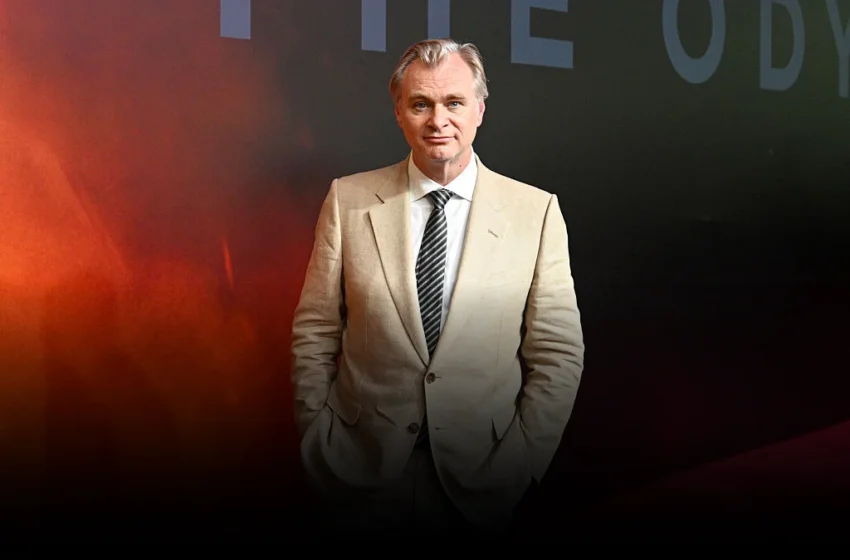
The Transparent Horse’s Heavy Hoofbeat
When Christopher Nolan, the acclaimed director behind the new cinematic epic “The Odyssey,” declares AI a “Trojan horse that everybody knows the Greeks are inside,” his observation carries a weight that extends far beyond the typical celebrity hot take. His candid remarks to interviewer Hugo Travers, describing it as a “transparent horse, made of glass,” suggest a pervasive public awareness. Yet, the critical implication here is not merely that we see the threat, but that the gates remain open, and the very industry Nolan champions is quietly, pragmatically welcoming it in.
Nolan noted, “I’ve never seen a technology advancing so rapidly [that’s been] so completely rejected by the public,” highlighting the sharp youth-led backlash against “AI slop” videos. This external skepticism, he argues, is “a very healthy skepticism,” a necessary filter for technology’s inevitable gifts. What the public, particularly those outside the tech epicenters, fails to grasp is the deeper, more complex negotiation underway behind the scenes.
As president of the Directors Guild of America (DGA), Nolan is himself a power player within a system actively grappling with AI’s encroachment. The DGA, much like the writers’ and actors’ unions during their 2023 strikes, secured specific generative AI protections in its latest contract. This move, while framed as a safeguard, is inherently an acknowledgment, an internal industry concession that AI is not a hypothetical future threat but an immediate, operational reality. The very act of negotiating AI protections in contracts is an implicit concession that the technology is not just coming, but is already here and will be utilized, regardless of public unease.
Hollywood’s Double Game: Creative Vision vs. Industrial Pragmatism
Hollywood operates on a delicate balance: it sells dreams and storytelling, yet it is a ruthlessly commercial enterprise driven by budgets, timelines, and intellectual property. Nolan’s long-standing “techno-skepticism,” as he describes it – a preference for Imax film over digital imaging, rooted in its superior visual representation – positions him as a guardian of traditional craft. He famously warned, “We almost lost film!” lamenting how new technologies are often sold “at the expense of systems that might still be valid and viable.”
However, the industry’s embrace of AI, even with Nolan’s vocal caveats, reveals a pragmatic undercurrent. Studios are under constant pressure to optimize production pipelines, reduce costs, and control intellectual property. Generative AI promises efficiency in everything from script development and visual effects to voice work and digital likenesses. This economic incentive is powerful enough to make the industry accept a transparent Trojan horse, even when its contents are clearly visible.
The current landscape sees major players like OpenAI reportedly developing hardware and investing heavily in implementation rather than just models. This signals a broader push for integration, suggesting that the industry’s future involves more than just contemplating AI; it involves actively deploying it. The incentive, therefore, is clear: technological advancement, however disruptive, is often perceived as an unavoidable path to competitive advantage, even if it means renegotiating the fundamental relationships between human creativity and automation.
Beyond the Hype: The Global Gaze on AI’s Realpolitik
Nolan’s call to view “the motives of the people giving it to us also… with skepticism” resonates profoundly, particularly from an international perspective often wary of Silicon Valley’s unchecked optimism. While US tech culture frequently celebrates disruption, other regions, notably the EU with its comprehensive AI Act, prioritize regulation and risk mitigation. This global disparity underscores that the AI conversation isn’t uniform; it’s a patchwork of differing regulatory frameworks and cultural anxieties.
The “transparent horse” metaphor becomes particularly stark when juxtaposed with the concentrated power of a handful of AI developers, often operating with venture capital backing and an aggressive product-market fit strategy. These entities are not waiting for consensus; they are building the future, piece by piece, and the creative industries are simply one of the next frontiers. The framing of AI as a ‘Trojan horse’ by an industry figurehead serves to placate public anxiety and union demands, while simultaneously allowing for its strategic, albeit regulated, integration into the production pipeline for economic benefit.
Ultimately, Nolan’s insightful skepticism provides a critical lens, yet the industry’s actions speak louder. The truth is not just that we see the Greeks inside the horse; it’s that we’re actively making room for them, crafting new rules of engagement as they enter. The deeper narrative isn’t about whether AI is coming, but about how gracefully, or reluctantly, established power structures are making space for it, even while voicing public concern.
