
Beyond the Billions: The Silent Escalation of Space Warfare Funding
- Military Technology
Arjun Vedanta
- 0
- 5 minutes read
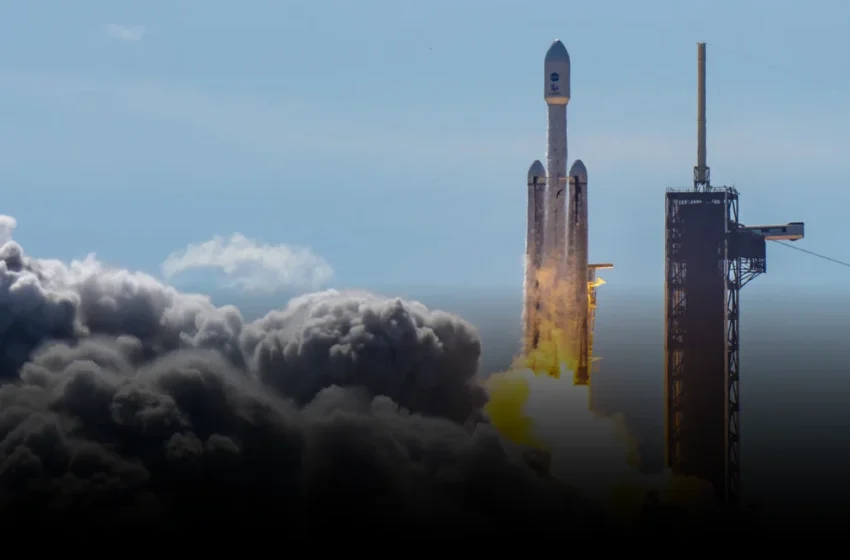
The Unseen Intent Behind Rising Space Budgets
The quiet uptick in defense budgets often masks profound strategic shifts, none more critical than the US Space Force’s recent, seemingly bureaucratic, adjustment to its National Security Space Launch (NSSL) Phase 3 contract. This isn’t merely an allocation of funds; it is a declaration of intent, reshaping the very definition of orbital peace.
Officials quietly tripled the maximum value of the contract pool from an initial $5.6 billion to a staggering $17 billion. This massive bump, announced Friday, goes beyond mere inflation or an increase in routine satellite replacements; it’s a clear indicator of a burgeoning, aggressive demand for military capabilities far removed from simple communication or weather monitoring.
This escalating investment, presented by the Pentagon as a response to “rising demand,” actually formalizes space as an undeniable theater of conflict. It entrenches the idea that nations must compete, and potentially fight, for dominance in an environment once considered the final frontier for scientific collaboration and discovery.
The Shifting Architecture of Orbital Warfare
The NSSL program’s structure itself offers a telling glimpse into this new reality. Lane 1 missions, labeled “risk-tolerant,” encompass medium-lift launches carrying “experimental payloads” or “rideshare missions” for surveillance and data relay constellations. This phrasing cleverly obscures the reality that “experimental payloads” are often prototypes for offensive or defensive weapons, and “surveillance” in this context is inherently military intelligence.
More chilling are the Lane 2 missions, described as “higher-priority strategic” and including “the government’s largest and most expensive spy satellites” and “radiation-hardened communications satellites designed to survive a nuclear war.” This is not about peaceful coexistence. This is about establishing a resilient, offensive, and defensive posture for a conflict that extends beyond terrestrial borders, signaling a clear preparation for full-spectrum engagement.
One must question whether this “rising demand” is a natural consequence of evolving threats or a deliberate, self-fulfilling prophecy. The true incentive here is multi-layered: it provides a robust, guaranteed revenue stream for key defense contractors, accelerates the development of dual-use technology that blurs commercial and military lines, and strategically positions the US to dictate terms in the nascent frontier of space. It’s hard to shake the feeling that this isn’t about responding to a threat as much as it is about creating the conditions for permanent militarization, benefiting a select few companies that lobby aggressively for such contracts.
A New Cold War in the Cosmos
This dramatic expansion of launch contracts reverberates far beyond the immediate financial implications. It sets a dangerous precedent for other major space powers, particularly China and Russia, who are already investing heavily in their own aerospace programs and developing anti-satellite weapons (ASAT) capabilities. The US Space Force’s move effectively ignites a new arms race, a zero-sum game played out in Low Earth Orbit (LEO) and beyond, where every surveillance satellite or protected communications network deployed by one side is perceived as a direct threat by the other.
The language used – “risk-tolerant” and “strategic” – is designed to sound benign, yet it covers a frantic race for geospatial intelligence supremacy and space domain awareness. This isn’t just about launching more objects; it’s about controlling the information flow, disrupting adversaries, and projecting power from an unassailable orbital advantage.
The Silicon Valley echo chamber, too often caught up in the commercial space race led by SpaceX and Blue Origin, frequently misses the stark reality of this military pivot. While private companies push for lunar tourism or Martian colonies, the quiet, massive infusion of defense capital is reshaping the fundamental economics and strategic imperatives of space, making it less about exploration and more about exploitation for military advantage.
The Unseen Costs of Orbital Dominance
The long-term costs of this strategy are immense and extend beyond the $17 billion figure. There’s the increased risk of orbital debris from potential conflicts, threatening all space assets, civilian and military alike. There’s the diversion of scientific talent and resources towards military applications, away from fundamental research that could benefit all humanity.
What we are witnessing is the quiet, almost mundane, operationalization of space as a warfighting domain. It’s not flashy, but a slow, methodical grind towards a future where the next global conflict might begin not on a battlefield, but in the silent vacuum of orbit. The US Space Force isn’t just buying rocket launches; it’s buying a ticket to an inevitable, and potentially catastrophic, orbital confrontation.
