
Cyclospora Outbreak Exposes Global Tech Failure in Supply Chain Traceability
- Tech
Arjun Vedanta
- 0
- 5 minutes read
When ‘Traceback’ Isn’t Enough
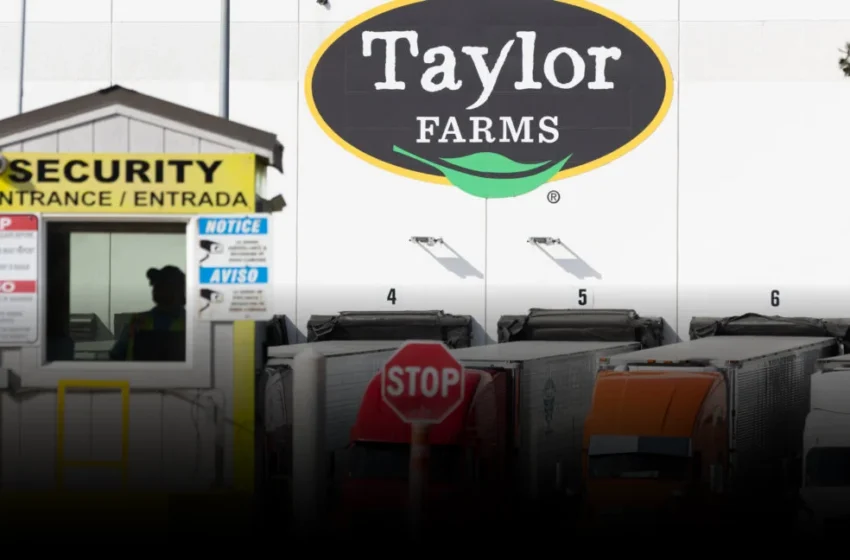
The latest federal affirmation that Taylor Farms’ iceberg lettuce is the definitive source of a multi-state Cyclospora outbreak might seem like a conclusion. In reality, it exposes a deeper, more systemic failure: the persistent inability of modern supply chains to deliver fundamental transparency, even in the face of public health crises. This isn’t merely about a contaminated product; it’s about a critical void in data integrity across global food networks.
The concept of a traceback investigation sounds robust, conjuring images of intricate digital ledgers and real-time visibility. In practice, however, the Food and Drug Administration (FDA) and Centers for Disease Control and Prevention (CDC) are often relying on a patchwork of paper records, siloed databases, and human memory to track a perishable product from plate to farm. The source article noted these investigations eventually converged on shredded iceberg lettuce from Central Mexico, supplied by Taylor Farms. Yet, the path to this convergence was anything but smooth, marked by a celebrated false positive test and ‘vague recall information’ that only served to deepen public confusion.
This persistent opacity in global food supply chains, despite decades of technological advancement, reveals a critical market failure where data integrity and traceability remain secondary to commercial interests, leaving public health dangerously exposed. Technologies like distributed ledger systems and IoT sensors promise granular, immutable records for every batch, every shipment. Yet, their widespread implementation in the agriculture sector, particularly across international borders, remains stubbornly elusive. The notion that technology simply needs to ‘catch up’ to complex global supply chains is a convenient fiction; the deeper truth is that many powerful actors benefit from the opaque status quo, actively resisting the kind of interoperable digital infrastructure that would make such transparency routine.
The Cost of Commercial Opacity
Taylor Farms’ brief, public triumph over a false negative diagnosis was not just a communication blunder; it was a clear demonstration of the immediate commercial incentive to minimize perceived liability and protect brand reputation, even when clarity is paramount for public health. This incident, where a company initially celebrated a testing error, highlights a structural conflict: the impulse to control narrative versus the necessity of open data. Businesses often frame data as proprietary, a competitive asset. But when that data pertains to public safety, its proprietary enclosure becomes a hazard.
The ‘murky details’ are not an accident; they are a feature of a system designed without a primary emphasis on end-to-end supply chain visibility. We live in an era where consumers track their packages from halfway across the world with minute-by-minute updates, yet the journey of the food on their plate remains a black box. This stark contrast exposes a significant policy and technology gap. Enterprise resource planning (ERP) systems exist, sophisticated logistics software is readily available, but the incentive to fully integrate these for public health benefits often falls short, especially when it involves coordinating disparate entities across international jurisdictions.
The US-centric perspective often misses the profound implications of global sourcing. When produce originates in Central Mexico, the complexity of implementing uniform food safety regulations and digital traceability standards multiplies exponentially. What constitutes ‘adequate’ record-keeping in one jurisdiction might be woefully insufficient in another, creating critical vulnerabilities that pathogens like Cyclospora exploit with alarming regularity.
Beyond the Blame Game: Architecting Accountability
The solution isn’t simply to point fingers at individual companies or regulatory bodies; it’s to recognize that the current architecture of global food supply chains is fundamentally broken from a data perspective. While Silicon Valley often chases the next consumer app or social media phenomenon, the real technological challenges—and opportunities—lie in hardening the industrial backbone of our most essential services. This means investing in and mandating interoperable digital platforms, potentially leveraging blockchain or similar distributed ledger technologies, to create an unimpeachable record of provenance and handling.
Such a transformation would require international cooperation on data standards, a willingness from corporations to prioritize public safety over short-term commercial shielding, and robust governmental oversight that moves beyond reactive traceback to proactive prevention. Imagine a world where every agricultural product carries a digital passport, accessible to regulators and, with appropriate safeguards, to consumers. This isn’t science fiction; the technology exists, whether through sophisticated IoT sensors monitoring conditions or a unified digital ecosystem for agricultural logistics.
Until data integrity is baked into the very fabric of our global food supply, outbreaks like this will remain an inevitable, and tragically preventable, recurring nightmare. The current system implicitly accepts a certain level of risk and murkiness. It is time for technology to force transparency, demanding accountability not just for the final product, but for every step of its journey.
