
Starship’s Next Leap Hides a Glaring Flaw in SpaceX’s Reusability Promise
- Space
Arjun Vedanta
- 0
- 5 minutes read
The Unspoken Cost of Starship’s Iterative Progress
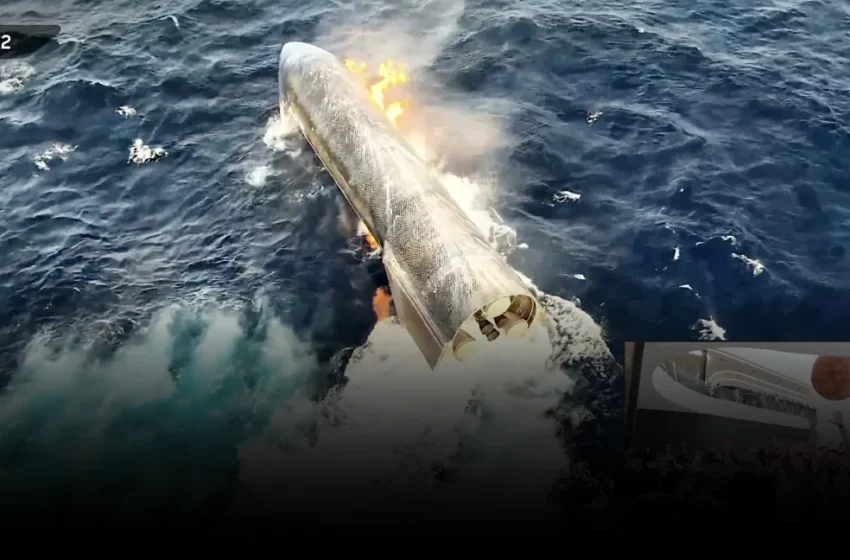
Elon Musk declared SpaceX will attempt a tower catch for Starship on its next flight, a bold move amplified by the recent, remarkably intact splashdown of Flight 13. The images of a pristine Starship floating serenely in the Indian Ocean, its heat shield seemingly unblemished after re-entry, offer compelling visual evidence of progress. This ‘dream scenario’ for engineers, as SpaceX communications manager Dan Huot termed it, provides critical thermal protection data, a cornerstone for the system’s rapid reusability goals. Yet, the narrative of triumph overshadows a critical, recurring issue that threatens the very foundation of Starship’s ambitious operational model.
For all the attention on Starship’s success, the Super Heavy booster, the gargantuan first stage, once again failed its controlled landing burn. This isn’t a minor hiccup; it’s a systemic problem. While Starship Version 3 reached its designated splashdown zone and deployed the first Starlink V3 satellites, the booster, designed for immediate return to the launch pad, plunged into the Gulf of Mexico. This marks a concerning pattern of incomplete reusability for the Super Heavy Version 3, contrasting sharply with the two successful recovery and re-flights achieved with the older Version 2 design. The incentive to frame Flight 13 as a resounding success, particularly around the intact Starship, subtly shifts focus away from this persistent engineering hurdle.
The Shadow of the Splashing Booster
The Starship program, unlike the Falcon 9, is a two-piece puzzle where both halves must land for full reuse to unlock the projected economics. SpaceX officials noted the booster completed its high-thrust boostback burn with all 33 Raptor engines for the first time with a V3, before ending early. However, attempts to relight a subset of engines for the landing burn ultimately led to a ‘hard splashdown.’ The company’s own update acknowledges this. This isn’t just a technical challenge; it’s a financial one that undermines the core premise of Starship’s cost-effectiveness. The entire system is predicated on the idea that both stages are rapidly reusable, multiple times a day.
Consider the scale: the Super Heavy is larger and heavier than Starship itself. Capturing it on the launch tower at Starbase, Texas, is meant to be a routine, almost mundane operation. Without this capability, the production line for new boosters becomes a far more significant cost sink. Every time a booster is lost, it represents a multi-million dollar write-off and delays in the iterative testing cycle.
The repeated failure to secure the Super Heavy’s landing stands in stark contrast to the nearly flawless recovery record of the Falcon 9 first stage. It suggests either an order of magnitude increase in the technical difficulty of the Super Heavy’s return, or a prioritization of Starship’s upper stage development over the booster’s. The observation here is simple yet sharp: SpaceX’s ‘iterative development’ is indeed showing spectacular progress on one half of the equation, but it’s dangerously close to becoming a two-steps-forward, one-step-back dance when it comes to the booster. We are watching a company push the boundaries of physics, but the persistent booster failures remind us that sometimes, the hardest problems are not just about reaching orbit, but about coming back cleanly.
Refueling Dreams vs. Reality on the Pad
NASA Administrator Jared Isaacman’s enthusiasm for Starship’s ‘game-changing’ capabilities, especially for the Artemis program and lunar missions, hinges entirely on orbital refueling. This requires multiple Starships to rendezvous and transfer propellant in low-Earth orbit. The article rightly points out this necessitates rapid reuse of both Starships and Super Heavy boosters at multiple launch pads. If Super Heavy boosters cannot be reliably recovered and rapidly turned around, the entire orbital refueling ballet collapses, delaying or rendering uneconomical any mission beyond low-Earth orbit. The vision of lunar bases and Mars colonies, compelling as it is, relies on a reality that is still, critically, half-baked.
The current iteration, Starship Version 3, has yet to demonstrate full reusability for both its components. While SpaceX has multiple launch sites under construction — two in Florida, alongside the existing Starbase pad — the bottleneck isn’t physical infrastructure; it’s the reliable, repeatable recovery of the Super Heavy. To achieve the required cadence for orbital refueling, dozens of Starships and Super Heavy boosters will need to be cycling through these pads with minimal downtime. The observation here is simple yet sharp: SpaceX’s ‘iterative development’ is indeed showing spectacular progress on one half of the equation, but it’s dangerously close to becoming a two-steps-forward, one-step-back dance when it comes to the booster. We are watching a company push the boundaries of physics, but the persistent booster failures remind us that sometimes, the hardest problems are not just about reaching orbit, but about coming back cleanly.
The Starlink V3 satellite deployment, a success in its own right and a precursor to higher-speed direct-to-device connectivity, offers a glimpse into Starship’s commercial viability. These larger, heavier satellites can’t fit on Falcon 9, creating an immediate demand for Starship’s unique capabilities. However, this commercial opportunity, and the significant revenue it promises, also predicates its long-term profitability on the rapid, full reusability that the Super Heavy booster still struggles to achieve. Without addressing the booster’s consistent hard landings, the economic model underpinning Starship’s entire ambitious future remains a significant unknown, one that US-centric media often overlook in their focus on Musk’s grand pronouncements.
