
Europe’s New Space Rush: Can VC Dollars Bridge a Policy Chasm?
- Space
Arjun Vedanta
- 0
- 5 minutes read
The Allure of Orbital Reusability
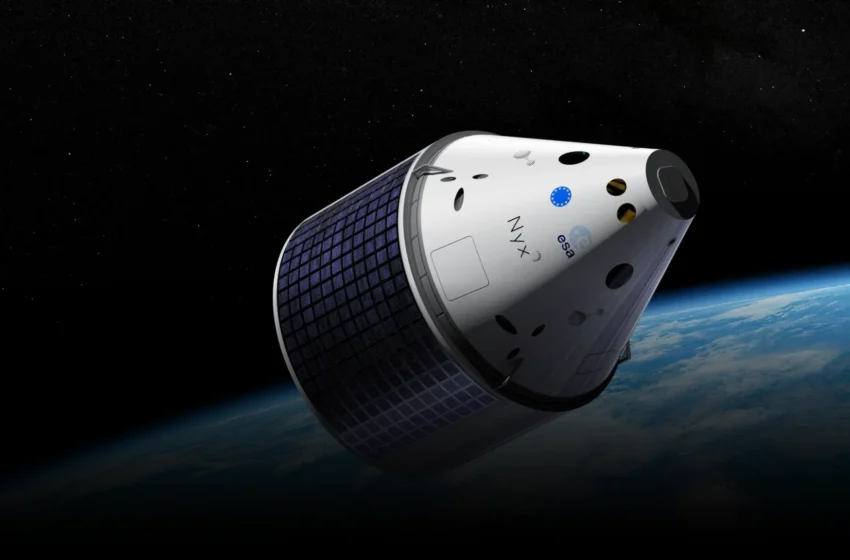
A $2 billion valuation for a Franco-German scaleup building reusable space capsules is not just a headline; it is a direct statement of ambition. The Exploration Company (TEC), reportedly in advanced talks with Atomico and Bessemer Venture Partners for a funding round that would cement this figure, represents Europe’s latest bid to carve out relevance in a domain increasingly dominated by American giants. On the surface, the narrative is compelling: a European firm, led by industry veterans like CEO Hélène Huby, tackling the complex engineering of orbital reentry for cargo, with an eye on deorbiting debris for the European Space Agency (ESA). This is not merely about launching things; it is about bringing them back, an operational loop that fundamentally changes the economics and capabilities of space logistics.
TEC’s business model targets a critical gap, differentiating itself from the raw launch power of a SpaceX. While the focus on reusable orbital vehicles initially for cargo, with an ambitious target of €100 million in revenue by 2026, seems prudent, it also highlights a distinct European pragmatism. American players often chase headline-grabbing human spaceflight or lunar ambitions; European firms like TEC are building the less glamorous, but equally vital, infrastructure layer. Yet, this is also where the skepticism creeps in: can a series of national champions, even with significant venture capital backing, truly compete with the vertically integrated scale of a company like SpaceX, which benefits from billions in governmental contracts and a unified national space strategy? The answer is not in the technology, but in the political economy.
A Flood of Capital, A Fragmented Landscape
Maija Palmer, an Atomico partner, articulated the sentiment driving this latest investment surge: “There’s a lot of appetite, I think, in Europe right now.” This “appetite” translates into serious capital, with TEC aiming for approximately $274 million in its new round, adding to previous injections like the €7 million from the European Innovation Council (EIC) Moonshots fund. The funding ecosystem for European space tech is undeniably vibrant, mirroring other major rounds for companies such as Isar Aerospace (€165 million) and Rocket Factory Augsburg, as well as specialised players like Space Cargo Unlimited (€200 million) and Varda Space (€30 million).
The incentive for venture capital firms like Atomico and Bessemer is clear: identify the next potential European unicorn in a sector ripe for disruption, especially as traditional aerospace giants like ArianeGroup face new competitive pressures. Backing TEC, with its deep technical expertise and an ESA deal to deorbit objects in EU space, offers a tangible path to market validation and scale. However, this fragmented approach to funding, where individual startups attract capital based on their specific niches, inadvertently underscores Europe’s core challenge. There is no singular, coherent European equivalent to NASA or the US Space Force driving a unified, long-term vision with sustained, massive procurement contracts that can bootstrap an entire industry. Instead, we see a patchwork of national and EU-level initiatives, often competing, often overlapping, and rarely providing the cohesive demand signal needed to foster true global leadership.
The Enduring Shadow of Silicon Valley
This rush of private capital into European space tech, while commendable for its immediate impact, does not fundamentally alter the structural competitive landscape. The $2 billion valuation for The Exploration Company is a testament to technological prowess and market opportunity, but it exists within a larger, less favourable context. The United States’ space industry thrives not just on Silicon Valley innovation, but on a symbiotic relationship with an enormous, unified government customer. NASA’s Artemis program, for instance, provides a gravitational pull for private enterprise, offering guaranteed demand and R&D funding that few European governments, let alone the European Union, can collectively match.
The critical implication here is that European venture capital is largely attempting to fill a policy void. While investment fuels innovation, it cannot dictate a unified European space policy or procurement strategy. Without a truly consolidated European space agency with the budget and mandate to act as a singular, anchor customer across the continent, individual successes like TEC’s will always be fighting an uphill battle against the scale and systemic advantages enjoyed by their American counterparts. This is not to diminish TEC’s achievements or potential; it is merely to acknowledge that even a $2 billion valuation, a significant milestone, is still playing in a different league when the rules of the game are set by national — or in Europe’s case, supranational and often disparate — strategic priorities.
