
Apple’s iOS 26.6 Update: A Quiet Play for On-Device AI Dominance
- Artificial Intelligence
Arjun Vedanta
- 0
- 5 minutes read
The Quiet Reshaping of Apple’s Core
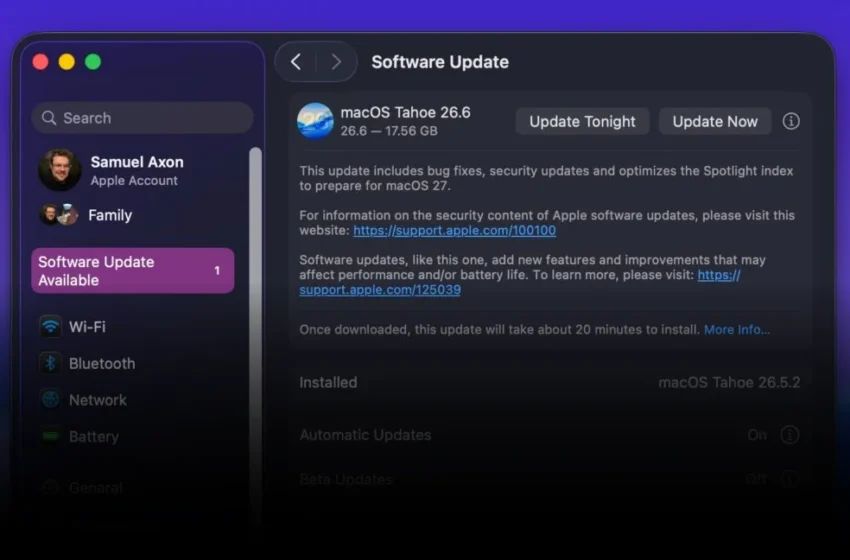
Apple’s 26.6 updates landed with the usual thud of minor bug fixes and security patches, a predictable prelude to the annual September fanfare. But buried in the release notes for iOS and iPadOS 26.6, a single, unassuming phrase concerning “optimizes the Spotlight index to prepare for iOS 27” hints at a far more significant, architectural realignment than Cupertino is letting on.
This isn’t merely about faster search results. It signals Apple’s intensifying commitment to on-device AI processing, positioning the device itself, rather than remote server farms, as the primary locus of intelligent computation. While Silicon Valley narratives often fixate on large language models running in vast cloud data centers, Apple is quietly shifting the computational gravity of its intelligence features back to the edge, leveraging its proprietary Apple Silicon architecture.
The emphasis on local processing for features like Spotlight aligns neatly with Apple’s long-standing privacy ethos. By keeping user data on the device, the argument goes, personal information remains more secure and less vulnerable to corporate harvesting or breaches. Yet, the narrative of enhanced privacy through on-device processing, while compelling, quietly reinforces Apple’s deep architectural control, making genuine data portability or interoperability ever more challenging for its vast user base.
Beyond the Hype: Practicalities of On-Device Intelligence
The decision to pre-index Spotlight for iOS 27 is a technical harbinger of a strategic shift. Major updates like iOS 27 and macOS 27 will undoubtedly feature more robust, AI-driven capabilities. Performing initial indexing work now, through the 26.6 updates across iOS, iPadOS, and macOS, alleviates the first-boot computational strain for millions of users when the next generation of operating systems drops.
This approach stands in stark contrast to the cloud-first strategies championed by competitors like Google and Microsoft, whose AI initiatives often necessitate constant data transmission and reliance on massive internet bandwidth. Apple’s alternative emphasizes reduced latency, offline functionality, and potentially lower long-term operational costs by offloading processing from cloud infrastructure to user devices.
The incentive is clear: Apple is pushing on-device AI now to leverage its chip design advantage, particularly the integrated Neural Engine within Apple Silicon, and to differentiate from competitors heavily reliant on costly cloud infrastructure. This simultaneously tightens its grip on the user experience and the entire digital stack. It’s a calculated move to solidify platform control in an increasingly AI-centric world.
The Power of Local Processing
Consider the computational burden of advanced machine learning models. Shifting this load to the device, rather than the cloud, impacts battery life, thermal management, and raw processing power. Apple’s continuous investment in custom silicon, exemplified by the performance gains seen in its latest iPhone and Mac chips, is not just about faster app launches; it’s about enabling a sophisticated, private form of edge computing at scale.
This means that features traditionally requiring a round trip to a server will execute almost instantaneously. From advanced image recognition within Photos to context-aware suggestions in Messages, the processing happens locally. It’s a fundamental architectural decision that dictates everything from user experience to the company’s long-term competitive positioning against rivals in the burgeoning AI landscape.
The Geopolitical Subtext of Platform Control
This subtle, technical preparation for iOS 27 extends far beyond search functionality; it’s about who dictates the terms of future digital intelligence. As regulatory bodies globally, from the European Union with its Digital Markets Act to antitrust efforts in the United States, scrutinize the power of dominant tech platforms, Apple’s on-device AI strategy presents a nuanced defense.
By championing privacy and local processing, Apple can argue for greater data sovereignty for users, even as it reinforces its own ecosystem. This strategic pivot may complicate future regulatory attempts to mandate interoperability or data portability, as critical intelligence functions become deeply embedded within the proprietary hardware and software stack of each individual device.
The release of iOS and macOS 26.6, with its quiet nod to Spotlight indexing, thus signals more than just an impending software upgrade. It’s an architectural declaration. It solidifies Apple’s dominance over the intelligence layer on its devices, potentially setting the stage for a fragmented AI ecosystem where device makers, not just cloud providers, dictate the terms of digital intelligence and, by extension, digital control.
