
AI’s Quiet Revolution: Redefining How We Uncover Lost Ancient Civilizations
Arjun Vedanta
- 0
- 4 minutes read
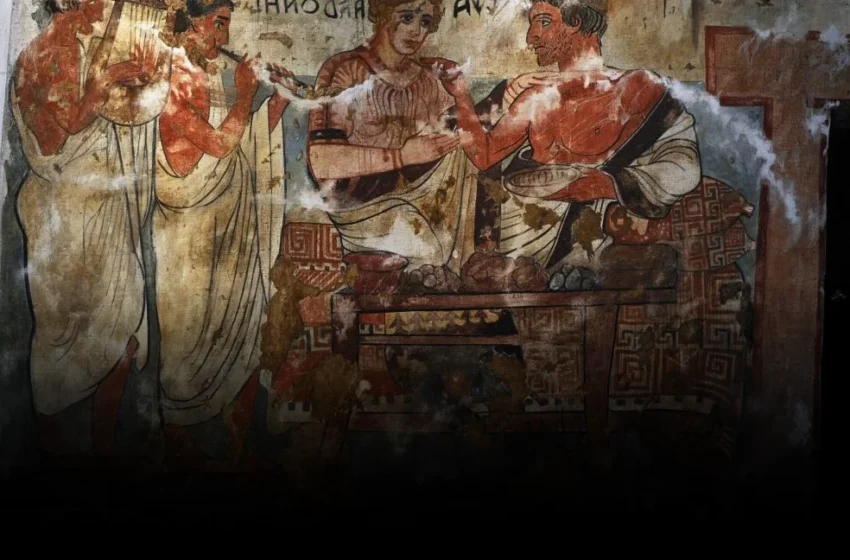
The Algorithm’s Gaze on Lost Tongues
The deepest fissures in our understanding of ancient history are not battles or political intrigues, but the silent, unreadable scripts of civilizations long past. For decades, the decipherment of languages like Linear A, the writing system of the Bronze Age Minoans, or the enigmatic Etruscan tongue, has remained stubbornly human-centric. It relied on a Rosetta Stone equivalent, a known linguistic relative, or the slow, painstaking intuition of a scholar poring over fragments for a lifetime.
Today, that epistemology is quietly shifting. The application of sophisticated artificial intelligence models to these long-intractable linguistic puzzles isn’t merely accelerating research; it’s fundamentally altering the very process of historical knowledge creation. We are moving beyond human decipherment to algorithmic inference, a transition that carries profound and largely unexamined implications for how we understand, and perhaps even inadvertently reshape, the past.
The traditional method for cracking an unknown script demands an ‘anchor’ – a bilingual text like the Rosetta Stone, which unlocked Egyptian hieroglyphs, or a confirmed familial link to a known language. Linear A, found on Crete, has neither, rendering it a true “language isolate” and a century-long enigma. Etruscan, pre-dating Rome, offers partial vocabulary but its grammatical structure remains elusive. These are precisely the hard problems where human ingenuity has met its limits, and where computational power now promises a new way forward.
From Intuition to Inductive Inference
Natural Language Processing (NLP) models, particularly those built on transformer architectures, are now routinely deployed not just to translate modern languages but to infer patterns in dead ones. These algorithms don’t ‘understand’ context in the human sense; they identify statistical correlations, frequently occurring sequences, and structural regularities across vast corpora of fragmented inscriptions. They can discern word boundaries, grammatical relationships, and even potential semantic fields with a speed and scale impossible for any human linguist. This capability allows researchers to bypass the need for an external anchor, generating hypotheses based purely on internal consistency and statistical likelihood.
Consider what this means: the ‘meaning’ of an ancient text, once painstakingly reconstructed through comparative linguistics, epigraphy, and archaeological context, is increasingly becoming the output of a probability function. We are moving from a truth derived from human-interpreted evidence to one suggested by computational pattern matching. While this offers unprecedented speed and the ability to test myriad possibilities, it also presents a subtle danger. Algorithms are exceptionally good at finding patterns, but they lack the nuanced cultural and historical understanding that is paramount when reconstructing human thought from millennia ago. The models may provide answers, but whether those answers truly reflect the original intent or merely a plausible statistical construct is a question that few are asking loudly enough.
This is where the incentive becomes clear: pushing AI into these ‘unsolvable’ historical problems garners significant academic prestige, attracts research funding, and provides invaluable, novel datasets to train and refine general AI models. The ‘discovery’ of a new linguistic structure by an algorithm is a headline-grabbing proof of concept, not just for linguistics, but for the broader field of artificial intelligence itself. The benefit extends beyond mere academic curiosity; it’s about validating the very methodology of AI-driven scientific inquiry.
The Reconfigured Past: Our Future Challenge
The impact of computational linguistics extends beyond decipherment to the broader digital humanities. Tools for corpus linguistics, stylistic analysis, and even automated archaeological record-keeping are already redefining scholarly practice. Yet, the deepest implication lies in the nature of historical truth itself. When AI reconstructs a lost language, it presents a coherent, statistically robust narrative. But it is a narrative devoid of the messy, contradictory, deeply human elements that characterize historical scholarship.
My sharpest observation is this: as algorithms become more adept at ‘translating’ the past, we risk understanding it less, mistaking statistical coherence for authentic human expression. We must remain vigilant, understanding that AI provides incredibly powerful tools for analysis, not an infallible oracle. The role of the human scholar must evolve from primary decipherer to critical interpreter of algorithmic outputs, ensuring that the stories of lost civilizations are not merely computed, but truly understood within their rich, complex human contexts. The true challenge is not just to make the past speak, but to ensure it speaks in a language we still genuinely comprehend.
