
The Starliner Paradox: Why Boeing’s Failures Keep Flying
- Space
Arjun Vedanta
- 0
- 5 minutes read
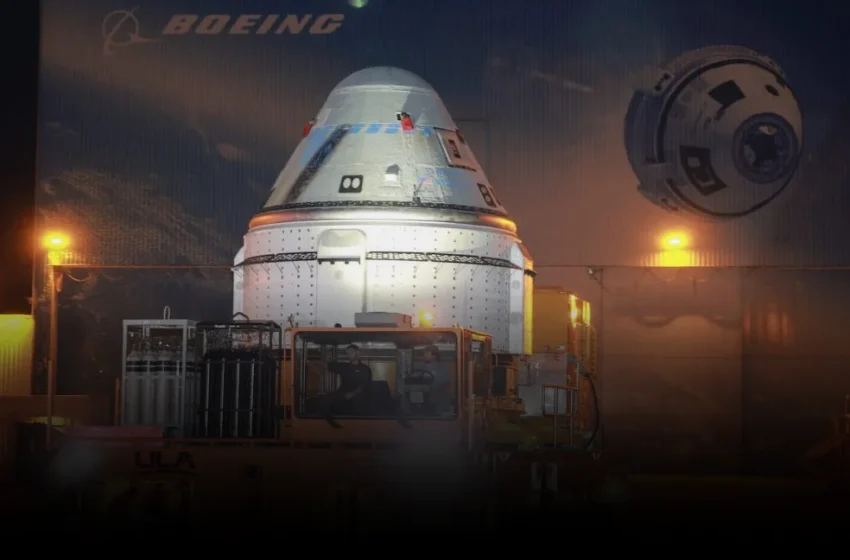
The ‘Type A’ Classification: A Semantic Shield?
Boeing’s Starliner program, burdened by persistent delays and a growing list of technical anomalies, is less a testament to engineering prowess and more a stark illustration of how entrenched political and industrial interests can sustain a failing project far beyond its logical expiration date. The announcement in February that NASA had formally classified Starliner’s 2024 crewed flight as a “Type A” mishap — the agency’s most severe designation, reserved for incidents involving significant damage, injury, or loss of life — should have been a red flag waving furiously in a gale. Instead, the subsequent reports that “work is proceeding apace” toward a potential flight this year read like a carefully managed public relations recovery rather than a candid assessment of risk.
A “Type A” mishap is not merely a hiccup; it acknowledges a serious failure. When NASA officials confirmed the severity, they underscored that Starliner would not fly its next mission until problems were “fully understood” and “remediated.” Yet, the underlying implication is that such a profound systemic issue can be addressed with enough quick fixes and engineering hours to meet an unspoken, perhaps political, deadline. To suggest that such a designation can be swiftly resolved without a deeper re-evaluation of fundamental program management speaks volumes about the narrative being carefully constructed, rather than a transparent acknowledgment of the extensive overhauls still required.
This isn’t just about a few faulty valves or wiring harnesses; this is about a pattern of design flaws, manufacturing errors, and software glitches that have plagued Starliner for years. Silicon Valley startups, operating on razor-thin margins and accountable to venture capitalists demanding rapid, demonstrable progress, would likely have seen such a project shelved long ago. But Boeing, a legacy aerospace titan, operates under different rules, bolstered by a unique blend of national security significance and bipartisan political support.
The Gravitational Pull of Government Contracts
The real engine driving Starliner’s continued, troubled journey isn’t simply engineering ambition, but the sheer momentum of Congressional funding and a political desire to maintain a diversified — if struggling — industrial base. NASA initiated its Commercial Crew Program to foster competition and reduce reliance on a single provider for human spaceflight, particularly after the Space Shuttle’s retirement. While SpaceX’s Crew Dragon has achieved operational status with remarkable efficiency and cost-effectiveness, Starliner has become a testament to the challenges of managing such a competitive landscape when one of the competitors is too big to fail.
Boeing’s deep ties to Washington D.C. are no secret. Decades of defense and space contracts have solidified its position as an indispensable partner, translating into substantial lobbying power and significant employment across key congressional districts. This structural reality means that even as Starliner’s development costs have soared — reportedly exceeding $1.5 billion in overruns shouldered by Boeing, in addition to the initial $4.2 billion NASA contract — the political incentive to keep the program alive remains incredibly potent. The alternative, allowing Starliner to fail outright, would not only represent a strategic defeat for NASA’s original vision of dual redundancy but also a politically unpalatable blow to a major American defense contractor.
This dynamic creates a perverse incentive structure: while a company like SpaceX thrives on fixed-price contracts that penalize delays and cost overruns, legacy contractors often benefit from cost-plus arrangements or have enough leverage to renegotiate terms. It’s a system that inadvertently rewards inefficiency when the contractor is deemed too essential to lose. This is the core contradiction Silicon Valley reporters, often focused on disruptors and innovation, tend to overlook – the powerful, silent hand of government procurement shaping the market in ways that defy pure meritocracy.
A Broader Warning for Commercial Space
The Starliner saga offers a crucial, if uncomfortable, lesson for the future of human spaceflight and the broader commercialization of space. While competition is touted as a driver of innovation, the experience demonstrates how political realities can create an uneven playing field. NASA’s commitment to Starliner isn’t just about technical validation; it’s about navigating a complex ecosystem where national interests, industrial policy, and geopolitical considerations often outweigh pure performance metrics.
What happens when a critical part of the national space strategy becomes synonymous with persistent delays and safety concerns? The agency’s patience, while understandable in the context of fostering a robust domestic launch capability, risks eroding confidence in its own oversight processes. Every new Starliner setback, whether it involves faulty valves, paratrooper issues, or wiring problems, reinforces the perception that the program is being given an almost indefinite grace period, a luxury not afforded to every player in the increasingly crowded space economy.
Ultimately, the question isn’t whether Starliner will eventually fly with astronauts onboard. The question is at what cost, and what precedent this drawn-out, politically supported struggle sets for future aerospace development. For intelligent, skeptical readers who follow the commercial space race, the true story of Starliner isn’t found in launch manifests, but in the less visible tug-of-war between engineering excellence and the gravitational pull of Washington.
