
AI’s Deep Dive: Unearthing Ghost Lineages and Rewriting Human Origins
- Artificial Intelligence
Arjun Vedanta
- 0
- 3 minutes read
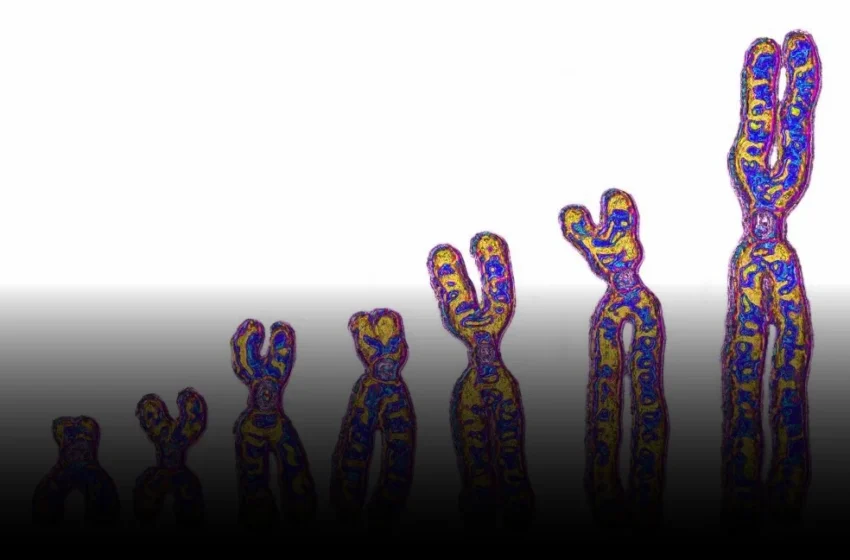
Genomic Archaeology Unearths Our Hidden Past
A spectral lineage, previously unseen, has surfaced from the vast ocean of human DNA, proving that our collective family tree is far more tangled than previously imagined. This isn’t merely another intriguing chapter in anthropology; it is a profound testament to how advanced computational genomics and sophisticated algorithms are fundamentally reshaping our understanding of human origins. The notion of a singular, clean “Out of Africa” migration and subsequent interbreeding with just Neanderthals and Denisovans now appears quaint, challenged by the relentless processing power of modern bioinformatics.
New research points to a distinct “ghost lineage” of ancient humans, an as-yet-unidentified group that interbred with modern humans within Africa before any significant migrations out of the continent. While the existence of Neanderthal DNA (averaging 2 percent in many populations) and Denisovan traces has been known for some time, this latest discovery pushes the boundaries, indicating yet another ancient interaction. Crucially, this isn’t a find unearthed by dusty spades and brushes, but by meticulously analyzing colossal datasets of modern human genomes, a feat only possible with cutting-edge analytical techniques.
The Algorithmic Lens: From Bones to Bits
For decades, the story of human evolution was primarily written in bone fragments and stone tools, pieced together by patient paleontologists. Today, the most powerful archaeological tools are often lines of code. Scientists, armed with recently developed analytical techniques, sift through genetic sequences, identifying subtle patterns and anomalies that indicate ancient intermingling. This isn’t simple pattern matching; it’s a sophisticated form of statistical inference and machine learning applied to biological data, teasing out faint signals from what would otherwise be considered genetic noise.
This computational prowess allows researchers to model complex evolutionary scenarios, comparing modern human genomes not just to known ancient hominids, but also against hypothetical genetic profiles to identify missing links. The implications extend far beyond academic curiosity; it’s a structural shift in how biological sciences progress, moving from direct observation to inferential reconstruction through big data analytics. The very narrative of human identity, once rooted in tangible archaeological finds, is now being rendered in gigabytes of code.
Incentives, Irony, and the Future of Self-Knowledge
The timing of such announcements often sparks questions about incentive: why this now? The simple answer lies in the maturation of both genomic sequencing technology and the computational biology infrastructure required to make sense of the deluge of data. Access to ever-larger and more diverse genomic libraries, coupled with increasingly powerful algorithms, makes these discoveries almost inevitable. Researchers and institutions benefit from groundbreaking findings that attract funding and cement their leadership in fields like phylogenetics and evolutionary modeling.
This particular discovery serves as a potent demonstration that the frontier of understanding who we are is no longer solely in the field, but increasingly in the server room. While Silicon Valley obsesses over generating synthetic faces and personalizing ad feeds, the real algorithmic breakthroughs are quietly reconstructing the human past, often overlooked by mainstream tech media fixated on consumer-facing flash. The ghost lineage, a silent partner in our DNA, reminds us that the quest for self-knowledge, enabled by technological advancements, reveals an ever-more complex tapestry, pushing us to continuously redefine what it means to be human.
