
Link Satellite’s Tumultuous Orbit Exposes Space Servicing’s Fragile Business Model
- Space
Arjun Vedanta
- 0
- 5 minutes read
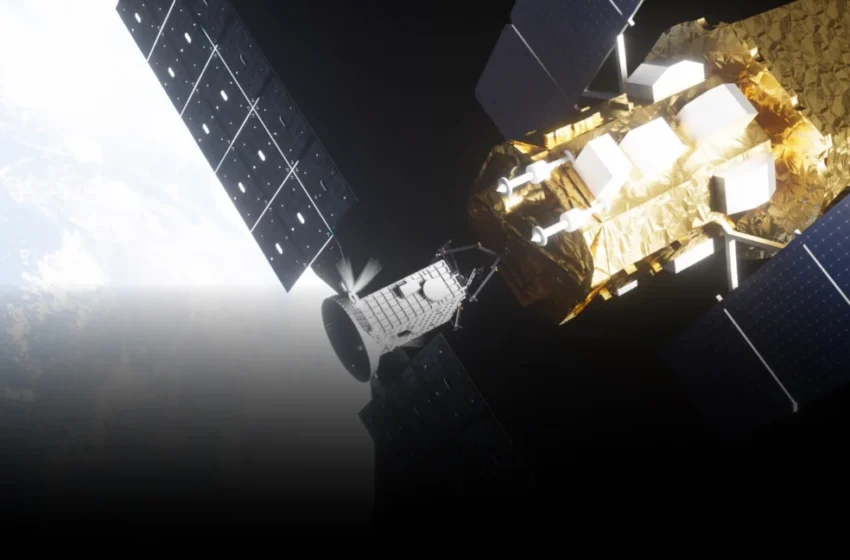
The $30 Million Gamble That Went Sideways
Two hundred miles above Earth, a $30 million solution to a half-billion-dollar problem is spinning uncontrollably. The Link satellite, the brainchild of Katalyst Space Technologies, was meant to rendezvous with NASA’s Swift gamma-ray observatory, grab onto it, and boost its orbit, saving the venerable $500 million asset from an fiery demise. Instead, a week ago, Link began an uncontrolled rotation on multiple axes, losing consistent contact with mission control. Two of its three reaction wheels — critical for precise pointing — failed, and engineers have since identified issues with its cold gas thrusters, essential for fine attitude adjustments. This isn’t merely a technical glitch; it’s a stark, public referendum on the nascent, high-stakes world of commercial in-orbit servicing, and it exposes a core contradiction that Silicon Valley’s boosters often overlook.
Katalyst Space Technologies won this significant NASA contract on the promise of a future where satellites are not disposable but serviceable, extending the life of valuable assets and, implicitly, managing orbital debris. The very public struggle to save Link, which was itself meant to be a savior, pulls back the curtain on the precarious economics and inherent risks of this vision. For all the talk of a burgeoning space economy, the reality remains that even missions with clear objectives and substantial funding can be crippled by challenges that are exceedingly difficult to anticipate, let alone mitigate in the unforgiving vacuum of space. The initial framing of Link as an unmitigated success story, as if orbital mechanics were merely complex plumbing, was always optimistic.
The Uninsurable Risks of Orbital Mechanics
The incident with Link isn’t just about a few malfunctioning components; it’s about the fundamental viability of an entire industry. Commercial space servicing, including satellite life extension and active debris removal, is predicated on the idea that complex orbital maneuvers can be reliably performed by private entities at a competitive cost. Yet, who truly bears the risk when a mission like Link’s falters? While NASA funded the contract, the reputational and financial hit to Katalyst Space Technologies is substantial, directly impacting future investment and contracts. The notion that space servicing will neatly address orbital debris without adding to it is a romantic concept, often pushed by companies whose primary goal is not environmental stewardship but securing lucrative government contracts to prove a capability.
Consider the broader implications: if a mission to rescue a known, stable asset struggles so profoundly, what does that say about the vastly more complex and hazardous task of capturing tumbling, non-cooperative space debris? The economic models for these ventures are already tenuous, built on projections of future demand and technological breakthroughs. Every such failure underscores the immense difficulty of attracting the kind of private capital that can absorb such losses, especially when traditional insurance markets are wary of covering these unprecedented risks. The incentive for both Katalyst and NASA is to demonstrate a viable in-orbit servicing capability; for the startup, it’s about commercial validation, and for the agency, it’s about offloading future infrastructure maintenance. This joint narrative often overshadows the underlying technical and financial fragility.
What Link’s Spin Tells Us About Space Sustainability
The Link mission was touted as a step towards greater space sustainability, a means to keep valuable assets in orbit longer and perhaps, eventually, to clean up the increasingly congested Low Earth Orbit. But the current situation reminds us that every rescue attempt is also a potential addition to the problem. Should Link be unable to recover, it becomes another piece of non-functional hardware circling Earth, highlighting a bitter irony in the quest for orbital housekeeping. This isn’t an isolated issue; the history of spaceflight is littered with ambitious projects that ran afoul of physics and engineering. From early launch vehicle failures to the ongoing challenges of spacecraft longevity, the promise of a clean, sustainable orbital environment hinges on a level of operational infallibility that has yet to materialize.
The global tech community needs to recognize that the dream of a robust, self-sustaining space economy, one that cleans up after itself, is hitting a very hard wall of physics and economics. It’s not enough to simply declare a new space era; the industry must contend with the brutal realities of operating in an environment that offers no second chances. The lessons from Link’s turbulent flight extend far beyond one struggling satellite. They challenge the very foundation of the commercial space servicing sector, forcing a reassessment of its scalability, financial models, and ultimately, its role in achieving genuine space sustainability. The current predicament makes it clear that while ambition is abundant, mastery of orbital logistics remains an elusive and incredibly expensive endeavor.
