
CDC Director’s Confirmation: A Troubling Victory for Political Expediency Over Science
- Special
Arjun Vedanta
- 0
- 5 minutes read
A Troubling Precedent for Public Health Governance
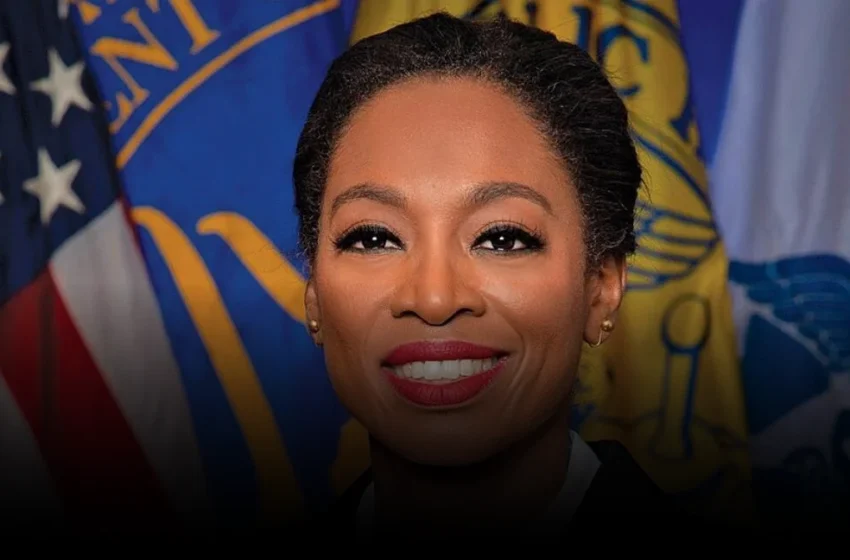
The 51–44 Senate vote confirming Erica Schwartz as the Centers for Disease Control and Prevention director this week did more than fill a critical leadership vacancy; it formalized the creeping politicization of a cornerstone public health institution. This was not a victory for effective governance, but a stark illustration of how scientific integrity can be systematically undermined, setting a deeply troubling precedent for global health security. Schwartz, a highly credentialed professional with a medical degree, a master’s in public health, and a law degree, now steps into this role not as an independent scientific authority, but as a compromise candidate, her confirmation hearing a public display of her political vulnerability and a harbinger of what is to come for the agency.
The circumstances surrounding her appointment are more telling than her impressive CV. Schwartz’s predecessor, Susan Monarez, was ousted last August for the cardinal sin of refusing to rubber-stamp vaccine recommendations from Health Secretary Robert F. Kennedy Jr.’s hand-picked advisors – individuals who openly share his anti-vaccine convictions. Against this backdrop, Schwartz’s confirmation hearing, where she conspicuously failed to convince senators she could stand up to Kennedy Jr., was not merely a procedural blip. It was a litmus test, a public vetting not of her scientific prowess, but of her willingness to navigate, or perhaps acquiesce to, a politically charged environment. The immediate benefit for Secretary Kennedy Jr. is clear: securing a pliable director allows him to further his agenda and consolidate power, effectively dismantling internal dissent against his controversial views without public confrontation, all while projecting an image of stable leadership.
The Erosion of Scientific Independence and Global Trust
For those of us observing global public health systems, this episode at the CDC is not an isolated incident; it resonates with a broader, concerning trend of institutional capture. Across various nations, from the manipulation of environmental agencies to the silencing of independent research bodies, the playbook is disarmingly consistent. Public health, however, operates on a unique currency: trust. When the chief scientific officer of a critical agency like the CDC is perceived as politically beholden rather than scientifically impartial, that trust begins to erode, not just domestically, but internationally.
International collaboration on disease surveillance, vaccine development, and outbreak response relies heavily on the credibility of institutions like the CDC. When vaccine efficacy guidelines or public health messaging emanating from the US are viewed through a political lens, the ripple effect is profound. Other nations, particularly those reliant on American scientific leadership and funding, will inevitably recalibrate their trust. This isn’t merely about policy disagreements; it’s about the fundamental integrity of data and recommendations. The world needs a CDC that speaks with an unimpeachable scientific voice, not one whose pronouncements are filtered through a political agenda. The previous director, Monarez, was dismissed for upholding scientific principles against political pressure, creating a chilling effect that will undoubtedly influence future leaders within the institution.
What This Means for Future Health Crises
The implications of this confirmation extend far beyond the current administration. We are witnessing the normalization of a profound structural implication: that a public health agency can function effectively, or even adequately, while its leadership is actively constrained by political ideologies at odds with established medical consensus. This is a dangerous gamble. Future pandemics, emerging infectious diseases, or even routine public health challenges like influenza seasons, demand rapid, evidence-based responses unburdened by political interference. A CDC director who struggled to articulate independence in a confirmation hearing is unlikely to find newfound courage when faced with an actual crisis, especially if the political costs are high.
This is precisely the kind of institutional weakening that Silicon Valley reporters, often focused on quarterly earnings and product launches, tend to miss. They see a confirmation, perhaps even a contentious one, and move on. What they don’t always grasp is the slow, almost imperceptible hollowing out of expertise and moral authority. To assume this erosion of public trust can be easily reversed in a subsequent administration is to fundamentally misunderstand how quickly institutional memory fades and political norms calcify. The 51–44 vote was not just a tally; it was a blueprint for how a nation can compromise its most vital defenses against unseen biological threats, all in the name of political expediency. The real question is not what Schwartz will do, but what she won’t be allowed to do, and the cost of that silence when the next global health challenge inevitably arrives.
