
Explosive Drone at Leipzig Reveals Civilian Aviation’s Kinetic Blind Spot
- Military Technology
Arjun Vedanta
- 0
- 4 minutes read
A New Front in Asymmetric Warfare Takes Flight
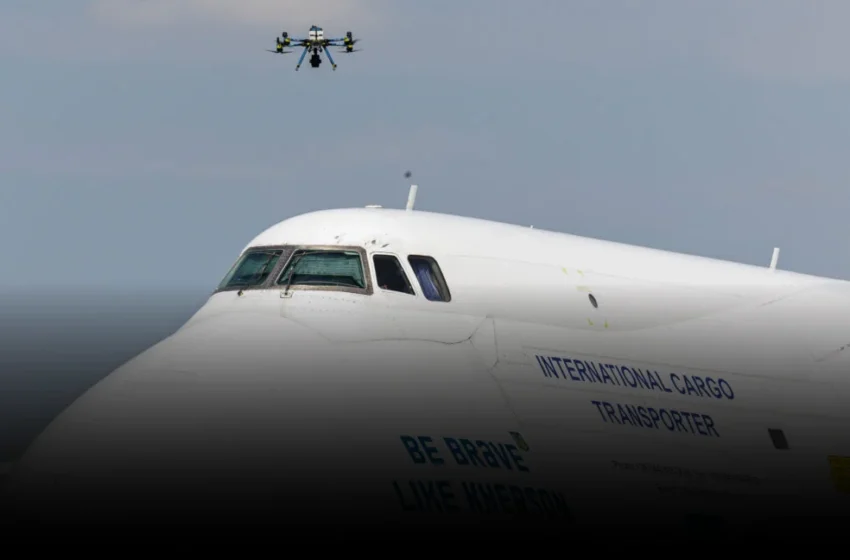
The explosive drone found hovering near Ukrainian cargo aircraft at Leipzig Airport wasn’t merely a security breach; it was a chillingly effective demonstration of a new, kinetic front in asymmetric warfare, revealing a systemic vulnerability in civilian infrastructure that current defenses are tragically ill-equipped to handle. On August 4, shortly before midnight, an airport employee discovered a drone between two parked An-124 cargo aircraft belonging to Ukraine’s Antonov Airlines. This wasn’t a hobbyist’s joyride; German Interior Minister Alexander Dobrindt confirmed the drone carried a “fist-sized package” of Semtex plastic explosive. Only a failed detonator, Dobrindt stated, prevented a catastrophic detonation near these critical logistical assets.
The drone itself had been modified, presumably to evade the airport’s existing drone defense sensors. This detail elevates the incident beyond a simple near-miss. It indicates a level of intent and operational sophistication far exceeding what airports typically contend with, highlighting a calculated effort to bypass established anti-drone systems. The investigation also considers a second drone after an approaching aircraft reported a mid-air collision with an unidentified object, suggesting a coordinated reconnaissance or diversionary tactic.
Beyond Disruptions: The Weaponization of Airspace
For years, the discourse around drones at airports has centered on nuisance, privacy, and flight disruptions—the kind of chaos seen at Gatwick. Leipzig, however, forces a stark re-evaluation. This incident wasn’t about delaying flights; it was about destroying high-value assets with military-grade explosives. This moves the conversation firmly into the realm of kinetic attack, posing an aerial threat vector that demands a complete overhaul of traditional civilian aviation security protocols.
While the immediate relief over a failed detonator is understandable, it masks a dangerous complacency: too many security experts remain fixated on traditional perimeter defenses, often dismissing airborne threats as mere disruptions rather than potential vectors for sophisticated, deadly sabotage. The target, Ukrainian cargo aircraft, clearly suggests geopolitical motivations, potentially linking to state-sponsored actors or sophisticated non-state groups seeking to disrupt vital supply chains or project power through unconventional means. This public revelation of a near-catastrophic failure, particularly given the specific geopolitical context of its target, inadvertently creates a powerful impetus for accelerated government and industry investment in advanced counter-UAS technologies, directly benefiting a burgeoning security market.
The Unspoken Costs of Aerial Sabotage
The implications extend far beyond Leipzig’s tarmac. Critical infrastructure protection across the globe, from logistics hubs and power grids to data centers, operates on assumptions now demonstrably fragile. Cheap, commercially available drone technology, when weaponized with rudimentary explosive packages, becomes an asymmetric weapon of devastating potential. Defending against such adaptable, low-cost threats requires enormous investment in sophisticated radar, jamming systems, and even kinetic interceptors—a significant and unforeseen burden on already stretched security budgets.
The psychological toll on public confidence and the economic impact of potential operational shutdowns or insurance premium hikes are equally profound. Every major claim of security in a networked world now carries the unspoken caveat that the skies above are increasingly permeable. The threat matrix for airports, long focused on landside and airside access points, must now fully integrate a comprehensive, dynamic aerial defense strategy against autonomous and remotely piloted systems. This isn’t a future problem; it’s a present reality demanding immediate, global attention to avert the next, potentially successful, act of aerial sabotage.
