
Misinformation’s Policy Leap: When Fringe Theories Enter the Oval Office
- Government & Policy
Arjun Vedanta
- 0
- 5 minutes read
The Policy Pivot, From Algorithm to Oval Office
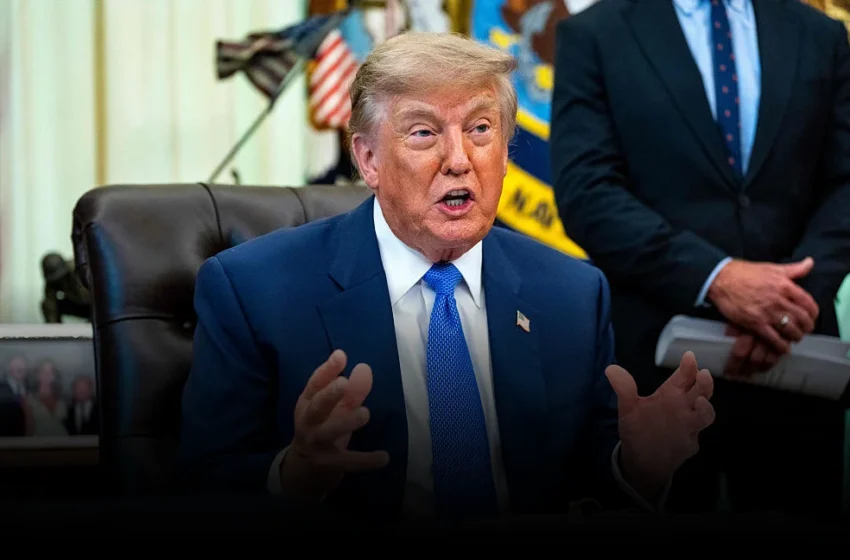
Eighteen becomes eleven. Not a subtle shift in a budgeting document, but a stark, unilateral re-engineering of federal vaccine recommendations for children, signed into executive order. President Trump’s decree to reduce the recommended childhood vaccination schedule from eighteen to eleven doses, while spacing out the remainder, is not merely a public health decision; it is a chilling demonstration of how thoroughly fringe digital misinformation has permeated the highest echelons of state power.
This isn’t about Silicon Valley’s latest product launch, but it is deeply about the information ecosystem that Silicon Valley helped build. For years, we’ve watched narratives metastasize across social feeds – from niche forums to mainstream platforms – peddling unsubstantiated claims about vaccine harm, autism links, or the notion of an “overwhelmed” immune system. These were once the exclusive domain of internet message boards and dimly lit YouTube channels, now they form the explicit bedrock of national policy, jettisoning decades of established scientific consensus.
The most cynical read suggests this wasn’t about public health, but a naked appeal to a specific, vocal segment of the electorate, further weaponizing mistrust in expert institutions for political gain. The incentive is clear: solidify a base by validating their contrarian views, even if it means risking national well-being. This is regulatory capture of scientific authority, not by industry, but by a political narrative shaped by online echo chambers.
The Digital Echo Chamber as Policy Blueprint
This executive order bypasses, without pretense, the entire medical establishment. The Centers for Disease Control and Prevention (CDC), the American Academy of Pediatrics, the World Health Organization – their recommendations, built on rigorous, longitudinal data and clinical trials, are implicitly dismissed. The President himself, during the signing, invoked images of “a vaccination that looks like the size of a bottle of soda” being “poured into a little child’s body,” leading to “bad things” and an “epidemic.” This is not the language of scientific discourse; it is the rhetoric of fear amplified, direct from the anti-vaccine playbook found on countless digital platforms.
We have long tracked how disinformation campaigns influence elections or sow societal discord. What this moment reveals, starkly, is a direct causal link between the unchallenged spread of medical falsehoods online and the tangible alteration of public health guidelines. It’s no longer about influence peddling or lobbying; it’s about a direct translation of scientifically debunked talking points into official government action. The structural implication is profound: if the scientific method can be so easily overridden by digitally propagated untruths, what other areas of policy, from climate change to cybersecurity, are similarly vulnerable?
Consider the implications for global public health initiatives. When the leader of a major global power actively undermines vaccine science, it provides a dangerous precedent and validation for anti-vaccine movements worldwide, complicating efforts to eradicate diseases like polio or measles, which rely on high vaccination rates. This is not just an American problem; it’s a global setback, broadcast and amplified by the very same digital infrastructure that fuels the initial misinformation.
Eroding Trust in a Fractured Information Landscape
The immediate consequence is, naturally, a heightened risk to public health. Lower vaccination rates inevitably lead to a resurgence of preventable diseases. But the more insidious, long-term impact is the further erosion of public trust in foundational institutions: science, medicine, and government itself. Silicon Valley, for all its talk of connecting the world, has struggled mightily with the externalities of that connection – the algorithmic amplification of divisive content, the monetization of outrage, and the difficulty of content moderation at scale.
What the US-centric tech press often misses is how these local skirmishes over ‘free speech’ versus ‘misinformation’ manifest globally. In countries where public trust in institutions is already fragile, the legitimization of anti-science narratives by a head of state has immediate, destabilizing effects. This order isn’t just a domestic policy change; it’s a global signal. It suggests that a nation’s health policy can be dictated by popular, albeit false, digital sentiment rather than expert consensus.
The tech industry’s efforts to combat health misinformation – from content labeling to outright bans – often feel like whack-a-mole. This executive order demonstrates that the problem isn’t confined to digital platforms; it’s a systemic failure where the output of those platforms can directly overwrite the input of scientific institutions. The challenge is no longer merely managing online discourse, but confronting the reality that the digital information ecosystem now actively dictates real-world policy outcomes, with potentially devastating consequences for global public health.
