
US Renewable Energy Growth: A Triumph of Past Policy, Not Present Progress
- Government & Policy
Arjun Vedanta
- 0
- 5 minutes read
The Illusion of Acceleration in US Renewables
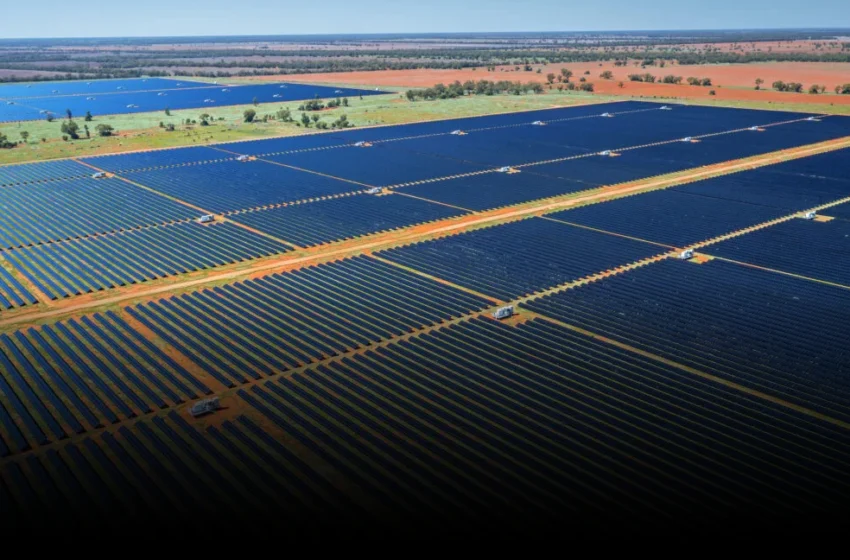
The impressive figures released by the US Energy Information Administration regarding new power plant capacity tell only part of a more complicated story about America’s clean energy transition. While the headline — 368 utility-scale plants coming online in the first half of the year, dominated by solar — certainly sounds like a surge of progress, digging just beneath the surface reveals a structural chasm between announced capacity and the grinding reality of new infrastructure deployment.
Consider the scale: 3,650 megawatts from SunZia Wind South and SunZia Wind North alone, now the country’s largest wind farms in New Mexico. This is not incidental capacity; it’s a monumental achievement. Yet, these projects did not spring up overnight. They represent a decade of planning, permitting, and construction, a testament to political will and market forces that were in play many years ago. To frame their activation today as a metric of current policy effectiveness or rapid innovation is to fundamentally misunderstand the timeline of large-scale infrastructure.
This celebratory framing, often amplified by domestic reporters eager for good news, obscures a troubling counter-narrative: the acknowledged dwindling of US onshore wind power development. The EIA itself points to challenges related to regulations and public opinion. This is not a technical problem; it is a societal and governance issue that reaches far beyond the specifics of turbine design or solar panel efficiency. It’s a systemic friction that applies equally to new grid infrastructure, advanced manufacturing facilities, or even ambitious data center projects for nascent AI technologies.
The Stalled Engine of New Green Infrastructure
The fact that America is commissioning major renewable assets largely conceived in a different era underscores a critical point: the US is adept at executing established plans, but increasingly paralyzed when it comes to initiating truly new, large-scale clean energy projects. The easy wins, the low-hanging fruit, have been harvested. What remains is a landscape riddled with local opposition, protracted environmental reviews, and often contradictory state and federal regulatory frameworks.
From my vantage point covering global tech, this isn’t just an energy sector problem; it’s a national competency issue. While Europe and parts of Asia are aggressively streamlining permitting processes and even nationalizing grid upgrades to accelerate their climate goals, the US remains bogged down in what amounts to chronic NIMBYism and fragmented governance. The incentive to frame these newly online plants as a triumph of present-day green policy is clear: it allows policymakers and industry players to project an image of robust progress, diverting attention from the increasingly tough battles to come. It’s easier to cut a ribbon on a finished project than to confront the political costs of ramming through a contentious new transmission line.
This isn’t to say solar isn’t booming — it absolutely is, particularly at the utility scale, buoyed by federal incentives like the Inflation Reduction Act. But even solar faces increasing scrutiny regarding land use, especially as projects grow larger and require extensive new transmission to reach load centers. The problem isn’t the technology; it’s the increasingly arduous path from conception to realization for anything substantial.
A Gathering Storm for Future Energy Targets
The consequences of this slow-motion paralysis are profound. Achieving ambitious decarbonization targets by 2030 or 2050 requires not just continued deployment, but a radical acceleration in the pace of new project approvals and grid modernization. We are not seeing that acceleration. Instead, we are seeing the last waves of old momentum, which, while impressive in their individual scale, are insufficient to meet the projected demand for clean electricity, especially from energy-intensive sectors like high-performance computing and industrial decarbonization.
The sharpest observation one can make here is that the US is in danger of becoming a victim of its own success, or rather, its past success. By celebrating these delayed completions as if they represent a new dawn of rapid deployment, the country risks fostering complacency about the underlying systemic challenges. The focus should not be on how many plants came online this year, but on how many new projects secured crucial permitting and commenced construction — those are the true indicators of future momentum. And by those metrics, the picture is far less rosy.
Unless the US government can fundamentally reform its permitting processes, overcome local opposition, and invest massively in a truly modern, resilient transmission grid, these impressive numbers will become increasingly anomalous. They will stand as monuments to past ambition, rather than harbingers of a truly sustainable and expedited clean energy future.
