
SpaceX’s $100 Billion Louisiana Bet: A Hedged Play on Starship’s Future
- Space
Arjun Vedanta
- 0
- 4 minutes read
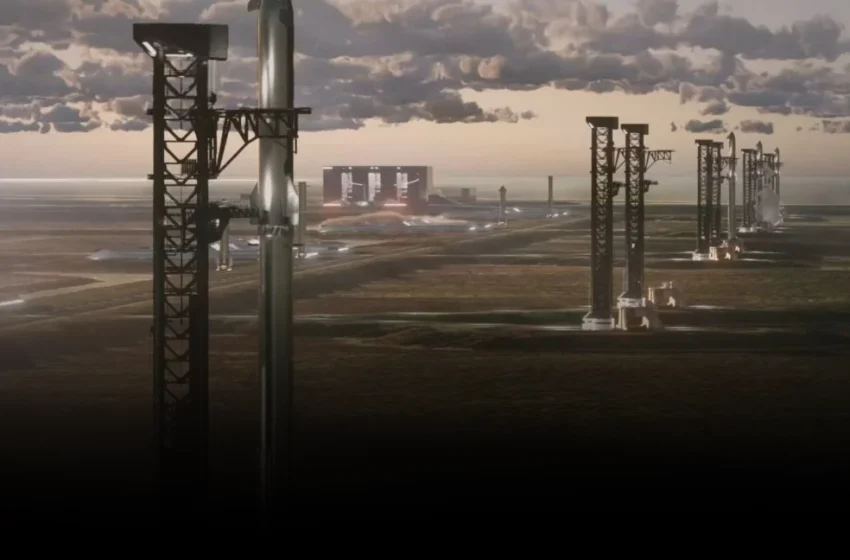
The Unspoken Logic of a Parallel Spaceport
A $100 billion investment for a second, massive Starship manufacturing and launch facility in Louisiana is not merely an expansion; it is a calculated move to de-risk SpaceX’s most ambitious project. Governor Jeff Landry’s announcement this week of the colossal sum — to replicate and expand upon the Boca Chica, Texas, Starbase — immediately triggers questions about why a company, known for its lean, iterative development, would effectively double down on such complex, high-stakes infrastructure.
This isn’t about simply building more rockets faster. It’s about building a
The Louisiana site, as described by SpaceX President and COO Gwynne Shotwell, promises to be a fully self-sustaining ecosystem: propellant production, power generation, deep-water shipping, vehicle processing, even an on-site airport. This vertical integration strategy mirrors Starbase but on an even grander scale, designed to reduce external dependencies and insulate Starship production from supply chain vulnerabilities. For SpaceX, the future isn’t just about getting to Mars; it’s about making sure nothing on Earth can stop them from trying.
Strategic Decentralization: Leveraging State Competition
Beneath the fanfare of job creation and technological advancement, this project is a hard-nosed lesson in corporate resilience and state-level regulatory arbitrage. SpaceX’s experience at Boca Chica, nestled against a national wildlife refuge, has been a masterclass in navigating environmental scrutiny and local opposition, leading to significant delays and operational restrictions. Launch windows, noise complaints, environmental impact assessments – these are the friction points of innovation on Earth.
By initiating “Starbase Louisiana,” SpaceX creates
The incentive for this announcement, timed as it is, speaks volumes. As Starship’s launch cadence accelerates and its critical role in NASA’s Artemis program becomes more pronounced, the cost of a single-point-of-failure — be it regulatory, environmental, or even catastrophic — becomes unbearable. This move ensures the continuity of Starship development and deployment, making SpaceX less vulnerable to the whims of any single jurisdiction or local community. It effectively holds a powerful card in future negotiations, a tactic often employed by multinational corporations but rarely on this scale within a single nation.
Environmental Stakes and Economic Gravitas
The choice of Louisiana, with its vast coastal marshlands and existing energy infrastructure, highlights a complex trade-off. While the region offers logistical advantages like deep-water access and a ready supply of methane — critical for Starship’s Raptor engines — it also presents significant environmental challenges. Developing such a massive industrial footprint in a delicate, hurricane-prone ecosystem will inevitably draw intense scrutiny from environmental groups, replicating, and perhaps amplifying, some of the issues seen in Texas.
Yet, the promise of a
This isn’t just a story about rockets; it’s a story about the strategic chess moves of a company aiming to redefine humanity’s place in the cosmos. SpaceX is not just building launch pads; it is building an operational fort that can withstand geopolitical, environmental, and regulatory turbulence. The $100 billion investment in Louisiana signals a future where orbital access is not merely possible, but
It’s a stark reminder that while innovation often looks like sleek hardware, its true enablers are often found in the messy, strategic decisions of land use, political leverage, and redundancy planning. SpaceX understands that to conquer space, one must first master the terrestrial game.
