
Europe’s Small Space Bets: A Lifeline or a Losing Hand Against the Private Giants?
- Space
Arjun Vedanta
- 0
- 4 minutes read
The Illusion of European ‘Robustness’
Europe is funding ‘lifelines’ for its nascent launch sector. Across the Atlantic, a single company is planning to invest a hundred billion dollars. This stark contrast, often glossed over, speaks volumes about the vastly different strategic trajectories in the global space economy.
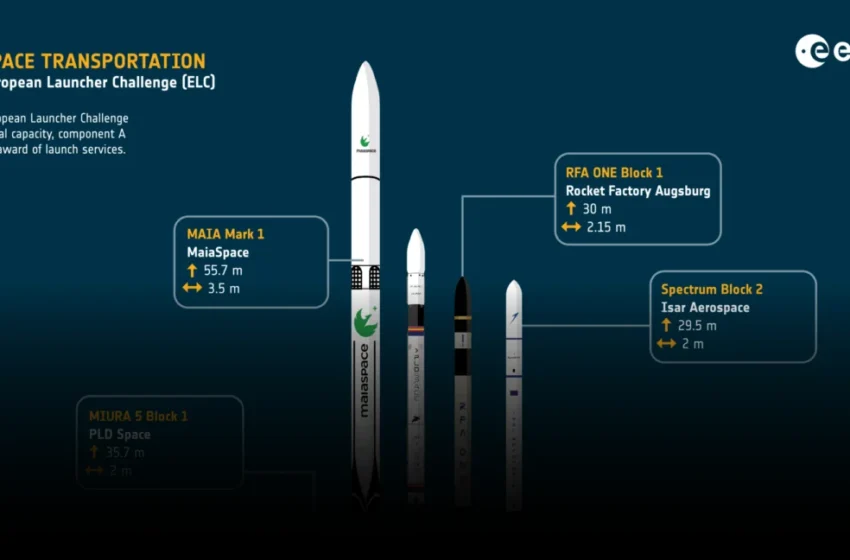
The European Space Agency’s (ESA) recent announcement of contracts under its ‘European Launcher Challenge’ is a case in point. Framed as an initiative to expand supply and ensure robustness in Europe’s access to space, these awards are intended to support the development and operation of small launch vehicles. For some of the recipient firms, the funding is explicitly called a ‘key lifeline.’ On the surface, this appears to be a sensible, supportive move for domestic industry.
Yet, the very language used — ‘lifeline,’ ‘robustness’ for ‘small launch vehicles’ — betrays a profound misreading of the accelerating commercialization curve. These are not investments designed to capture market share or innovate at a disruptive scale. They are defensive grants, aimed at patching over gaps in a legacy system that increasingly struggles against agile, privately capitalized competitors.
The American Colossus and its Gravity Well
Consider the parallel development: SpaceX’s audacious plan to invest up to $100 billion in Louisiana for Starship factories and multiple launch pads. This isn’t just an investment; it’s an industrialization strategy that will utterly transform a region and solidify a market dominance previously unthinkable. This single, privately funded American enterprise dwarfs Europe’s collective efforts by orders of magnitude.
The scale differential isn’t just about money; it’s about the entire philosophy of space access. While ESA focuses on cultivating a fragmented ecosystem of ‘small launch vehicles,’ SpaceX is building a vertically integrated, high-volume production system capable of launching unprecedented payloads at unprecedented frequency. This isn’t just competition; it’s a structural shift, creating a gravity well of capability and cost-efficiency that other players struggle to escape.
The idea that a scattering of small grants will somehow create ‘robustness’ against the market forces unleashed by private capital of a scale never before seen in commercial space is either deeply naive or a cynical misdirection. This framing allows European agencies to demonstrate action and commitment to domestic industry, deflecting criticism about the continent’s lagging position without fundamentally challenging the structural disadvantages their startups face.
Europe’s Costly Small Bets
The strategic implication for Europe is dire. By focusing on shoring up niche capabilities and funding ‘lifelines,’ the continent risks being permanently relegated to a secondary role in critical areas of the space economy, from satellite deployment to future deep-space missions. While European firms struggle for survival with public funds, their American counterparts are building infrastructure for the next century of space exploration and utilization, often with significant government contracts but private capital driving the primary innovation.
This isn’t about blaming the startups; it’s about the systemic environment. Europe’s reliance on state-centric funding models, often characterized by complex bureaucratic hurdles and a preference for distributed, incremental progress, clashes with the ruthless pace of innovation driven by private capital and bold risk-taking exemplified by companies like SpaceX, Blue Origin, or even Rocket Lab. The continent has a strong legacy in scientific space missions, but commercial launch services are a different beast entirely.
Unless Europe fundamentally rethinks its approach – perhaps by fostering massive private investment, consolidating efforts, or taking bolder, more centralized risks – its ‘robustness’ in space access will remain an aspiration, while true capability and competitive advantage drift further across the Atlantic. The cost of these small bets isn’t just financial; it’s strategic and existential for Europe’s future role in the commercial space age.
