
Tesla Cybercab’s Regulatory Limbo: A Calculated Public Bet or Reckless Ploy?
- Artificial Intelligence
Arjun Vedanta
- 0
- 5 minutes read
Regulatory Inertia Meets Iteration Acceleration
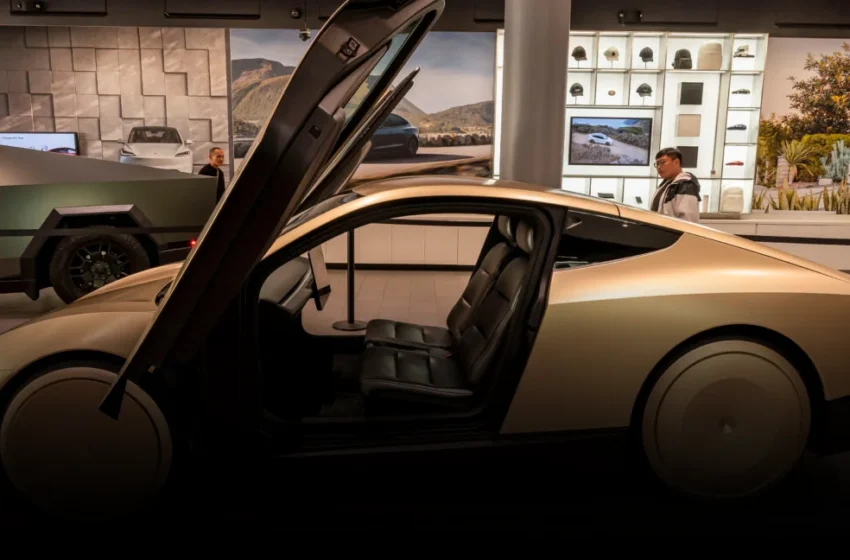
The curtain barely fell on Tesla’s splashy Cybercab debut in Austin, ferrying “hundreds of fans” around a meticulously controlled downtown circuit, before the National Highway Traffic Safety Administration (NHTSA) opened a federal probe. This isn’t merely a routine safety check; it’s a direct confrontation between an automaker’s unyielding drive for radical design and a regulatory body struggling to apply “years-old standards” to a vehicle that fundamentally disregards them. The Cybercab, a purpose-built two-seater conspicuously lacking a steering wheel or brake pedals, represents a significant leap from modified production vehicles. Its immediate deployment and concurrent federal investigation highlight a systemic impasse: can a regulator, inherently reactive and procedure-bound, keep pace with a tech giant committed to aggressive, public-facing iteration in safety-critical domains?
NHTSA finds itself in an unenviable position. On one hand, the agency is actively attempting to modernize the regulatory framework for autonomous vehicles (AVs), specifically “tweaking eight rules” to remove requirements for components like brake pedals, windshield wipers, and rearview mirrors — parts rendered obsolete by full self-driving capabilities. Yet, “years-old standards remain in place,” leaving a profound legal void. Tesla, meanwhile, has always preferred to operate at the bleeding edge, often betting that public enthusiasm and technological advancement will outrun bureaucratic caution. This latest move feels less like an oversight and more like a deliberate gambit to force the regulator’s hand. The question is not whether the Cybercab is safe in a vacuum, but whether it is safe under a legal regime designed for a different era of automotive engineering.
The Spectacle of ‘Deployment’ vs. Operational Reality
Calling the initial Austin rides a “deployment” feels generous, bordering on a rhetorical sleight of hand. While “members of the public” are indeed being picked up in “two states” as part of its Robotaxi network, the early stages appear more akin to a controlled public beta test, thinly veiled as a full-scale launch. This tactic is vintage Tesla: generate immense media hype, leverage a loyal fan base for public demonstrations, and create a narrative of pioneering innovation. The true operational scale of its “Robotaxi ride-hail network” in Texas and Florida remains opaque, and certainly not at a level where this vehicle design has undergone extensive, diverse real-world validation beyond the company’s internal testing.
This approach highlights a significant difference in how Silicon Valley perceives “progress” versus how traditional industries, particularly those touching public safety, define it. For Tesla, putting an early, radical design into public circulation, even if limited, creates invaluable data and public mindshare. For regulators and the broader public, however, the appearance of “hundreds of fans” in a vehicle without manual controls, just hours before a federal safety probe, raises legitimate questions about corporate responsibility and the ethics of what amounts to a public experiment. The incentive for Tesla is clear: force the issue, generate headlines, and create a groundswell of public and investor enthusiasm that can be difficult for slow-moving government bodies to counter. It also serves as a potent advertisement for its autonomous driving capabilities, an adjacent technology that remains central to its long-term vision for urban mobility.
Whose Standards Prevail? Redefining Vehicle Safety in the AI Age
The core of this conflict isn’t just about brake pedals or rearview mirrors; it’s about establishing precedent for an entirely new category of vehicle. Traditional automotive safety is built on decades of crash data, established engineering principles, and a clear chain of human command. The Cybercab, by design, breaks almost every one of these assumptions. This isn’t merely about retrofitting existing laws; it’s about reimagining them for a future where artificial intelligence and sensor fusion largely govern vehicle operation. What constitutes “safe” when there’s no human fallback?
My sharpest skeptical observation here is that Tesla isn’t waiting for the rules to change; it’s actively creating a situation where regulators are forced to react to its product. This isn’t innovation pushing boundaries; it’s innovation deliberately blurring the lines of public safety liability. While the company may argue it is merely pushing for an accelerated future, the implicit message is that its design choices should dictate the pace of governmental oversight, rather than the other way around. This dynamic sets a dangerous precedent, particularly if similar strategies are adopted by other autonomous systems developers in less regulated markets. The global implications are vast: will other nations, from the EU to Singapore, accept US regulatory outcomes, or will they develop their own, potentially diverging, safety standards for these radical new designs? The immediate future of urban mobility and public trust in driverless technology hinges on how this fundamental tension is resolved.
