
The Perilous Opacity of Hyperscale AI Compute Infrastructure
- AI Infrastructure
Arjun Vedanta
- 0
- 4 minutes read
The Anatomy of a Blind Spot
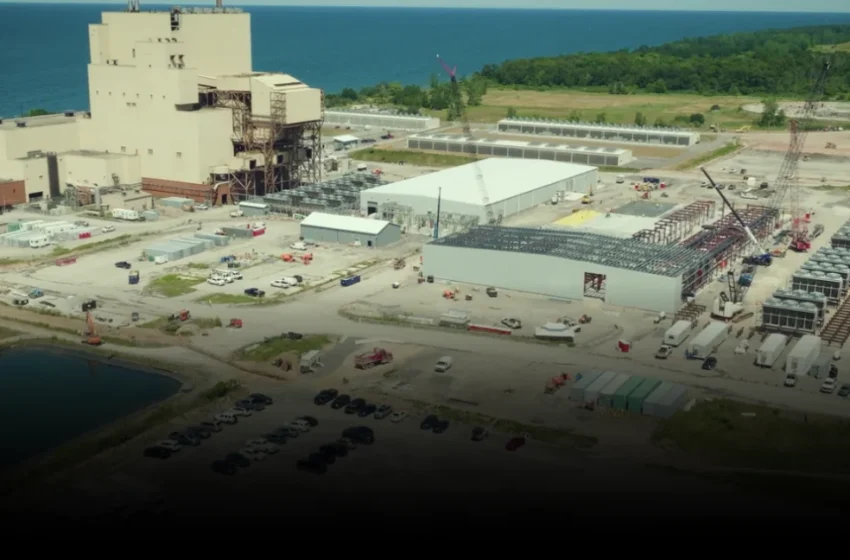
A $3.2 billion AI data center, under construction in rural Somerset, New York, recently experienced a fire that illuminated a dangerous truth: the immediate need for advanced compute capacity is outpacing fundamental safety oversight. In early June, when firefighters from the Barker Fire Department responded to the blaze at the Lake Mariner facility, they reportedly encountered an alarming litany of failures: no operational fire alarm, no active suppression system, and three dead hydrants. This wasn’t merely an accident; it was a revelation of critical infrastructure vulnerabilities.
Steve Matisz, chief of the Barker Fire Department, starkly described his crew going into the building “kind of blind.” Firefighters faced dense black smoke, unable to identify the chemicals burning because the legally required safety data sheets had, according to reports, conveniently burned up in the very same fire. His skepticism was palpable when he stated he wasn’t sure what to think about that specific claim, underscoring the immediate information void confronting local emergency responders.
This incident, on a site formerly occupied by a coal mine on Lake Ontario, exposes the profound disconnect between the high-stakes, globally-driven ambition of AI buildouts and the stark realities of local safety protocols. The facility is destined to serve the compute demands of companies like Anthropic, yet its foundational safety mechanisms were reportedly nonexistent. The sophistication of the AI applications it will host stands in sharp contrast to the apparent lack of basic fire safety readiness.
Layers of Liability, Shifting Sands of Ownership
The opaque corporate layering behind Lake Mariner is a textbook example of how accountability can diffuse when urgent market demand meets complex financial engineering. The data center is owned and operated by TeraWulf, a company known for Bitcoin mining, but it leases the land from a separate entity owned by TeraWulf’s own CEO. Fluidstack, a UK-based AI company, is slated to run the entire facility. Adding another intricate layer, Google holds warrants for a future 14 percent equity stake and has committed to guaranteeing Fluidstack’s lease payments.
This labyrinthine structure—TeraWulf as operator, a CEO as landlord, Fluidstack as the manager, and Google as a significant financial backer and eventual equity holder—illustrates a crucial incentive at play: the relentless pursuit of speed-to-market for *hyperscale* AI compute capacity. Every party benefits from accelerated deployment, but the fragmented responsibilities inherently create opportunities for critical oversight, particularly concerning construction safety and regulatory compliance, to fall through the cracks. Who ultimately owns the risk when the structure is designed to obscure clear lines of command?
The global race for AI supremacy, fuelled by an insatiable appetite for *compute infrastructure*, often prioritizes rapid scaling over meticulous, localized scrutiny. This setup, common in the *colocation* industry, complicates enforcement for anyone without a forensic accounting team. It’s a structural tension where global corporate efficiency inadvertently undermines local community safety and regulatory coherence.
The Regulatory Chasm
The Lake Mariner fire is not an isolated incident; it’s a bellwether for a widening regulatory chasm. Local fire departments, typically equipped to handle conventional industrial incidents, are suddenly confronting complex, multi-billion-dollar *AI data center* facilities managed by an international web of entities. They are expected to oversee infrastructure that serves leading-edge AI models while struggling to obtain basic safety documentation, as Chief Matisz’s experience highlights.
This isn’t merely about communication breakdown; it’s a fundamental mismatch of scale and resources. Local municipalities often lack the expertise, legal leverage, or even the basic understanding of the technologies involved to effectively regulate these massive, rapidly deployed projects. The speed and complexity of the AI industry’s expansion create a significant challenge for local authorities tasked with ensuring public safety and environmental compliance.
The underlying implication is clear: as the demand for AI compute drives unprecedented infrastructure buildouts, the diffused accountability inherent in complex corporate structures creates systemic risks that local regulatory bodies are currently ill-equipped to address. The Lake Mariner fire serves as a stark reminder that the promises of artificial intelligence must not overshadow the essential, often mundane, realities of physical safety and transparent governance.
