
US Lawmakers’ ALPR Bill: A Restriction or a Rubber Stamp for Surveillance?
- Government & Policy
Arjun Vedanta
- 0
- 5 minutes read
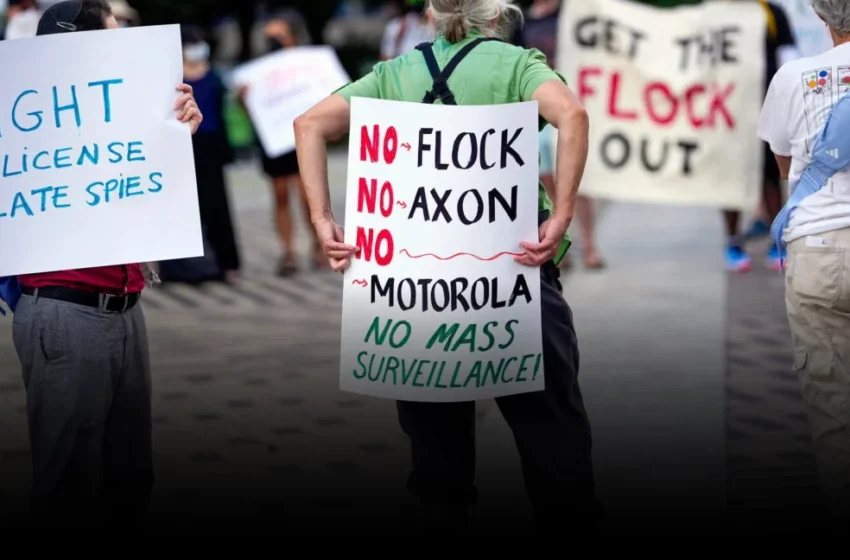
The ‘No FLOCK’ Act: Standardizing the Surveillance State
A curious tension defines the emerging battle over automated license plate readers (ALPRs) in the United States. While US Congressmen Raja Krishnamoorthi and Michael Cloud position their proposed ‘No FLOCK Act’ as a critical check on pervasive surveillance, threatening states with a 10 percent cut in federal highway funding if they don’t comply, the bill simultaneously codifies the technology’s enduring presence. This isn’t a ban; it’s a blessing with caveats, implicitly acknowledging and entrenching ALPRs as a foundational component of law enforcement infrastructure rather than fundamentally challenging their expansion.
The legislation, aimed at companies like Flock Safety, outlines five specific scenarios for permissible use: enforcing tolls, identifying stolen vehicles, locating missing persons, apprehending felony warrant suspects, or investigating felony offenses. This leaves little room for the ‘nefarious uses by officers’ that prompted the backlash — traffic studies, minor drug crimes, or parking enforcement are conspicuously absent. Yet, the very act of drawing these lines, however well-intentioned, tacitly accepts that a vast network of always-on cameras scanning every vehicle is a legitimate tool. For those of us who have watched similar technologies seep into public spaces globally, from Beijing’s social credit system to London’s expansive CCTV networks, this legislative framework feels less like a bulwark against state overreach and more like a reluctant concession, defining the boundaries of an already established domain.
The global context offers a stark comparison. European data protection laws, like GDPR, frequently demand a higher bar for justifying such pervasive data collection, often requiring explicit consent or a demonstrated necessity that goes beyond mere convenience. The US approach, by contrast, remains piecemeal, state-by-state, and often reactive. The ‘No FLOCK Act’ doesn’t dismantle the surveillance apparatus; it merely trims its edges, creating a legal framework where none existed, thereby inadvertently lending new legitimacy to what was previously a grey area of unchecked monitoring. The sharpest observation here is that codifying ‘acceptable’ uses for ALPRs creates a perceived regulatory victory while firmly planting the flag for the technology’s widespread adoption in every other ‘approved’ context.
The Data Dragnet and Its True Cost to Privacy
Beyond the immediate restrictions, the structural implications of a sanctioned ALPR network are profound and often overlooked by US-centric tech reporting. Even when limited to felony investigations, the data collected by these devices — timestamps, locations, vehicle identifiers — doesn’t exist in a vacuum. It flows into vast databases, often retained for years, and can be shared with various federal agencies, including ICE, the FBI, and fusion centers, creating an ever-expanding digital footprint for every driver. This network is not merely about identifying a stolen car; it is about building comprehensive movement histories.
Consider the incentive at play here: the bipartisan nature of the ‘No FLOCK Act’ allows politicians to appear responsive to privacy concerns while simultaneously signaling continued support for law enforcement access to powerful tools. For companies like Flock Safety, this legislation, far from being a setback, offers a pathway to market stability. By providing a clear, federally endorsed framework for ‘legitimate’ use, it reduces legal ambiguity and arguably solidifies their position as essential vendors for government agencies. The ‘cost’ of these restrictions, in effect, becomes the societal acceptance of this widespread surveillance infrastructure, with a veneer of accountability.
Furthermore, the data is not exclusive to law enforcement. A thriving ecosystem of data brokers aggregates and sells vehicle movement data, often sourced from ALPRs or other connected car technologies. Even if police are restricted, the same data points can find their way into the hands of private entities, insurers, or even less scrupulous actors. The idea that restricting police use for specific crimes somehow safeguards the broader privacy implications of such pervasive data collection is naive. It ignores the secondary uses, the data aggregation, and the potential for a composite digital profile to be built from seemingly disparate data points, all without due process or individual consent.
The Illusion of Regulation and What Everyone Is Missing
My concern, having observed technology adoption across diverse regulatory landscapes, is that this bill represents a classic American response: a reactive measure that seeks to regulate symptoms rather than address the underlying condition. Silicon Valley’s focus often remains on the next product launch or the immediate political skirmish, missing the slower, more insidious creep of technologies that fundamentally reshape civil liberties. This ‘No FLOCK Act’ isn’t about stopping the ALPR train; it’s about ensuring it runs on a more publicly acceptable track, with specific stops, but still running.
What’s truly missing from the narrative around these restrictions is the conversation about whether such a comprehensive, always-on surveillance system is compatible with a free society in the first place, regardless of the ‘crime’ it’s ostensibly fighting. When we permit a technology that can instantaneously log the movements of millions, even for noble causes, we accept a profound shift in the balance of power between the individual and the state. This bill, by defining ‘acceptable’ use cases, effectively establishes the precedent for an omnipresent, data-collecting infrastructure. It’s not a step back from the brink of ubiquitous surveillance; it’s a careful negotiation of its terms, ensuring its place in our collective future. We are not regulating surveillance out of existence; we are regulating it into legitimacy.
