
Small AI Models Usher In A New Era Of Accessible Algorithmic Warfare
- Artificial Intelligence
Arjun Vedanta
- 0
- 5 minutes read
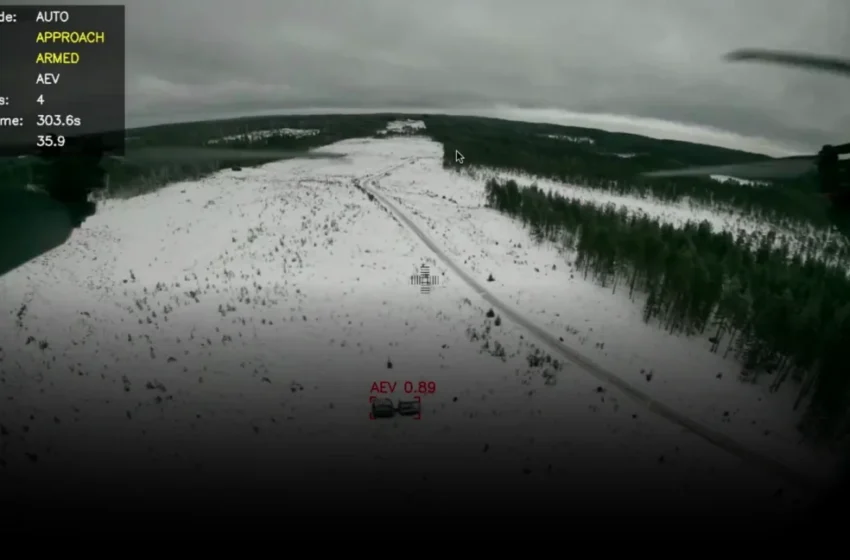
Beyond Silicon Valley: The Global Race for Edge AI in Warfare
The real story here is not merely that artificial intelligence can now identify battlefield targets autonomously; it is how frighteningly cheap and simple it has become to deploy such lethal capabilities. A small, NATO-backed Swedish startup, Scaleout Systems, is not just refining battlefield AI; they are, perhaps inadvertently, democratizing its destructive potential, pulling autonomous killing machines off the drawing board and into the hands of a broader array of actors.
Originally founded in 2018 by researchers from Sweden’s Uppsala University, Scaleout Systems began its journey by tackling the decidedly unglamorous problem of training and deploying machine learning models directly on the hardware of commercial trucks. This focus on getting AI to run efficiently on limited computational resources—what we call edge computing—was a niche, technical pursuit. Then came February 2022, and with Russia’s full-scale invasion of Ukraine, the company pivoted sharply towards defense applications.
As Andreas Hellander, Scaleout Systems cofounder and CEO, told Ars, the shift was driven by a stark realization: “With the war in Ukraine and a shifting world, we realized that this technology can be very important to operationalize edge data and sensor data for machine learning to make sure that NATO allies have found that strategic advantage.” This statement, while understandable from a business perspective, underscores a narrow, almost parochial view of a technology with global, destabilizing ramifications that extend far beyond NATO’s borders.
The Cost of Autonomy: Lowering the Barrier to Lethal AI
What Scaleout Systems is perfecting—small AI models capable of running on modest hardware—is precisely the kind of innovation that makes advanced military technology accessible to a wider market. Gone are the days when sophisticated target recognition algorithms required supercomputers or immense data centers. Today, these models can fit onto the processors found in commercially available drones, significantly driving down the cost of entry for what amounts to lethal autonomous weapons systems (LAWS).
The incentive for Scaleout Systems in this pivot is clear: an urgent market driven by geopolitical instability. NATO allies, witnessing the efficacy of drone warfare in Ukraine, are desperate for technological superiority. By translating their expertise in federated learning and edge AI from commercial logistics to military applications, Scaleout Systems positions itself as a critical enabler in this new arms race, securing funding and legitimacy in a rapidly expanding defense sector. The framing of their work as providing a “strategic advantage” perfectly aligns with national security narratives, making it easier for governments to justify investment.
This is where the concept of dual-use technology becomes particularly troubling. A system designed to optimize truck routes suddenly finds new life in identifying enemy combatants. This flexibility means that the tools for algorithmic warfare are not confined to the traditional military-industrial complex. Any nation, or indeed, any sufficiently resourced non-state actor, can now plausibly acquire or develop similar capabilities, bypassing the monumental R&D costs historically associated with cutting-edge defense tech.
A Dangerous Proliferation: Algorithmic Warfare’s New Frontier
The proliferation implied by this development is alarming. When AI-driven target detection becomes a standard feature on inexpensive drones, the threshold for engaging in sophisticated, autonomous conflict drops dramatically. The focus on gaining a “strategic advantage” in Europe often conveniently sidesteps the global ethical and proliferation risks inherent in such rapid deployment. Every perceived advantage quickly becomes a common capability, raising the global baseline of violence and blurring lines of accountability.
My skeptical observation here is this: the perceived strategic advantage of deploying cheap, autonomous killing machines is a mirage. It’s a short-term gain that ensures a long-term future of widespread, dehumanized conflict, eroding any hope of meaningful arms control or ethical oversight. When the ability to deploy AI-powered drone swarms — a concept often associated with swarm intelligence — is no longer the exclusive domain of major powers, the implications for international law and civilian protection are profound and largely unexplored.
The rapid integration of these smaller, smarter AI models into battlefield hardware forces a confrontation with the true nature of algorithmic warfare. It is not a distant sci-fi scenario but an immediate reality where decisions about life and death are increasingly outsourced to code running on a cheap chip. We are moving towards a future where the capacity for autonomous targeting is not a state secret but a commercially available product, redefining both national security and global instability.
