
SpaceX’s Falcon 9 Blockade: The Looming Crisis in Global Launch Capacity
- Space
Arjun Vedanta
- 0
- 5 minutes read
The Illusion of Abundance in Low Earth Orbit
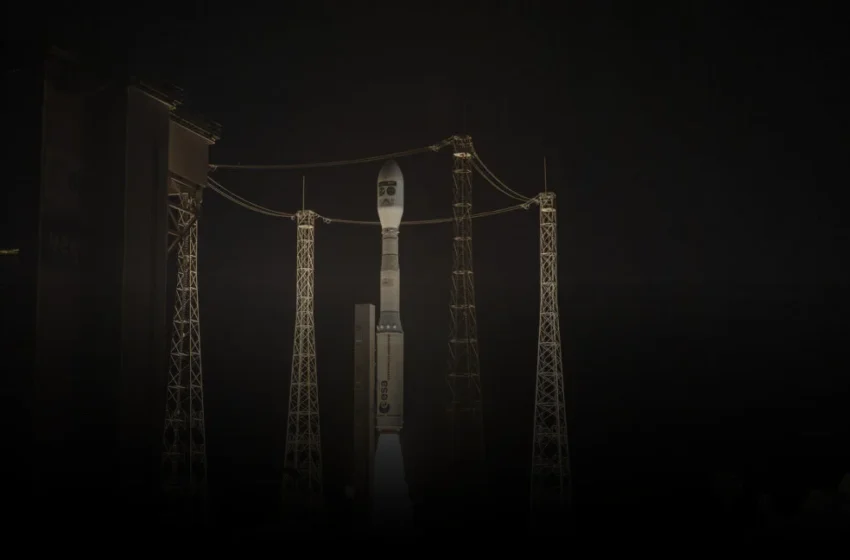
A quiet observation from Avio CEO Giulio Ranzo recently — that his company is fielding a whole bunch of customers
turned away by SpaceX — is not a story of a small player finding its footing. It is an alarm bell for a global space economy that has grown dangerously reliant on a single provider, now facing a hard reality: even the most powerful rocket company on Earth has finite capacity and rapidly shifting priorities.
SpaceX’s unilateral decision to stop accepting new commercial Falcon 9 launch orders signals not just a market correction, but a profound strategic realignment. This move carries global consequences, underscoring a stark future where getting to orbit becomes less about booking a ride and more about fitting into a dominant player’s internal roadmap. The once-dependable Falcon 9, a workhorse for everything from government satellites to private constellations, is no longer the open highway to space it once seemed.
For years, Silicon Valley narratives celebrated SpaceX’s disruptive force, often contrasting its reusable rockets and aggressive pricing with the cumbersome, expensive offerings of legacy players. Indeed, the fading fortunes of United Launch Alliance, once the unchallenged titan of US launches, are a testament to this shift. But the current scramble for available slots reveals the darker side of this disruption: when one company dominates market share, its strategic pivots send disproportionate shockwaves through the entire ecosystem, creating a market fragility that few analysts truly anticipated.
SpaceX’s Shifting Gravitational Pull
This isn’t an act of charity or market altruism; it is a calculated business move by SpaceX. The primary incentive driving this shift is clear: the company is prioritizing its own massive internal projects, specifically the relentless deployment of its Starlink internet constellation and the ambitious development of the Starship mega-rocket. Every Falcon 9 mission dedicated to a third-party commercial payload is one less mission building out Starlink’s global coverage or freeing up resources for the Starship program, which promises even greater long-term market dominance.
SpaceX is effectively converting a portion of its commercial launch capacity into a strategic asset for its vertically integrated space services. This pivot suggests that for a company like SpaceX, the immediate revenue from opportunistic Falcon 9 launches is less valuable than accelerating the deployment of Starlink, which generates recurring subscription revenue, or advancing Starship, which promises to revolutionize heavy-lift capabilities and deep-space travel. This isn’t merely about market share; it’s about controlling critical infrastructure and establishing a future monopoly on certain types of space access.
The idea that smaller players like Avio can truly fill the gap left by SpaceX is a convenient fiction. While Avio’s Vega C or Arianespace’s future Ariane 6 will certainly absorb some of the displaced demand, their launch cadences, payload capacities, and pricing structures simply do not match the scale or flexibility that the Falcon 9 once offered. To suggest that a few European rockets can replace the sheer volume and reliability of a curtailed Falcon 9 manifest is to fundamentally misunderstand the scale of global demand. This isn’t a simple game of musical chairs; it’s a profound contraction of readily available, competitive launch options.
Who Controls Access to Space?
The long-term implications of this strategic redirection are significant for anyone not directly aligned with SpaceX’s core mission. Smaller satellite operators, university research projects, and even sovereign nations without their own robust launch capabilities will find themselves increasingly beholden to a shrinking pool of providers. This could lead to longer wait times, higher costs, and a chilling effect on innovation for those reliant on frequent, affordable access to orbit.
As countries like China aggressively expand their own national launch capabilities, and others like India and Japan refine theirs, the West’s reliance on a single private entity becomes a geopolitical vulnerability. The narrative of an open, competitive space economy is rapidly giving way to one dominated by a handful of players, each with their own national or corporate agendas. The market for accessing space is not merely consolidating; it is becoming increasingly stratified, with premier access reserved for those who can either afford to pay a premium or align their payloads with a dominant player’s strategic objectives.
The abrupt halt of commercial Falcon 9 bookings by SpaceX, while seemingly beneficial to smaller players like Avio, exposes a deeper structural fragility in the global launch market. Even dominant players like SpaceX now visibly lack the capacity or incentive to serve a broad range of commercial payloads. This signals a looming consolidation or redirection of launch capabilities towards strategic mega-constellations or governmental priorities, fundamentally reshaping who gets to go to space, and on whose terms.
