
Beyond Cheap Launch: Europe’s Strategic Reckoning in a Post-Falcon 9 Space Market
- Space
Arjun Vedanta
- 0
- 6 minutes read
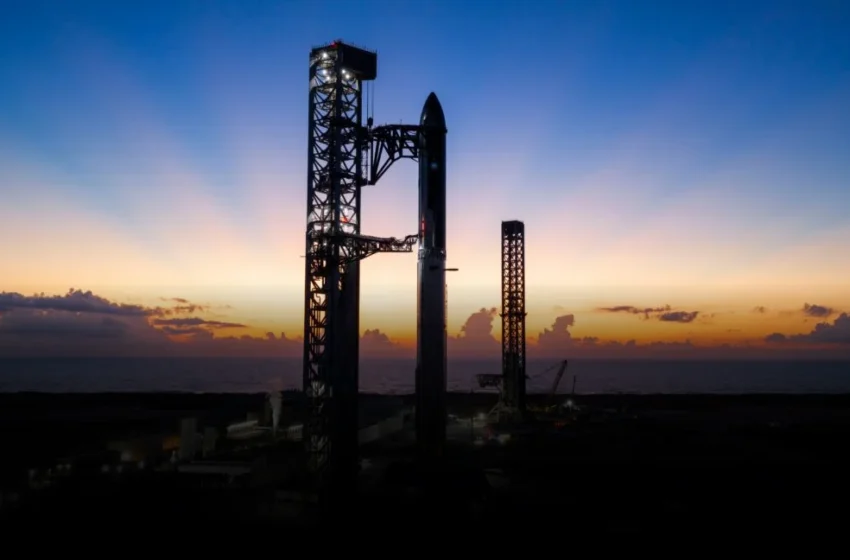
The global space launch market is undergoing a quiet, yet profound, realignment, and while Silicon Valley reporters fixate on the immediate implications for US operators, the real tremor is being felt across the Atlantic. What’s often missed in the domestic chatter about SpaceX’s impending wind-down of Falcon 9 commercial launches is the disproportionate impact on Europe’s already fragile aspirations for independent access to space. This isn’t just about rising costs; it’s about a strategic sovereignty eroding in plain sight.
SpaceX, with its dominant Falcon 9, has effectively backstopped a significant portion of the global payload market for years. Its strategy of cheap, rapid, and reliable launch became the industry baseline. Now, with the company signalling an exit from commercial launches for Falcon 9 within two to three years, the scramble among satellite operators is predictable. What is less discussed is how this reshuffles the deck for Europe, which has long grappled with inconsistent domestic launch capabilities and a reliance on foreign providers, often for geopolitical reasons.
The delay of HyPrSpace’s Baguette One suborbital rocket, now pushed to 2027, is more than a footnote; it’s emblematic. While a 10-meter vehicle designed for 300 kg payloads might seem insignificant next to a Falcon 9, it represents Europe’s struggle to foster a competitive ecosystem, even at the micro-launcher level. This single-stage, hybrid-propulsion rocket, though promising in its design, faces a market that is simultaneously losing its anchor in the heavy-lift category and seeing its smaller players struggle with commercialisation and reliability, as Astra’s own 2027 return target further illustrates.
Europe’s Launch Paradox: Affordability vs. Autonomy
The industry consensus, articulated by players like Firefly, suggests that launch costs are set to rise. Customers, it is argued, became “too used” to the Falcon 9’s unprecedented price-performance ratio. This observation, while financially astute, masks a deeper, more existential crisis for non-US space powers. For Europe, the notion of ‘getting used to cheap launch’ was often a necessary compromise, a Faustian bargain to maintain a presence in orbit without the prohibitive expense of its own less efficient systems. Without Falcon 9, that bargain is off the table, and the alternatives are either more expensive or non-existent for certain payload classes.
The incentive for US-based launch providers to highlight rising costs is clear: it justifies higher prices for their own burgeoning capabilities, notably those moving beyond the Falcon 9’s domain. However, for European Space Agency members, this shift is not merely an inconvenience; it’s a direct challenge to national security and economic planning. Consider the ramifications for Galileo, Europe’s own global navigation satellite system, or Copernicus, its Earth observation program. Relying on potentially adversarial nations for critical infrastructure launches is untenable. Yet, consistent delays and cost overruns on projects like Ariane 6 underscore Europe’s systemic challenges.
The sharpest sentence I can offer is this: Europe is being forced to pay a premium for a launch independence it has consistently failed to cultivate on its own terms, making the ‘era of expensive launch’ a self-fulfilling prophecy for its space ambitions.
The Micro-Launcher Mirage and Strategic Drift
While the focus often drifts to the multi-ton payload market, the burgeoning micro-launcher sector was once pitched as Europe’s path to agility. The reality is far more complex. Startups like HyPrSpace, with innovative hybrid propulsion systems, are crucial for dedicated small satellite missions, yet they face brutal market dynamics. Investors are increasingly wary of the long development cycles and high capital expenditure required, especially when a handful of heavily backed US players dominate the headlines, if not yet the consistent launch manifest.
The delay of Baguette One, while perhaps technically justifiable, contributes to a narrative of European startups struggling to deliver on timelines, further pushing customers towards more established — or at least, better-funded — US alternatives. This creates a strategic drift, where European payloads, regardless of size, increasingly rely on US infrastructure, gradually diminishing Europe’s indigenous capabilities and technical expertise. The continent’s historical strengths in satellite manufacturing risk being undermined by a lack of reliable, sovereign launch access.
This situation isn’t accidental. The fragmented nature of European space policy, with national interests often overriding a unified continental strategy, has consistently hampered the creation of truly competitive and resilient launch capabilities. While agencies like ESA strive for integration, the commercial realities and the pull of national industrial champions often lead to suboptimal outcomes. Without a clear, long-term, and well-funded strategy that prioritizes reliable, sovereign access over short-term cost savings, Europe will remain a junior partner in the global space race, irrespective of its technological prowess in other areas.
Redefining Europe’s Space Ambition in a Post-Falcon 9 World
The impending void left by Falcon 9’s commercial departure forces a re-evaluation of what Europe’s space ambition truly means. Is it about merely accessing space, or about owning that access? The former can be achieved through commercial contracts with whoever offers the best price – historically SpaceX. The latter demands substantial, sustained investment in indigenous launch platforms, from heavy-lift to micro-launchers, coupled with a willingness to absorb higher initial costs for long-term strategic benefits. The current trajectory suggests Europe is still equivocating.
The hard numbers underscore the urgency. Falcon 9’s wind-down in two to three years leaves a critical window. For HyPrSpace’s Baguette One to launch in 2027, and for other European entrants to mature, the pace needs to accelerate dramatically. The geopolitical landscape, marked by increasing competition and weaponization of space, further amplifies the need for self-reliance. Without it, Europe risks becoming a tenant in an orbital neighbourhood where it once aspired to be a landlord, reliant on the whims and policies of others for its most critical space assets.
This is not merely a supply-chain disruption; it is a fundamental test of strategic resolve. Europe cannot afford to simply outsource its future in orbit. The continent’s leaders must decide whether the cost of true space independence is worth the strategic dividends. The current news, from SpaceX’s shift to HyPrSpace’s delay, paints a picture of a market in flux, where Europe’s unique vulnerabilities are coming into sharper focus. It is a moment for uncomfortable truths, not just for the launch industry, but for the entire concept of European technological sovereignty.
