
When Regulatory Science Bows to Political Loyalty: A Global Precedent for Tech
- Government & Policy
Arjun Vedanta
- 0
- 5 minutes read
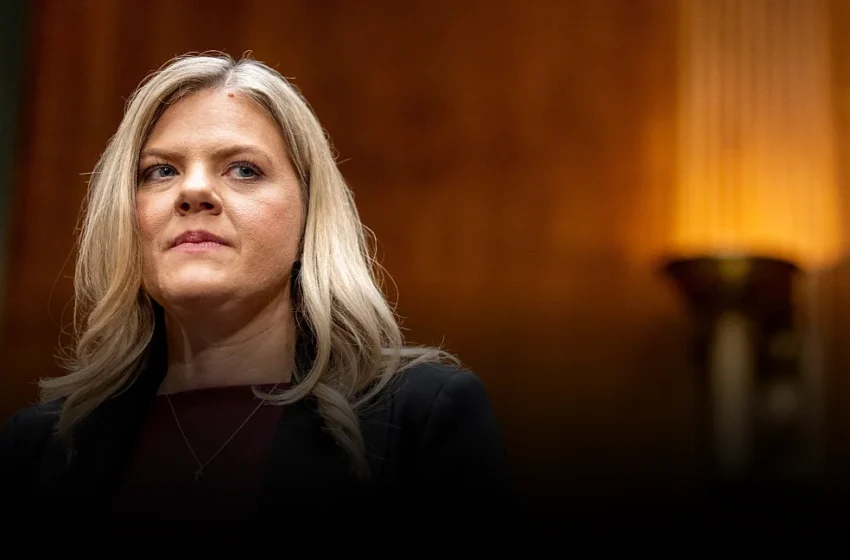
The Price of Unquestioning Allegiance
Heidi Overton’s confirmation hearing for the Food and Drug Administration top job was not merely a domestic political skirmish; it was a stark demonstration of how deeply scientific institutions can be compromised by political allegiance. Her nearly two hours of stonewalling senators, avoiding direct answers on issues from vaccine efficacy to the safety of the abortion pill mifepristone, revealed a nominee whose primary qualification seemed to be unwavering loyalty, not independent scientific judgment. This isn’t just about a single agency or a single nation; the uncritical deference shown by a scientific nominee to a political leader sets a dangerous precedent for the very foundations of scientific authority, echoing across global regulatory bodies and the nascent frameworks governing emerging technologies.
Overton, a physician with a doctorate in clinical investigation, possesses the academic credentials on paper. Yet, her prior role as deputy assistant to the president for domestic policy and her conservative think tank background seemed to overshadow any commitment to evidence-based policy. The FDA is currently scrutinizing mifepristone’s safety, despite extensive data affirming its low risk profile, creating a direct conflict with Overton’s publicly stated opposition to abortion. More troubling was her silence regarding President Trump’s past assertions that the measles, mumps, and rubella (MMR) vaccine is “quite lethal,” or his call for splitting immunizations without scientific basis. This isn’t about specific health policies; it’s about the erosion of institutional trust when a leader, poised to guide a crucial scientific agency, cannot publicly affirm widely accepted scientific consensus.
The sharpest observation here isn’t the political maneuvering itself, which is expected in any capital. It’s the normalization of a profound shift: deference to political authority now routinely trumps established scientific fact within institutions designed to safeguard public welfare. Such a spectacle, played out on the global stage, undermines the very notion of independent expertise that underpins modern governance and technological progress.
Global Repercussions of US Regulatory Drift
For those of us tracking the broader currents of international science and technology, the implications extend far beyond the Potomac. The FDA holds immense sway as a global benchmark. Its decisions and the integrity of its leadership directly influence drug approvals, medical device standards, and public health campaigns in markets from Singapore to Geneva. When the US, a traditional leader in scientific research and regulatory rigor, appears to compromise its core scientific bodies for political expediency, the ripple effects are significant.
International health organizations and national regulatory agencies often look to the FDA’s gold standard. A perceived politicization weakens this standard, fostering distrust in public health initiatives worldwide, particularly those as critical and often contentious as vaccination programs. This dynamic contributes to a global climate where misinformation thrives and evidence-based policy is increasingly sidelined in favor of ideological alignment. The incentive behind such a nomination, and the nominee’s posture, is clear: to consolidate political power within scientific domains, appealing to a specific electoral base by demonstrating unwavering loyalty over impartial expertise, thereby redefining what constitutes ‘authority’.
This is what many US-based Silicon Valley reporters, often too engrossed in product launches and venture capital rounds, frequently miss. The underlying *regulatory frameworks* and the *public trust* they engender are the invisible infrastructure of innovation. When that infrastructure cracks, the consequences are felt in every laboratory, every startup, and every market that relies on predictable, scientifically sound governance.
A Dangerous Blueprint for Tech Governance
Consider the escalating debates around Artificial Intelligence, biotechnology, and data governance. These fields demand rigorous, independent oversight, ethical considerations, and a deep understanding of complex science. If a health agency can be seen to compromise its scientific integrity at the highest levels, what signal does this send for the future of AI regulation or CRISPR gene editing oversight?
The questions facing new technologies are inherently global: who sets the standards for AI ethics? How do we ensure the safe deployment of advanced robotics? What are the international norms for *data privacy* and digital sovereignty? If the model established by this FDA nomination becomes a blueprint, we risk a future where critical decisions on these *adjacent technologies* are dictated by political loyalties rather than by the consensus of experts, scientific evidence, and global best practices. The trust that enables researchers to share findings, companies to operate across borders, and the public to adopt new tools rests precariously on the perceived impartiality of these oversight bodies. This episode is a potent reminder that the battle for scientific integrity is not confined to medicine; it is a universal fight for the future of all innovation.
