
Tesla’s Robot Pivot: A Self-Inflicted Identity Crisis on the Factory Floor
- Robotics
Arjun Vedanta
- 0
- 5 minutes read
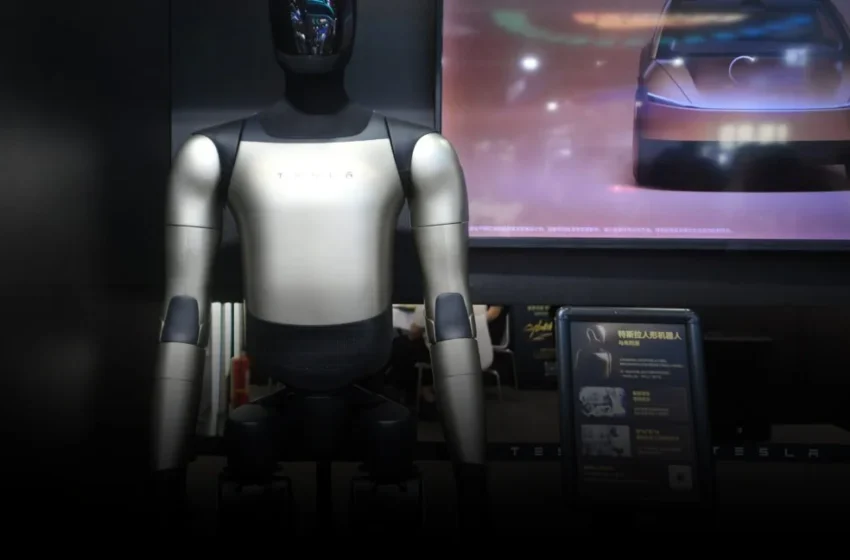
When Vision Collides with Reality: The Human Cost of Robotic Ambition
Tesla’s factories in California are not just building vehicles anymore; they are also building a fundamental conflict. As line workers in Fremont are redirected from producing Model S sedans and Model X SUVs to training their potential robotic successors, the company’s ambitious pivot to humanoid robotics is creating an inherent tension that threatens its operational stability and market identity. This isn’t merely a logistical hurdle of complex robot hands or disgruntled employees resisting change; it’s a structural contradiction at the heart of Elon Musk’s strategy, where a manufacturing giant is actively dismantling its proven revenue streams and human capital in pursuit of a speculative, unproven AI product.
The move, extensively detailed in reporting by The Information, reveals that as of May 2026, both production lines and engineering talent are being funneled into the Optimus project. Musk, ever the showman, has grandly declared Optimus could be “the biggest product ever,” a pronouncement made during the second-quarter 2026 earnings call. Yet, the same CEO also admitted developing an autonomous, general-purpose humanoid robot is “one of the hardest things to solve.” The chasm between these two statements — audacious promise and stark technical reality — is where Tesla finds itself today, asking its human workforce to participate in their own obsolescence.
This is not a simple automation upgrade. It’s a company-wide reorientation, betting the farm on an entirely new product category that exists far outside Tesla’s established domain of electric vehicles. The workers’ understandable pushback against training Optimus as a replacement isn’t just about job security; it’s a visceral reaction to a strategy that undermines their very role within a company they helped build, creating a climate of uncertainty that skilled labor typically shuns.
The Unseen Risk in Chasing the Next ‘Biggest Product’
For a company that still derives the vast majority of its revenue from automobiles, the complete cessation of Model S and X production in Fremont to reallocate resources to Optimus represents a significant, almost reckless, gamble. While these models might not be Tesla’s volume sellers, they represent established market segments and brand prestige. Shifting this capacity to an unproven humanoid robot — one that even Musk acknowledges as incredibly complex — is a high-stakes play that puts immediate operational efficiency and long-term market position at risk.
The immediate incentive for this announcement, particularly its timing, seems geared towards maintaining investor confidence in a broader vision of AI leadership. By explicitly detailing the internal reallocation of resources, Musk reinforces the narrative that Tesla is not just a car company, but a vertically integrated AI and robotics powerhouse. This framing attempts to justify Tesla’s often exorbitant valuation by promising future — rather than current — technological dominance, a tactic common among companies whose market cap far outstrips their present earnings. It’s a masterclass in narrative control, designed to keep the valuation bubble inflated.
The inherent risk here is not just about R&D costs or technical feasibility, but about customer and investor perception. Tesla’s brand equity is tied to electric vehicles, battery technology, and increasingly, advanced driver-assistance systems. Diverting resources from these core competencies to a product with an entirely different market, regulatory, and ethical landscape stretches the company’s focus thin. It invites questions about the company’s ability to execute on existing promises while simultaneously attempting to conquer a wholly new, incredibly difficult frontier of artificial general intelligence embodied in a bipedal form.
What Silicon Valley Misses: The Operational Squeeze
US-centric Silicon Valley reporters often fixate on the technological marvel or the charismatic CEO, missing the foundational operational implications when a company like Tesla makes such a radical pivot. The challenge of scaling up Optimus production isn’t just about making robots work; it’s about making them work reliably, safely, and economically at a scale that justifies pulling resources from a mature, if competitive, industry. The complexity of robot hands, highlighted as a specific issue, is a microcosm of the vast engineering challenges ahead, suggesting that the journey from prototype to mass-market product is fraught with unforeseen delays and costs.
Beyond the technical, the human element is being gravely underestimated. Relying on an existing workforce to train their eventual replacements cultivates resentment and fosters an environment antithetical to productivity and innovation. This isn’t just a moral dilemma; it’s a profound strategic misstep. A motivated, engaged workforce is critical for scaling any complex manufacturing process, and actively signaling their impending obsolescence is a peculiar way to secure their cooperation. This internal friction will inevitably bleed into external delays, quality control issues, and further erode the stability required for such an ambitious undertaking.
While Musk paints a picture of a future where Optimus robots transform labor, the current reality for Tesla is that this future is actively destabilizing its present. The company isn’t just building robots; it’s attempting a complete corporate metamorphosis while simultaneously grappling with the very human resistance and operational complexities it has created. This pivot risks turning Tesla into a jack of all trades, master of none, undermining its hard-won position in the EV market long before Optimus can even tie its own shoelaces.
